Argonne National Laboratory Upgrades Supercomputing and Imaging Capabilities
The Aurora supercomputer and the Advanced Photon Source are providing researchers with unprecedented tools for scientific discovery.
PENN Explainer
Hear this story explained in 90 seconds.
Scientists at the Argonne National Laboratory in Lemont, Illinois, have recently unveiled significant upgrades to their primary research facilities. These enhancements include the deployment of the Aurora supercomputer and a major modernization of the Advanced Photon Source. Together, these tools are designed to accelerate complex research across various scientific disciplines. The laboratory aims to provide researchers with the computational power and imaging precision necessary to solve some of the most challenging problems in modern science.
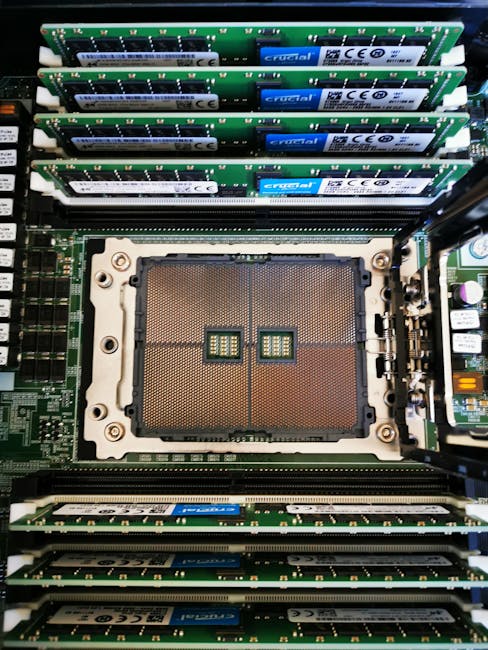
Katherine Riley, the director of science at Argonne, described the scale of the new computing infrastructure. She noted that the Aurora system functions like 10,000 individual computers communicating with each other at extremely high speeds. This massive parallel processing capability allows for simulations that were previously impossible to perform. The system is expected to support breakthroughs in fields ranging from materials science to climate modeling.
Complementing the computing power is the upgraded Advanced Photon Source, which serves as a high-energy X-ray microscope. Laurent Chapon, the director for photon sciences at Argonne, explained that the facility acts as a giant microscope for the atomic world. By using intense X-ray beams, researchers can observe the internal structures of materials with incredible detail. This level of clarity helps scientists understand how substances behave at the molecular level.
The combination of these two technologies creates a powerful environment for experimental and theoretical research. By integrating high-speed data analysis with advanced imaging, the laboratory can bridge the gap between observation and prediction. This synergy is expected to shorten the time required to move from a hypothesis to a verified discovery. The facility remains open to researchers from around the world who need access to these specialized tools.
As these systems become fully operational, the scientific community anticipates a surge in data-driven insights. The laboratory continues to refine its processes to ensure that these resources are used effectively for global scientific advancement.
You've reached your free article limit
You've read 10 of 10 free articles this month. Subscribe to Planet Earth News Network for unlimited access to neutral, global journalism — plus puzzles, podcasts, and the weekly newsletter.
Already a subscriber? Sign in.
Ask the Author
Subscribers can ask the journalist a question about this story. Subscribe to ask.
Nota di neutralità
Auto-harvested from global news wires and presented neutrally by PENN.
to vote
Comments
No comments yet — be the first to share your thoughts.
Related stories in Science & Technology

Astronomers Use Machine Learning to Unmask Hidden Planets in Telescope Data
2026-11-09
Physicists Create Record-Low Temperature Aboard China's Space Station
2026-11-09