Astronomers Discover Two Previously Hidden Satellite Galaxies Orbiting the Milky Way
New observations from the Vera C. Rubin Observatory reveal faint companions that could provide fresh insights into the nature of dark matter.
PENN Explainer
Hear this story explained in 90 seconds.
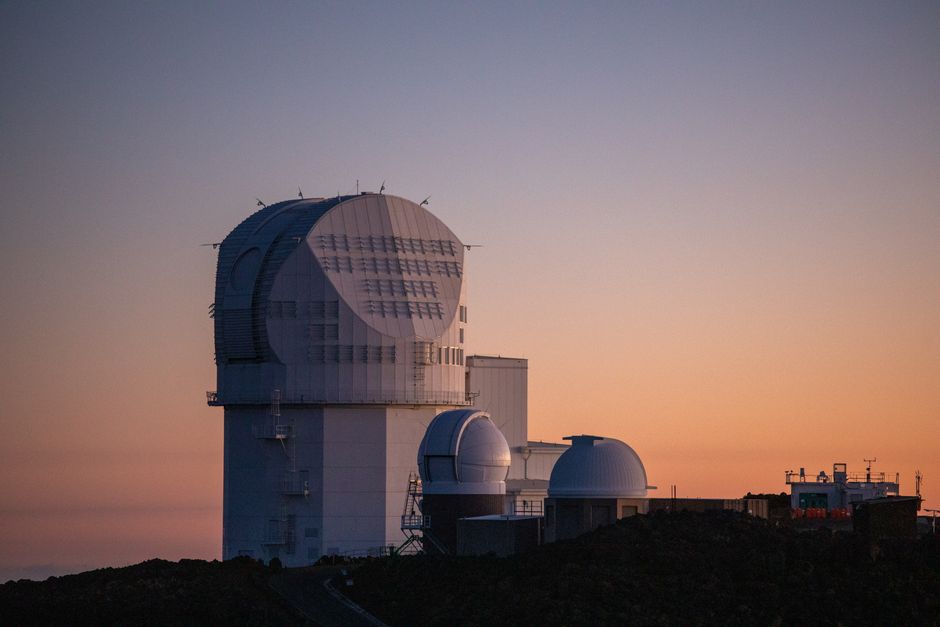
Astronomers have identified two previously unknown satellite galaxies orbiting the Milky Way, marking a significant early success for the Vera C. Rubin Observatory. These faint celestial neighbors were discovered using preview data collected by the facility before its official launch. The findings suggest that many more small galaxies may be waiting to be found in the outskirts of our own galaxy. Researchers believe these discoveries are just the beginning of what the observatory will reveal over the coming decade.
The Vera C. Rubin Observatory is a joint project funded by the U.S. National Science Foundation and the U.S. Department of Energy. It began its ambitious ten-year Legacy Survey of Space and Time in June 2026. The facility is designed to map the night sky with unprecedented detail and speed. By capturing steady, repeated images of the same regions, the telescope can detect objects that move or change in brightness over time.
This capability makes it a powerful tool for both mapping the Milky Way and identifying near-Earth asteroids. The two newly discovered satellites were identified by analyzing observations gathered between April 2025 and January 2026. Despite covering only a small fraction of the night sky, the data revealed these exceptionally faint objects that had remained hidden from previous surveys. William Cerny, an astronomy student at Yale University who led one of the studies, noted that these initial findings are an exciting start for the project.
Finding additional satellite galaxies is important because it helps scientists better understand the distribution of dark matter. Dark matter is an invisible substance that makes up most of the mass in the universe, yet it remains one of the greatest mysteries in modern physics. By studying how these small galaxies orbit the Milky Way, researchers can test theories about how dark matter influences the structure of the cosmos. The observatory is named after Vera C. Rubin, an American astronomer whose pioneering work provided some of the first convincing evidence for the existence of dark matter.
Her research showed that galaxies rotate in ways that suggest they are held together by more gravity than visible stars can provide. The facility continues her legacy by providing the data needed to explore these fundamental questions about the universe. As the survey continues, astronomers expect to catalog billions of galaxies and stars. This massive inventory will provide a clearer picture of the Solar System and the broader galactic environment. The project is expected to significantly increase the number of known asteroids and help scientists refine their understanding of the Milky Way's surroundings.
You've reached your free article limit
You've read 10 of 10 free articles this month. Subscribe to Planet Earth News Network for unlimited access to neutral, global journalism — plus puzzles, podcasts, and the weekly newsletter.
Already a subscriber? Sign in.
Ask the Author
Subscribers can ask the journalist a question about this story. Subscribe to ask.
Note de neutralité
Auto-harvested from global news wires and presented neutrally by PENN.
to vote
Comments
No comments yet — be the first to share your thoughts.