
Astronomers Identify Oldest Compact Quasar Pair in the Universe
New research reveals a significant discovery regarding the early universe's most energetic objects.

PENN Explainer
Hear this story explained in 90 seconds.
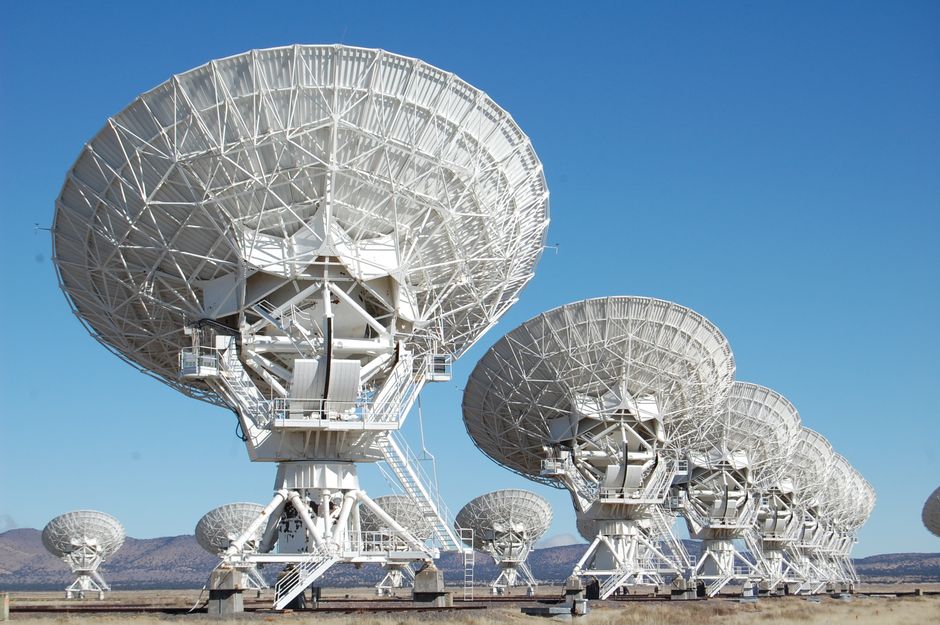
Astronomers have officially identified the oldest known compact quasar pair in the universe, a discovery that provides new insights into the evolution of the early cosmos. The celestial objects, named Nāpōwawāʻenakaulua, were observed using advanced ground-based telescope arrays. This finding marks a significant milestone in understanding how massive black holes interacted during the universe's infancy. Quasars are among the most luminous and energetic objects in space, powered by supermassive black holes at the centers of galaxies.
When two such objects are found in close proximity, they offer a rare glimpse into the chaotic processes of galactic mergers. The identification of this specific pair helps researchers map the density of matter in the early universe. Scientists at the National Optical-Infrared Astronomy Research Laboratory, or NOIRLab, confirmed the discovery on November 10, 2026. The research team utilized high-resolution imaging to distinguish the two distinct light sources from the surrounding galactic environment.
By analyzing the light emitted by these quasars, the team was able to calculate their distance and age with high precision. This data suggests that the pair existed when the universe was only a fraction of its current age. The discovery challenges existing models that predict how quickly supermassive black holes can grow and pair up. Further study of Nāpōwawāʻenakaulua is expected to reveal more about the gravitational forces that drive these cosmic encounters.
Researchers plan to use upcoming space-based observatories to gather more detailed spectral information about the pair. Understanding these ancient systems is essential for building a more complete picture of how the first galaxies formed and evolved. The scientific community views this as a foundational step toward explaining the distribution of dark matter and energy in the early universe. Future observations will likely focus on whether such compact pairs were common or if this discovery represents a unique cosmic anomaly.
You've reached your free article limit
You've read 10 of 10 free articles this month. Subscribe to Planet Earth News Network for unlimited access to neutral, global journalism — plus puzzles, podcasts, and the weekly newsletter.
Already a subscriber? Sign in.
Ask the Author
Subscribers can ask the journalist a question about this story. Subscribe to ask.
Neutrality note
Auto-harvested from global news wires and presented neutrally by PENN.
to vote
Comments
No comments yet — be the first to share your thoughts.
Related stories in Space & Astronomy
European Space Agency Releases First Major Data from Euclid Telescope
2026-11-15
Starfish Space Concludes Mission After Losing Contact with Otter Satellite
2026-11-14