Astronomers Uncover Definitive Evidence That Giant Star Betelgeuse Harbors a Hidden Companion
Long-standing brightness fluctuations and pulsation cycles in the red supergiant point to a previously unconfirmed secondary star.
PENN Explainer
Hear this story explained in 90 seconds.
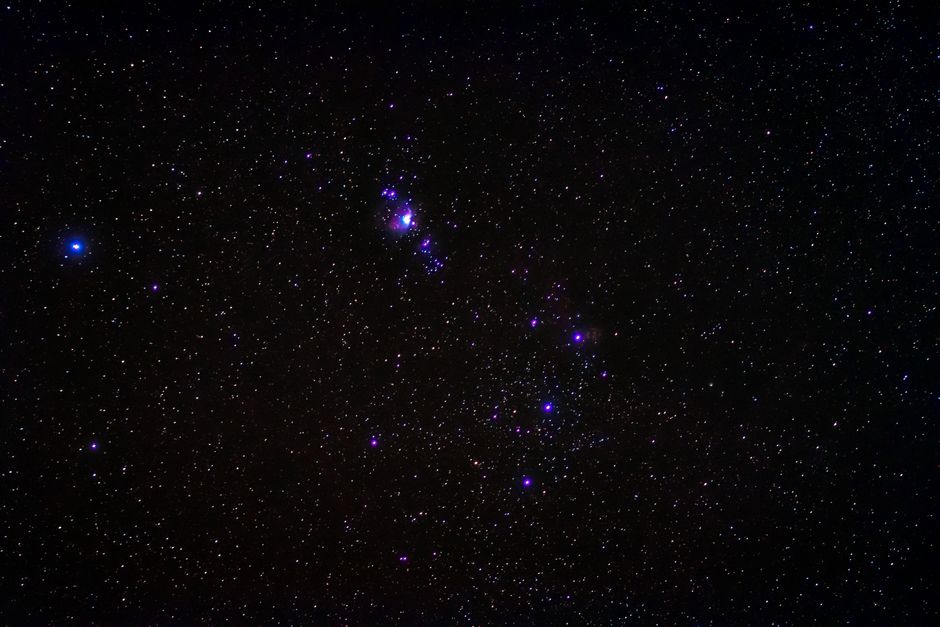
Astronomers studying the prominent red supergiant Betelgeuse in the constellation Orion have identified clear observational evidence that the massive star is not solitary, resolving a long-standing astronomical puzzle regarding its periodic brightening and dimming cycles.
Betelgeuse, located roughly 650 light-years away from Earth, has intrigued researchers for decades due to its unstable outer layers and dramatic, irregular shifts in brightness, which reached international prominence during a sudden dimming event in late 2019.
While primary pulsations within the star itself account for one major rhythm lasting roughly 400 days, scientists had struggled to explain a secondary, long-period variation spanning approximately six years.
By analyzing high-precision spectroscopic and photometric data gathered across international ground-based and space observatories, research teams observed gravitational perturbations and motion signatures that point directly to the presence of a smaller companion star orbiting the supergiant.
Astrophysicists explain that this companion body, though dwarfed in size and luminosity by Betelgeuse, exerts a steady gravitational pull that shapes the outer envelopes of gas and dust drifting away from the red supergiant.
This gravitational interaction modulates the star's apparent brightness over long intervals, acting essentially as a cosmic clock that mirrors the observed multi-year cycle.
Discovering a companion star significantly shifts models predicting the eventual fate of Betelgeuse, which is near the end of its stellar lifespan and expected to explode in a core-collapse supernova within the next 100,000 years.
The presence of an orbiting companion alters how mass is shed from the supergiant, influencing the final density and distribution of matter that will surround the star when it ultimately detonates.
Independent research teams intend to carry out targeted high-resolution interferometric observations to directly image the companion and measure its precise mass and orbital parameters.
Stellar astronomers note that these findings offer rare real-time insight into the late evolutionary stages of massive binary systems across the Milky Way.
Ask the Author
Subscribers can ask the journalist a question about this story. Subscribe to ask.
Neutrality note
Auto-harvested from global news wires and presented neutrally by PENN.
to vote
Comments
No comments yet — be the first to share your thoughts.