
Australia Validates New Long-Range Missile Capability for FA-18F Fighter Jets
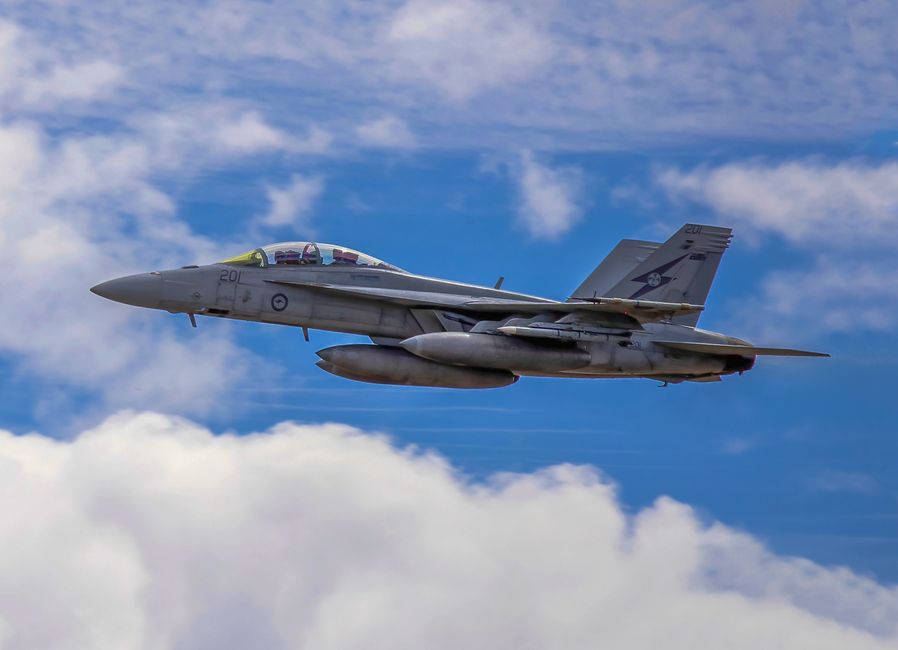
The Royal Australian Air Force has successfully integrated advanced U.S.-made cruise missiles to enhance its long-range strike capabilities.
PENN Explainer
Hear this story explained in 90 seconds.
The Royal Australian Air Force has officially declared its fleet of FA-18F Super Hornet fighter jets capable of deploying advanced long-range cruise missiles. This milestone follows successful live-fire validation tests conducted in both the United States and Australia. The new capability allows the aircraft to engage high-value targets from significant distances, marking a notable shift in the nation's aerial strike potential.
The integration includes the AGM-158B Joint Air-to-Surface Standoff Missile-Extended Range, which features a stated operational range of up to 900 kilometers. Additionally, the fleet is now equipped with the AGM-158C Long-Range Anti-Ship Missile, designed to strike maritime targets beyond 370 kilometers. These weapons were acquired through the U.S. Foreign Military Sales framework to ensure compatibility with allied systems.
This procurement process began several years ago, with the U.S. State Department approving the potential sale of up to 200 anti-ship missiles and 80 cruise missiles to Canberra. By adopting these specific munitions, the Australian military is tying its operational procedures and integration standards more closely to those of the United States. This alignment is intended to improve interoperability during joint missions and regional security operations.
The move comes as Australia continues to modernize its defense infrastructure and expand its strategic partnerships. Recent reports indicate that the U.S. military and various defense contractors have secured access to over 100 facilities across Australia to support these collaborative efforts. This expanded footprint includes rotational deployments and joint exercises that rely on shared technological standards.
Defense analysts note that the ability to launch these missiles from existing platforms provides a flexible solution for the Royal Australian Air Force. Rather than waiting for entirely new aircraft or systems, the military has focused on upgrading current assets to meet modern security requirements. This approach aligns with broader national defense strategies aimed at maximizing the return on investment for sovereign capabilities.
Beyond air-launched weapons, Australia has been actively experimenting with other maritime and land-based defense technologies. Recent trilateral experiments involving Australian, Japanese, and U.S. personnel have focused on linking autonomous maritime systems to improve situational awareness. These efforts are part of a wider push to integrate advanced sensors and strike platforms across all branches of the Australian Defence Force.
Government officials have emphasized that these developments are essential for maintaining national security in a changing regional environment. The focus remains on building a resilient force that can operate effectively alongside key allies. By investing in long-range strike capabilities, Australia aims to deter potential threats while maintaining a credible defensive posture.
The integration of these missiles also reflects a broader trend of Australian defense policy, which prioritizes rapid capability delivery over long-term, costly development projects. The 2023 Defence Strategic Review encouraged this shift toward practical, affordable solutions that can be fielded quickly. This strategy ensures that the military can adapt to emerging challenges without overextending its budget.
As the Royal Australian Air Force integrates these weapons, training programs are being updated to reflect the new operational requirements. Pilots and ground crews are learning to manage the complex targeting and deployment procedures associated with the long-range systems. This training is vital for ensuring that the new capability can be used effectively in real-world scenarios.
Looking ahead, the Australian government plans to continue its investment in advanced missile technology and integrated air defense systems. Future efforts will likely focus on further refining the coordination between air, sea, and land-based assets. These ongoing developments are expected to play a central role in Australia's long-term national security strategy.
You've reached your free article limit
You've read 10 of 10 free articles this month. Subscribe to Planet Earth News Network for unlimited access to neutral, global journalism — plus puzzles, podcasts, and the weekly newsletter.
Already a subscriber? Sign in.
Ask the Author
Subscribers can ask the journalist a question about this story. Subscribe to ask.
Neutrality note
Auto-harvested from global news wires and presented neutrally by PENN.
to vote
Comments
No comments yet — be the first to share your thoughts.
Related stories in Defense & Military

Cyprus, France, and Sweden Establish Framework for Joint Anti-Tank Missile Procurement
2026-11-09
Germany and United Kingdom Strengthen Defense Ties Through New Strategic Partnership
2026-11-09