Community of the Day: Aswan
Egypt's historic southern gateway along the cataracts of the Nile
PENN Explainer
Hear this story explained in 90 seconds.
Aswan, Egypt
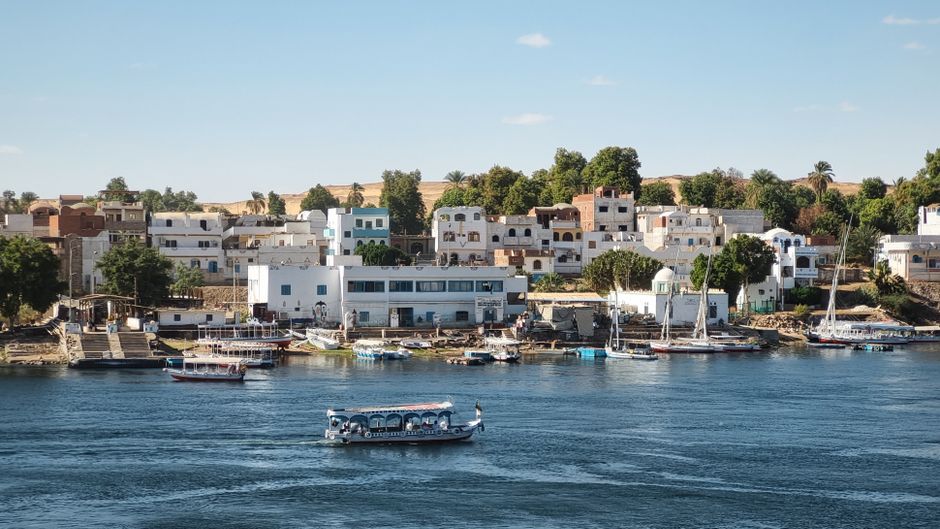
Resting along the First Cataract of the Nile River in southern Egypt, Aswan is a legendary desert oasis famous for its dramatic river sceneries, enduring Nubian heritage, and pivotal role throughout thousands of years of human civilization.
- Ancient Trading Hub and Etymology: In antiquity, the settlement was known as Swenett, an ancient Egyptian name translating to 'market' or 'trade,' which later evolved into the Greek Syene and modern Arabic Aswan. Positioned at the natural barrier of the Nile's First Cataract, it served as the kingdom's fortified southern frontier and primary portal for trade with Nubia and central Africa, channeling ivory, gold, ebony, and exotic animal pelts northward.
- Center of Ancient Stone Quarries: Aswan was the cornerstone of Egyptian monumental architecture because its surrounding hills contained rich deposits of rose-colored granite, quartzite, and sandstone. Massive monoliths across the kingdom, including the towering obelisks of Luxor and the casing stones of northern pyramids, were systematically quarried here and transported along the Nile. The famed Unfinished Obelisk still rests in its bedrock quarry, offering insight into ancient stone-carving techniques.
- Calculation of Earth's Circumference: During the Hellenistic period, the Greek polymath Eratosthenes used Aswan—then known as Syene—to achieve the world's first accurate calculation of the Earth's circumference. He observed that the sun cast no shadow at noon on the summer solstice in a deep well in Syene, while it cast a shadow simultaneously in Alexandria to the north, allowing him to use trigonometry to estimate the planet's size.
- Heart of Nubian Culture: Aswan remains the cultural heartland of Egypt's indigenous Nubian population, who have inhabited the Nile valley between southern Egypt and northern Sudan for millennia. Today, traditional communities such as those on Elephantine Island and in Gharb Soheil preserve distinct Nubian languages, vibrant folk music traditions, and vividly painted mud-brick architecture decorated with intricate geometric motifs.
- Engineering Feat of the High Dam: Constructed in the 1960s and officially inaugurated in 1971, the Aswan High Dam fundamentally transformed the nation's hydrology and modern industrial landscape. Built with Soviet technical assistance after Western financing stalled, the massive rock-fill embankment tamed annual river flooding, expanded national irrigation schemes, and continues to generate vast hydroelectric power.
- Creation of Lake Nasser: The construction of the High Dam impounded the Nile to create Lake Nasser, one of the largest human-made reservoirs on Earth, spanning southward across the border into Sudan. While the lake provides immense freshwater storage against severe droughts, its rising waters permanently flooded historic Nubian ancestral lands, necessitating large-scale population resettlements.
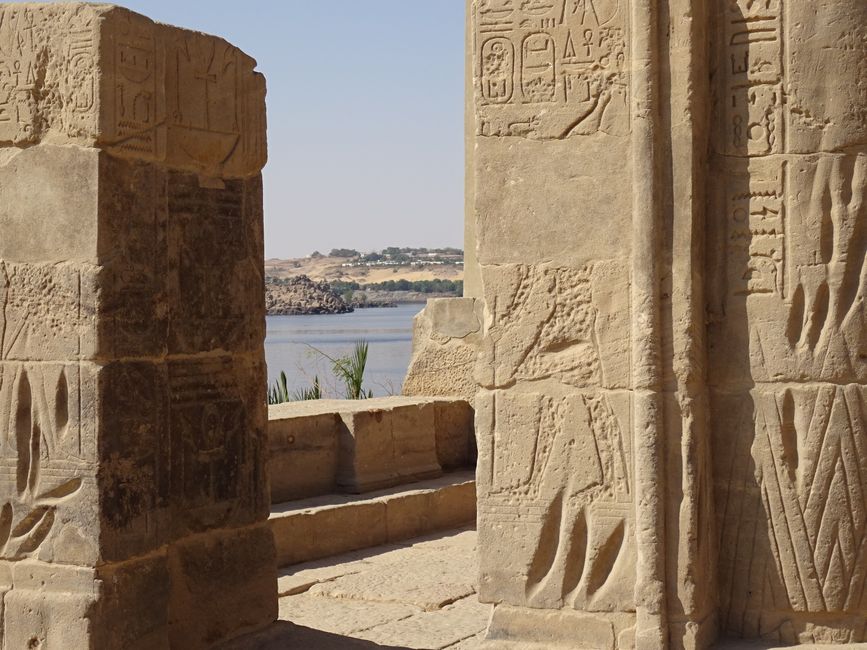
- Historic UNESCO Salvage Campaigns: The impending inundation from Lake Nasser triggered an unprecedented international UNESCO campaign to dismantle and rescue endangered ancient monuments block by block. Masterpieces such as the rock-hewn temples of Abu Simbel and the sacred Ptolemaic sanctuary of Philae were meticulously cut apart and reassembled on higher ground, with Philae relocated to nearby Agilkia Island.
- Arid and Sun-Drenched Climate: Geographically, Aswan ranks among the sunniest, driest inhabited regions in the world, receiving essentially negligible annual rainfall and enduring intensely scorching summer temperatures. The combination of intense solar radiation and expansive desert topography has recently turned the surrounding governorate into a clean energy powerhouse, epitomized by the massive Benban Solar Park.
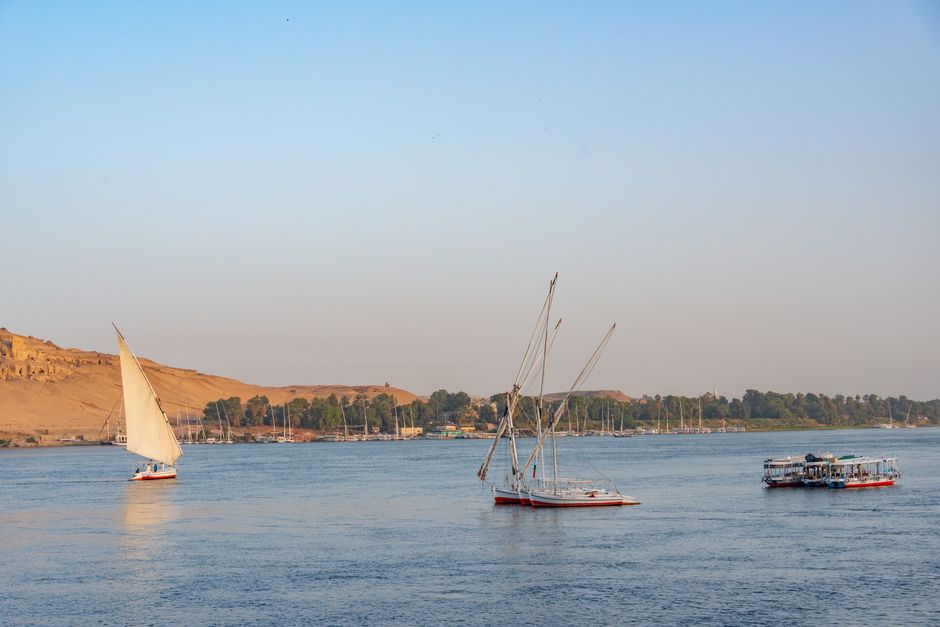
- Vibrant River Economy and Feluccas: The city's local economy thrives heavily on cultural heritage tourism, artisanal markets, and traditional river transportation. Iconic wooden sailboats known as feluccas with lateen sails navigate between granite islets, botanic reserves, and local souks, offering a tranquil riverine commerce system that operates much as it has for centuries.
- UNESCO Creative City of Crafts: Aswan is recognized as a member of the UNESCO Creative Cities Network under the Folk Art and Crafts category, honoring its vibrant community of artisans. Local markets are renowned for handcrafted palm-leaf basketry, beadwork, hand-loomed textiles, and exotic spice blending, keeping ancient domestic crafts alive in the modern global economy.
Photo Gallery
Ask the Author
Subscribers can ask the journalist a question about this story. Subscribe to ask.
Neutrality note
Community of the Day feature by PENN editorial.
to vote
Comments
No comments yet — be the first to share your thoughts.
Author
Planet Earth News Travel DeskSenior Editor, Planet Earth News Network
View all articles by Desk →