Community of the Day: Colombo, Sri Lanka
Exploring the vibrant commercial heart and historic port city of the Indian Ocean
Hear this story explained in 90 seconds.
Colombo, Sri Lanka
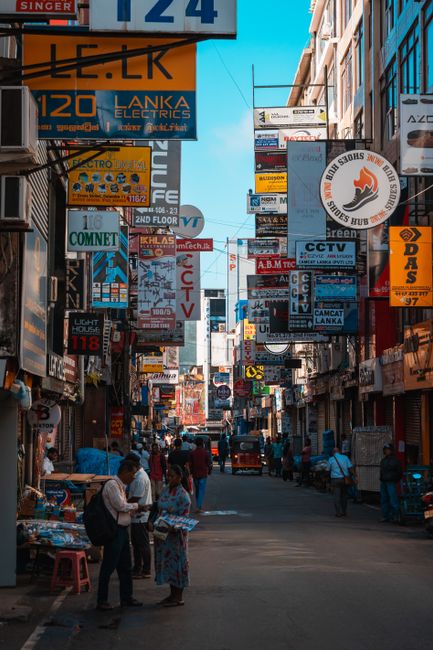
Colombo is the bustling commercial capital of Sri Lanka, situated on the island's western coast. Known for its rich colonial history, diverse cultural landscape, and status as a major South Asian port, the city serves as the primary economic engine of the nation.
- The history of Colombo as a significant seaport spans over 2,000 years, having served as a vital stop for ancient traders from Greece, Rome, Persia, and China. Its strategic location on the Indian Ocean trade routes allowed it to flourish as a gateway between the East and the West long before modern development.
- The city's name is believed to have been introduced by the Portuguese in 1505, potentially derived from the Sinhalese term 'Kolon thota,' meaning 'port on the Kelani River.' This linguistic evolution reflects the deep layers of cultural influence that have shaped the city's identity over centuries.
- Colombo experienced successive waves of European colonization, starting with the Portuguese, followed by the Dutch, and finally the British. Each power left an indelible mark on the city's architecture, legal systems, and social customs, creating a unique urban environment that blends European and South Asian styles.
- Although the official administrative capital of Sri Lanka was moved to the nearby suburb of Sri Jayawardenepura Kotte in the 1980s, Colombo remains the country's undisputed commercial and financial hub. Most foreign diplomatic missions and major corporate headquarters continue to operate from within the city limits.
- The city is renowned for its remarkable religious diversity, where Buddhist temples, Hindu kovils, mosques, and Christian churches often stand within meters of each other. This proximity fosters a unique atmosphere of coexistence and reflects the multi-ethnic composition of the local population, which includes Sinhalese, Tamil, and Muslim communities.
- The Gangaramaya Temple stands as one of the most significant Buddhist sites in the city, located near the scenic Beira Lake. Beyond its religious importance, the temple complex houses an eclectic museum featuring donated artifacts, including vintage cars and historical currency, showcasing the city's cultural heritage.
- Galle Face Green is a beloved urban park and promenade that stretches along the Indian Ocean coastline. Historically used for horse racing and golf, it has evolved into a popular gathering spot where locals and tourists alike enjoy the sea breeze and vibrant street food culture.
- The Colombo Fort area serves as the historic heart of the city, where modern skyscrapers now stand alongside colonial-era buildings dating back to the 1700s. This district encapsulates the city's rapid modernization while preserving the architectural remnants of its complex past.
- The city's economy is heavily driven by its massive artificial harbor, which is one of the busiest in South Asia. This port handles the majority of Sri Lanka's foreign trade, facilitating the export of goods and supporting the nation's industrial growth.
- Colombo's geography is defined by its coastal location, numerous canals, and the presence of the Beira Lake in the city center. The northern and northeastern borders are marked by the Kelani River, which flows into the sea at a point known as Modera, meaning 'delta' in Sinhalese.
Photo Gallery


You've reached your free article limit
You've read 10 of 10 free articles this month. Subscribe to Planet Earth News Network for unlimited access to neutral, global journalism — plus puzzles, podcasts, and the weekly newsletter.
Already a subscriber? Sign in.
Subscribers can ask the journalist a question about this story. Subscribe to ask.
Community of the Day feature by PENN editorial.
Comments
No comments yet — be the first to share your thoughts.
Senior Editor, Planet Earth News Network
View all articles by Desk →