
Community of the Day: Djenné, Mali
An ancient center of commerce and architectural wonder in the heart of the Inland Niger Delta.
Hear this story explained in 90 seconds.
Djenné, Mali
Djenné is a historic city in Mali, renowned for its ancient roots, vibrant marketplace, and the iconic Great Mosque, which stands as the largest mud-brick structure in the world. Situated on the floodplain of the Bani River, this UNESCO World Heritage site serves as a testament to centuries of trans-Saharan trade and Islamic scholarship.
- Djenné is one of the oldest cities in sub-Saharan Africa, with its history deeply intertwined with the nearby ancient settlement of Djenné-Jeno. While Djenné-Jeno dates back to 250 BCE, the modern city of Djenné was established between the 8th and 13th centuries CE.
- The city is famous for the Great Mosque of Djenné, a masterpiece of Sudano-Sahelian architecture. This massive structure is built entirely from banco, a mixture of earth, clay, straw, and rice husks, which is dried in the sun to create durable adobe bricks.
- The current iteration of the Great Mosque was completed in 1907, replacing earlier versions that stood on the same site since the 13th century. It features three distinct minarets and a unique design that has influenced religious architecture across the region.
- A defining cultural event in the city is the annual festival known as the Crepissage. During this time, the entire community gathers to participate in the labor-intensive task of replastering the exterior of the Great Mosque to protect it from the elements.
- Djenné is located on a floodplain between the Bani and Niger rivers, which creates a unique geographical situation. During the rainy season, the rising waters of the Bani River can surround the city, effectively turning it into an island.
- Historically, the city flourished as a vital hub for trans-Saharan trade, connecting the Sudan region with the tropical forests of Guinea. By the 14th century, it had become a major center for commerce, attracting merchants from across North Africa.
- Beyond its commercial success, Djenné was a significant center for Islamic learning and scholarship. Its mosques and schools played a crucial role in the expansion and consolidation of Islam throughout West Africa.
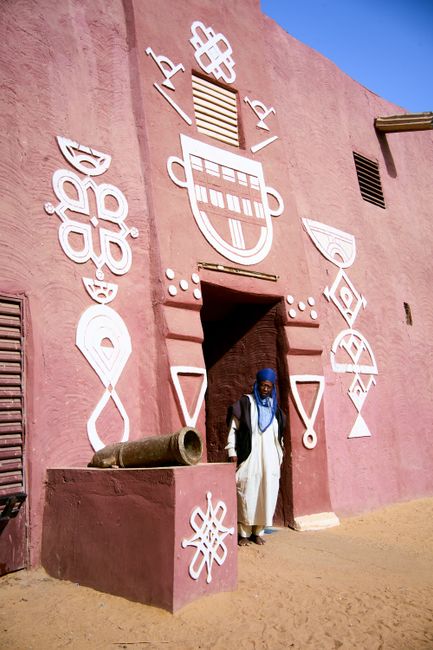
- The city's architecture is not limited to the Great Mosque; the entire old town is characterized by traditional mud-brick houses. These structures often feature intricate facades and are designed to withstand the harsh climate of the Sahel.
- Djenné is located approximately 220 miles southwest of Timbuktu and 250 miles northwest of Bamako. Despite its remote location, it remains a focal point for regional trade, with people traveling long distances to visit its bustling markets.
- In recognition of its outstanding universal value, the Old Towns of Djenné were designated as a UNESCO World Heritage site. This status helps protect the city's unique architectural heritage and archaeological sites, including the ruins of Djenné-Jeno.
Photo Gallery

You've reached your free article limit
You've read 10 of 10 free articles this month. Subscribe to Planet Earth News Network for unlimited access to neutral, global journalism — plus puzzles, podcasts, and the weekly newsletter.
Already a subscriber? Sign in.
Subscribers can ask the journalist a question about this story. Subscribe to ask.
Community of the Day feature by PENN editorial.
Comments
No comments yet — be the first to share your thoughts.
Senior Editor, Planet Earth News Network
View all articles by Desk →

