Community of the Day: Jaisalmer, India
Exploring the Golden City of the Thar Desert

PENN Explainer
Hear this story explained in 90 seconds.
Jaisalmer, India
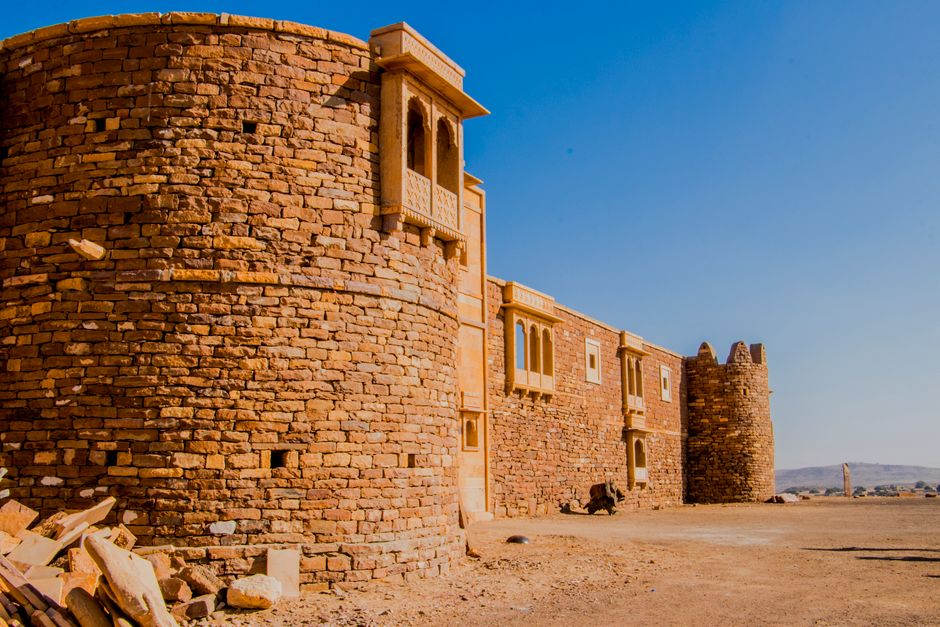
Known as the Golden City, Jaisalmer is a historic desert town in Rajasthan, India, famous for its stunning yellow sandstone architecture and its position as a gateway to the vast Thar Desert.
- Jaisalmer was founded in 1156 AD by the Bhati Rajput ruler Rawal Jaisal. Legend suggests he chose the Trikuta Hill for his new fort on the advice of a local hermit named Eesaal to ensure the safety of his people.
- The city is widely known as the Golden City because of the distinctive yellow sandstone used in the construction of its buildings and the massive fort. This stone gives the entire town a warm, golden-yellow glow, especially during sunrise and sunset.
- Jaisalmer Fort, a UNESCO World Heritage site, is one of the few living forts in the world. Unlike many other historical monuments, it remains a bustling residential area where thousands of people still live and work within its ancient ramparts.
- The fort features 99 bastions and houses the royal palace, several intricate Jain temples, and the Gyana Bhandar library. This library is a treasure trove of ancient Sanskrit and Prakrit manuscripts that preserve the region's intellectual history.
- Historically, Jaisalmer served as a vital caravan center on the trade routes connecting India to Persia, Egypt, and Africa. The local rulers grew wealthy by taxing the merchants who passed through the desert with goods like wool, hides, and salt.
- The Nathmal ki Haveli is a prime example of the city's architectural brilliance, built in the 19th century by two brothers. They worked on opposite sides of the building simultaneously, resulting in a unique, symmetrical masterpiece of stone carving.
- The Desert Festival, held annually around January or February, is a major cultural event that showcases the vibrant traditions of Rajasthan. Visitors can enjoy folk music, dance performances, camel races, and even camel polo.
- The surrounding region is part of the Great Indian Thar Desert, characterized by its arid, sandy landscape and extreme temperatures. The area experiences scorching heat in the summer and significant drops in temperature during the winter nights.
- Kuldhara, a nearby village, is famous for its mysterious history. It was abandoned overnight by its entire population in the 1800s, and to this day, no one knows exactly where the villagers went or why they left so suddenly.
- The local economy has evolved from ancient trade to include tourism, agriculture, and energy production. Today, the region is also known for its significant wind-energy installations and the discovery of natural gas in the Jaisalmer basin.
Photo Gallery

You've reached your free article limit
You've read 10 of 10 free articles this month. Subscribe to Planet Earth News Network for unlimited access to neutral, global journalism — plus puzzles, podcasts, and the weekly newsletter.
Already a subscriber? Sign in.
Ask the Author
Subscribers can ask the journalist a question about this story. Subscribe to ask.
Related Games
NCAA FBS Football
- Georgia 42, Ole Miss 7 (Nov 7)
- Notre Dame 31, Miami 24 (Nov 7)
- Oregon 41, Ohio State 28 (Nov 7)
- Utah 28, BYU 20 (Nov 7)
WNBA
- Golden State Valkyries 68, Atlanta Dream 63 (Oct 29)
- Atlanta Dream 75, Golden State Valkyries 72 (Oct 27)
- Golden State Valkyries 80, Atlanta Dream 78 (Oct 25)
Neutrality note
Community of the Day feature by PENN editorial.
to vote
Comments
No comments yet — be the first to share your thoughts.
Author
Planet Earth News Travel DeskSenior Editor, Planet Earth News Network
View all articles by Desk →