
Community of the Day: Makassar, Indonesia
The Gateway to Eastern Indonesia
Hear this story explained in 90 seconds.
Makassar, Indonesia
Makassar is the vibrant capital of South Sulawesi and serves as the largest city in Eastern Indonesia. Known historically as a major maritime hub, it acts as a crucial gateway connecting the western and eastern regions of the Indonesian archipelago.
- Makassar has a long history as a powerful trading port and was once the center of the influential Gowa Sultanate. In the 17th century, it became a focal point for European colonial interests, eventually falling under the control of the Dutch East India Company.
- The city is located on the southwestern coast of Sulawesi, facing the strategic Makassar Strait. This geography has historically allowed its people to engage in extensive maritime activities, with local fishers famously traveling as far as the Australian coast.
- For a significant period in the 20th century, the city was known as Ujung Pandang. It officially reverted to its original name, Makassar, on October 13, 1999, reflecting the city's deep-rooted cultural identity.
- Makassar serves as the primary economic engine for the region, with major exports including cocoa, coffee, palm oil, and timber. The city's port functions as a vital distribution center for goods moving throughout the Moluccas and the Lesser Sunda Islands.
- The city is a melting pot of cultures, primarily inhabited by the Bugis and Makassarese ethnic groups. Smaller populations of Toraja and Mandar people, along with a significant Chinese community, contribute to the city's diverse social fabric.
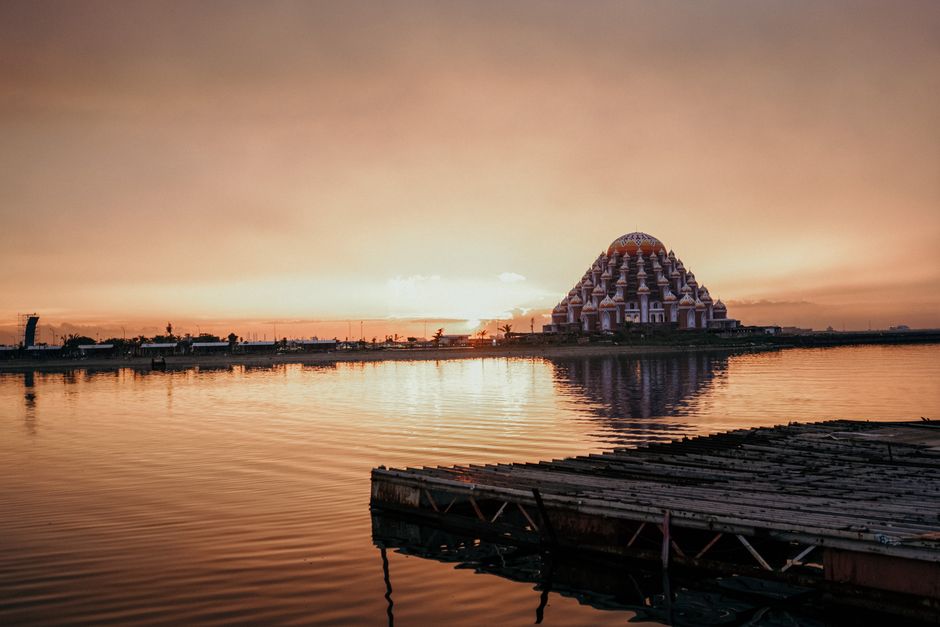
- Religion plays a central role in daily life, with the majority of the population being devout Muslims. Mosques are a prominent feature of the urban landscape, often found on nearly every street corner, influencing the city's cultural festivals and community rhythms.
- Makassar is famous for its historical connection to "macassar oil," a popular 19th-century hair ointment. The product was so widely used that protective cloth covers for chair backs were invented to prevent hair oil stains, leading to the term "antimacassar."
- The city experiences a tropical climate with distinct wet and dry seasons. During the peak of the wet season between December and February, the city can receive over 500 mm of rainfall per month, contrasting sharply with the dry month of August.
- Social structure among the traditional Makassar people has historically been divided into three ranks: nobility, commoners, and slaves. While modern society has evolved, these historical concepts of rank and lineage still influence some aspects of community life and marriage customs.
- Makassar is a major transportation hub, featuring a well-developed road network and an international airport. This infrastructure makes it the essential transit point for travelers heading to the stunning cultural sites of Tana Toraja.
- The culinary traditions of Makassar are a unique blend of agrarian and maritime influences. Local dishes often utilize fresh seafood and agricultural products from the surrounding coastal and rice-farming regions, creating a distinct regional flavor profile.
- The city's population is officially estimated at over 1.4 million, though the actual number of people in the city during the day is significantly higher. This is due to a large number of commuters arriving from neighboring regencies for work and education.
Photo Gallery


You've reached your free article limit
You've read 10 of 10 free articles this month. Subscribe to Planet Earth News Network for unlimited access to neutral, global journalism — plus puzzles, podcasts, and the weekly newsletter.
Already a subscriber? Sign in.
Subscribers can ask the journalist a question about this story. Subscribe to ask.
Community of the Day feature by PENN editorial.
Comments
No comments yet — be the first to share your thoughts.
Senior Editor, Planet Earth News Network
View all articles by Desk →

