
Community of the Day: Sapa, Vietnam
Discovering the Town in the Clouds
Hear this story explained in 90 seconds.
Sapa, Vietnam
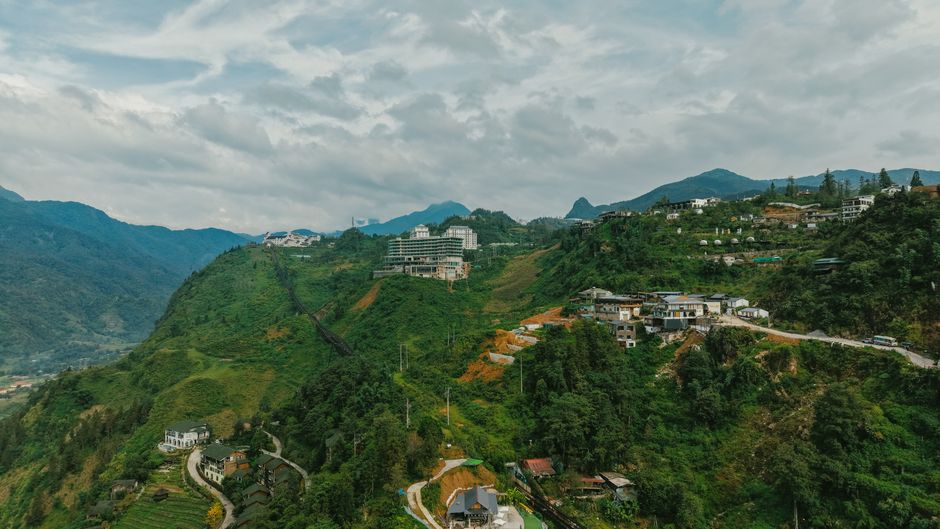
Nestled in the Hoang Lien Son mountains of northwestern Vietnam, Sapa is a breathtaking highland town renowned for its dramatic terraced rice fields, cool alpine climate, and vibrant ethnic minority cultures. Often called the "town in the clouds," it serves as a premier gateway for trekking and cultural exploration in the northern highlands.
- Sapa is located in the Lao Cai Province, approximately 315 kilometers northwest of Hanoi. Its high-altitude position near the Vietnam-China border provides a cool, refreshing climate that contrasts sharply with the heat of the lowlands. This unique geography has made it a popular escape for travelers seeking both adventure and tranquility.
- The town is home to a diverse array of ethnic minority groups, including the Hmong, Red Dao, Giay, and Tay people. These communities maintain distinct languages, traditional clothing, and ancestral farming practices that define the region's cultural identity. Their presence offers visitors a rare opportunity to experience indigenous traditions firsthand.
- Mount Fansipan, standing at 3,143 meters, is located near Sapa and is proudly known as the "Roof of Indochina." It is the highest peak in the region and serves as a major destination for trekkers and mountaineers. The mountain provides challenging hiking routes and spectacular panoramic views of the surrounding valleys.
- The history of modern Sapa began in 1903 when French cartographers from the Geography Service of Indochina discovered the region. This discovery was part of a larger colonial project to map and survey the mountainous areas of Vietnam. Consequently, the French developed the town as a summer retreat for colonial elites.
- By 1920, the completion of a railway line linking Hanoi to the Lao Cai region significantly boosted Sapa's accessibility. This infrastructure allowed the town to flourish as the "summer capital" of Northern Vietnam during the colonial era. The railway remains a historical symbol of the region's integration into the broader Indochinese economy.
- The Vietnam War and subsequent border conflicts had a profound impact on the region, leading to a long period where tourism was virtually non-existent. During this era, many local ethnic groups, particularly the Hmong, were involved in regional conflicts. It was not until the early 1990s that the area began to reopen to international visitors.
- Sapa is world-famous for its spectacular terraced rice fields, which are carved into the steep mountainsides. These terraces are not only an agricultural necessity for the local people but also a stunning visual feature that changes with the seasons. September and October are considered the best times to view the fields when the rice turns a vibrant golden yellow.
- Tourism in Sapa underwent a massive transformation following Vietnam's economic reforms in the 1990s. By 1993, the town officially reopened to global travelers, shifting from an exclusive colonial hill station to a bustling hub for backpackers and trekkers. Today, it is one of the most visited destinations in Northern Vietnam.
- The local economy is heavily supported by tourism, which has led to the development of various homestays and trekking services. Many of these initiatives are led by local ethnic communities, such as the Hmong-led Sapa O'Chau or Sapa Sisters. These programs aim to provide sustainable income while preserving traditional ways of life.
- Visitors to Sapa can explore traditional villages like Cat Cat and Ta Phin, which offer insights into local craftsmanship and daily life. These villages are often integrated into trekking routes, allowing travelers to witness traditional weaving, farming, and community gatherings. Engaging with these communities provides a deeper understanding of the region's social fabric.
Photo Gallery


You've reached your free article limit
You've read 10 of 10 free articles this month. Subscribe to Planet Earth News Network for unlimited access to neutral, global journalism — plus puzzles, podcasts, and the weekly newsletter.
Already a subscriber? Sign in.
Subscribers can ask the journalist a question about this story. Subscribe to ask.
Community of the Day feature by PENN editorial.
Comments
No comments yet — be the first to share your thoughts.
Senior Editor, Planet Earth News Network
View all articles by Desk →

