Community of the Day: Sukhothai, Thailand
Exploring the Dawn of Happiness and the birthplace of Thai civilization.
Hear this story explained in 90 seconds.
Sukhothai, Thailand
Sukhothai, located in north-central Thailand, serves as a profound window into the nation's past, famously known as the 'Dawn of Happiness.' As the capital of the first Kingdom of Siam in the 13th century, it remains a cornerstone of Thai cultural, linguistic, and artistic identity.
- Sukhothai was established in 1238 by King Sri Indraditya after local Thai princes revolted against Khmer rule. This event marked the emergence of the Thais as a dominant force in the region and the founding of the first independent Thai kingdom.
- The city is widely celebrated as the birthplace of the Thai alphabet, which was invented by King Ramkhamhaeng the Great. This development was a pivotal moment in history, allowing for the formal recording of Thai language, laws, and religious traditions.
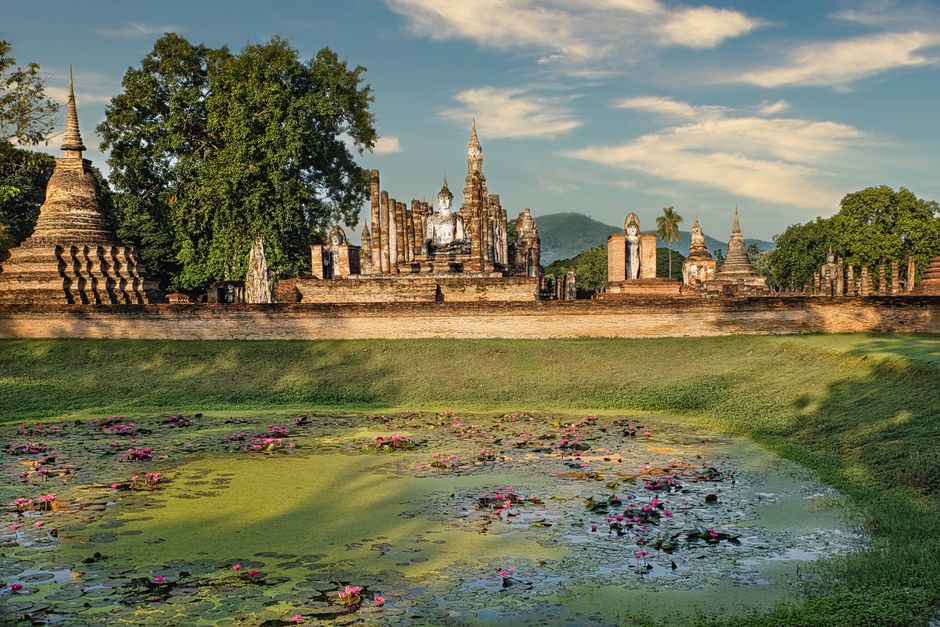
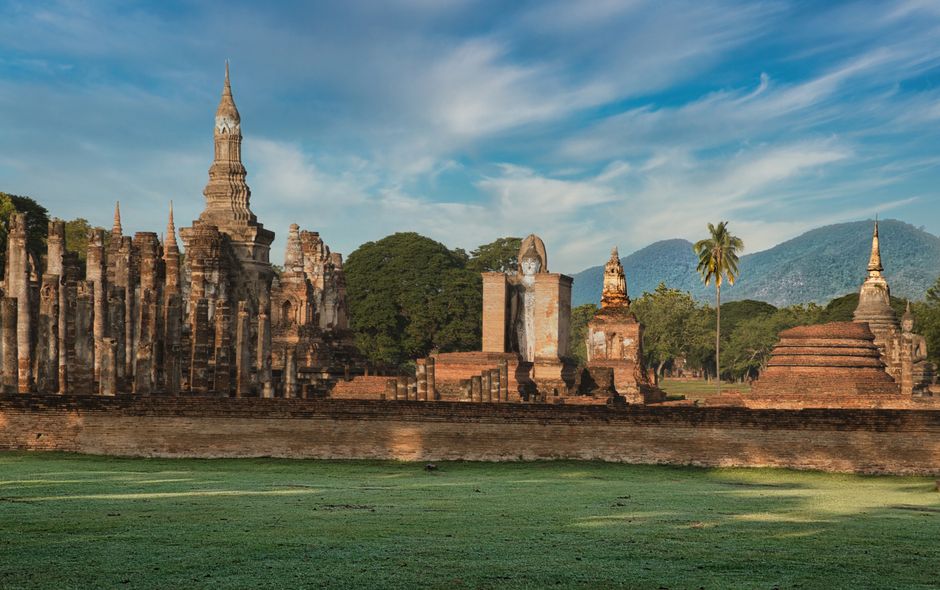
- The Sukhothai Historical Park, a UNESCO World Heritage site, spans approximately 70 square kilometers and contains nearly 200 historical sites. It is meticulously managed by the Fine Arts Department to preserve the crumbling temples, lotus-topped stupas, and serene Buddha statues that define the area.
- During its 13th and 14th-century peak, the kingdom was known as a 'Golden Age' of Siamese civilization. It was a period of immense prosperity where art, religion, and governance flourished, creating a distinct cultural pattern that persists in Thailand today.
- The economy of the ancient kingdom was diverse, relying heavily on agricultural production due to its fertile location near the Mae Nam Yom River. Beyond farming, the region was a major industrial hub, famous for the production and export of high-quality ceramics throughout Southeast Asia.
- Sukhothai developed a unique artistic style, aptly named the 'Sukhothai style,' which is characterized by its graceful and fluid depictions of the Buddha. This aesthetic influence spread throughout the region and remains a defining feature of classical Thai art.
- The kingdom's administrative and legal structures were sophisticated, drawing influences from Khmer, Mon, and Mongol traditions while maintaining a uniquely Thai identity. Stone inscriptions found at the sites provide detailed accounts of how the society was organized and governed during this era.
- Wat Mahathat stands as the heart of the historical park and is the most significant temple in the complex. It once housed a sacred Buddha relic and contained nearly 200 chedis, serving as the spiritual center for the ancient capital.
- The city's decline began in the late 14th century as the rival kingdom of Ayutthaya rose to power in the south. By 1438, Sukhothai was conquered and incorporated into the Ayutthaya kingdom, eventually leading to its abandonment by the 16th century.
- Today, visitors can explore the ruins by bicycle or on foot, particularly at sunrise when morning mist creates a magical atmosphere around the ancient structures. Modern Sukhothai also offers a vibrant local culture, where travelers can enjoy traditional markets and the famous local crispy noodles.
Photo Gallery

You've reached your free article limit
You've read 10 of 10 free articles this month. Subscribe to Planet Earth News Network for unlimited access to neutral, global journalism — plus puzzles, podcasts, and the weekly newsletter.
Already a subscriber? Sign in.
Subscribers can ask the journalist a question about this story. Subscribe to ask.
Community of the Day feature by PENN editorial.
Comments
No comments yet — be the first to share your thoughts.
Senior Editor, Planet Earth News Network
View all articles by Desk →