Culinary Tradition of the Day: Jollof Rice
The vibrant, tomato-based one-pot rice dish that serves as the heart of West African celebrations.
Hear this story explained in 90 seconds.
Jollof Rice
Jollof rice is a beloved, seasoned one-pot rice dish that stands as a cornerstone of West African cuisine. Known for its vibrant red color and deep, savory flavor, it is the quintessential celebration food, appearing at weddings, funerals, naming ceremonies, and holiday gatherings across the region.
History
The origins of Jollof rice are traced back to the 14th and 15th centuries within the historic Wolof Empire, which encompassed parts of modern-day Senegal, The Gambia, and Mauritania. Food historians, including Fran Osseo-Asare, note that the dish evolved from a traditional Senegalese meal known as thieboudienne, which consists of rice, fish, and vegetables. As the dish spread across West Africa, it adapted to local ingredients and preferences, eventually becoming a distinct staple in countries like Nigeria, Ghana, Cameroon, and Sierra Leone.
Cultural Significance
Jollof rice is more than just a meal; it is a symbol of cultural identity and pride. It is famously at the center of the "Jollof Wars," a long-standing, friendly, yet spirited rivalry between nations—particularly Nigeria and Ghana—over whose version is superior. In Nigeria, "party jollof," often cooked in large cast-iron pots over open flames, is considered the gold standard. The dish is so central to social life that its quality is often used as a metric to judge the success of a wedding or community event.
How It Works
The preparation of Jollof rice typically begins with a base of tomatoes, onions, and chili peppers, which are blended and cooked down into a rich, flavorful stew. Long-grain rice is then added to this base, allowing the grains to absorb the liquid and spices. While the core ingredients remain consistent, variations abound: some regions use specific spice blends like curry powder and thyme, while others incorporate meat, fish, or mixed vegetables. The cooking process requires careful heat management to ensure the rice is perfectly tender without burning the bottom of the pot, a prized layer known in some traditions as the "party crust."
Representative Recipe
Classic Nigerian-Style Jollof Rice
A rich, smoky, and aromatic rice dish cooked in a flavorful tomato and pepper stew, perfect for any festive occasion.
Prep time: 20 min | Cook time: 45 min | Total time: 65 min | Yield: 6 servings | Difficulty: Medium
Ingredients
- 3 cups long-grain parboiled rice
- 4 large plum tomatoes
- 1 red bell pepper
- 1 large red onion
- 3 scotch bonnet peppers (adjust to heat preference)
- 1/2 cup vegetable oil
- 3 tbsp tomato paste
- 2 cups chicken or vegetable broth
- 2 tsp curry powder
- 1 tsp dried thyme
- 2 bay leaves
- Salt to taste
Instructions
- Blend the tomatoes, red bell pepper, half of the onion, and scotch bonnet peppers until smooth.
- Heat the vegetable oil in a large pot over medium heat. Add the remaining sliced onion and sauté until translucent.
- Stir in the tomato paste and fry for 5–7 minutes, stirring constantly to prevent burning, until the color deepens.
- Pour in the blended tomato mixture. Add the curry powder, thyme, bay leaves, and salt. Simmer for 10–15 minutes until the sauce thickens and the oil begins to separate.
- Add the washed rice to the pot and stir well to coat every grain with the tomato stew.
- Pour in the broth until it just covers the rice. Cover the pot tightly with foil and a lid to trap the steam.
- Cook on low heat for 25–30 minutes until the liquid is absorbed and the rice is tender.
- Remove from heat and let it sit for 10 minutes before fluffing with a fork.
Notes
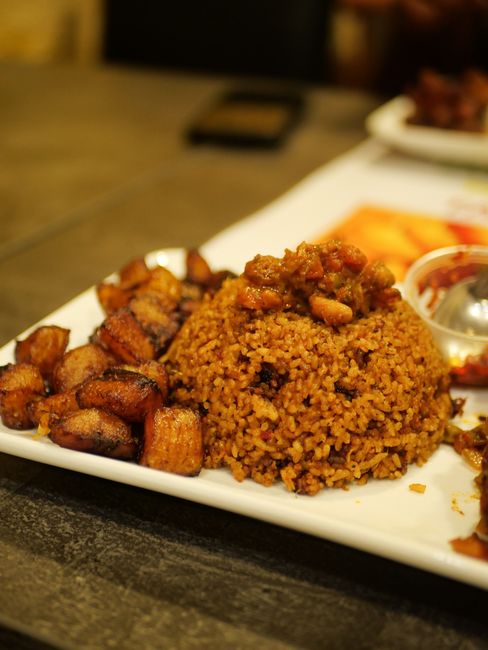
Serve hot with fried plantains, coleslaw, or grilled chicken. For a smokier flavor, some cooks prefer to cook the rice over an open wood fire. Store leftovers in an airtight container in the refrigerator for up to three days.
Subscribers can ask the journalist a question about this story. Subscribe to ask.
Culinary Tradition of the Day feature by the PENN Food & Spirits Desk.
Comments
No comments yet — be the first to share your thoughts.
PENN's lifestyle and culinary department, covering global cuisine — the origins, traditions, and recipes behind the world's dishes, with deep histories and cultural context that go beyond the plate. and PENN's beverage-focused culinary team, dedicated to spirits and drinks — covering distilleries, breweries, and producers worldwide, with histories, tasting notes, professional reviews, and cocktail traditions.
View all articles by Desk →