
Culinary Tradition of the Day: The Georgian Supra
An ancient communal ritual of feasting, wine, and oratory that defines the social fabric of Georgia
Hear this story explained in 90 seconds.
The Georgian Supra
The supra is a traditional Georgian feast that serves as a cornerstone of the nation's social and cultural life. Far more than a simple meal, it is a structured, communal ritual that brings people together to celebrate, mourn, or mark significant life events. This practice is deeply intertwined with Georgia's identity, reflecting a history of hospitality and the importance of human connection.
History
The origins of the supra are rooted in the ancient history of Georgia, a country often cited as the cradle of winemaking with traditions dating back to 6,000 BCE. The term itself derives from the Georgian word for tablecloth, symbolizing the shared space where food and wine are presented. Over centuries, the feast evolved into a sophisticated social institution, influenced by the country's position at the crossroads of the Silk Road, which brought diverse culinary influences from the Persian, Ottoman, and Byzantine empires into the local repertoire.
Cultural Significance
At the heart of every supra is the tamada, or toastmaster, who holds a position of paramount importance. The tamada is responsible for leading the gathering, proposing toasts that function as a form of praise, plea, or prayer, and ensuring the flow of the event follows established social codes. These toasts are not merely casual remarks but are poetic, structured messages that honor the homeland, God, ancestors, and guests. The supra serves as a vital mechanism for maintaining community bonds, providing a space for collective joy, consolation, and the reinforcement of shared values.
How It Works
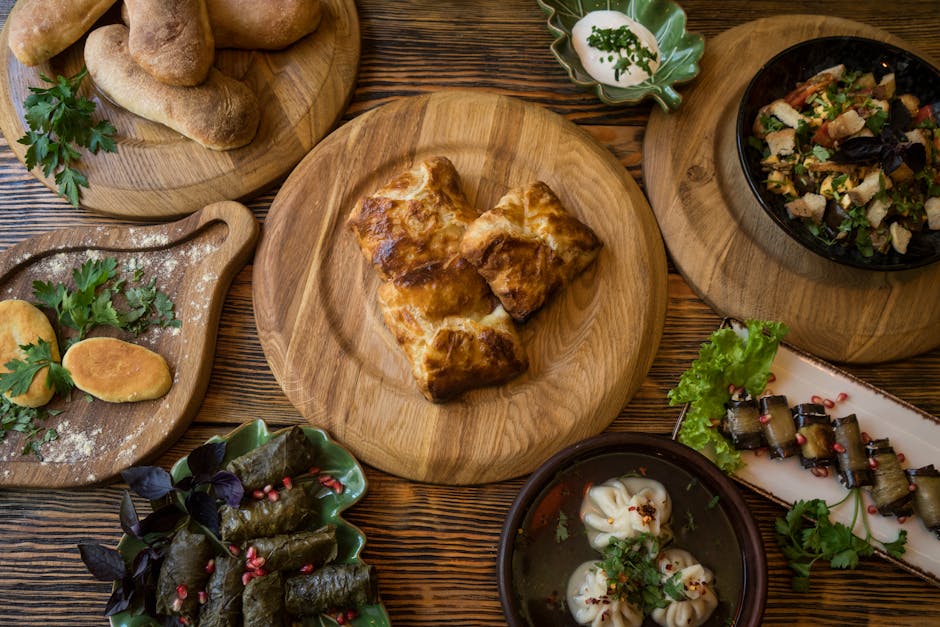
A supra is characterized by a generous spread of traditional dishes that showcase the diversity of Georgian cuisine. The table is typically laden with items such as khachapuri, a cheese-filled bread, and mtsvadi, which consists of meat chunks grilled over grapevine twigs. Other staples include satsivi, a poultry dish in a rich walnut and garlic sauce, and various vegetable preparations seasoned with fresh herbs like coriander. The sequence of dishes and the order of toasts may vary by region or occasion, but the fundamental emphasis on abundance and hospitality remains constant.
Representative Recipe
Imeretian Khachapuri
A classic, circular Georgian cheese-filled bread that serves as a staple of the traditional supra.
Prep time: 30 min | Cook time: 15 min | Total time: 45 min | Yield: 4 servings | Difficulty: Medium
Ingredients
- 1 kg all-purpose flour
- 500 ml cheese whey or water
- 20 g yeast
- 50 ml vegetable oil
- 1.2 kg Imeretian cheese (or a mix of mozzarella and feta)
- 2 eggs
- 1 tsp salt
- Butter for brushing
Instructions
- Combine the flour, yeast, salt, and liquid to form a soft dough, kneading until smooth and elastic.
- Allow the dough to rise in a warm place until it has doubled in size.
- Grate the cheese and mix it with one egg to create the filling.
- Divide the dough into portions, flatten each into a circle, and place a generous amount of cheese filling in the center.
- Gather the edges of the dough over the filling, seal them tightly, and gently roll the ball back into a flat, circular shape.
- Bake in a preheated oven at 200 degrees Celsius until the crust is golden brown, then brush immediately with butter while hot.
Notes
Serve warm as part of a larger meal. Variations exist across Georgia, such as the boat-shaped Adjarian style or the layered Meskhetian version. Store leftovers in an airtight container and reheat in an oven to maintain the texture of the crust.
You've reached your free article limit
You've read 10 of 10 free articles this month. Subscribe to Planet Earth News Network for unlimited access to neutral, global journalism — plus puzzles, podcasts, and the weekly newsletter.
Already a subscriber? Sign in.
Subscribers can ask the journalist a question about this story. Subscribe to ask.
Culinary Tradition of the Day feature by the PENN Food & Spirits Desk.
Comments
No comments yet — be the first to share your thoughts.
PENN's lifestyle and culinary department, covering global cuisine — the origins, traditions, and recipes behind the world's dishes, with deep histories and cultural context that go beyond the plate. and PENN's beverage-focused culinary team, dedicated to spirits and drinks — covering distilleries, breweries, and producers worldwide, with histories, tasting notes, professional reviews, and cocktail traditions.
View all articles by Desk →

