European Space Agency's Euclid Telescope Identifies First Comet
The space observatory captured images of the previously unknown object while conducting its primary mission to map the dark universe.
PENN Explainer
Hear this story explained in 90 seconds.
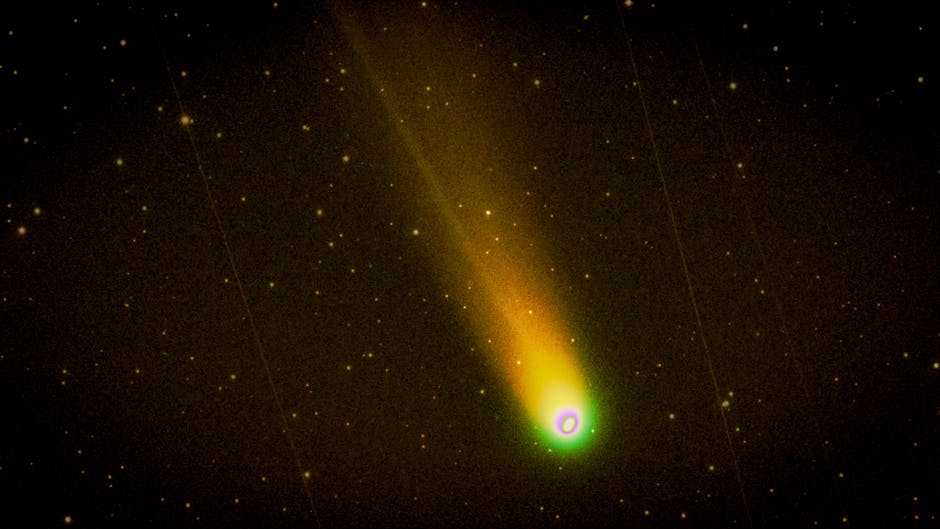
The European Space Agency’s Euclid space telescope has successfully identified its first previously unknown comet. The object, officially designated as C/2026 S1 (Euclid), was spotted in images taken by the telescope between September 16 and September 24, 2026. This discovery marks a notable achievement for the mission, which is primarily designed to study the hidden influences of dark matter and dark energy across the cosmos.
Euclid typically avoids the plane of the Solar System to minimize interference from dust and debris. By steering clear of this comet-rich band, the telescope ensures its sensitive instruments remain focused on deep-sky imaging. The accidental detection of C/2026 S1 occurred despite these deliberate efforts to avoid such objects, highlighting the telescope's high level of sensitivity.
The mission utilizes a unique step-and-stare imaging strategy to survey the sky. Because the telescope generally visits each section of the sky only once, astronomers cannot easily return to the same spot to confirm the characteristics of a newly found object. Scientists are currently working to refine the orbital period of the comet as they gather more data from the initial observations.
Tracking objects within our own Solar System is a necessary task for the Euclid team. Identifying these moving bodies allows researchers to remove unwanted noise from their images, such as comet trails or stray light. This process ensures that the final data remains clear for the mission's primary goal of mapping billions of galaxies.
Euclid is a collaborative international effort led by the European Space Agency with significant contributions from NASA. The project involves a consortium of more than 2,000 scientists from 300 institutes across Europe, the United States, Canada, and Japan. These researchers are responsible for providing the scientific instruments and analyzing the vast amounts of data returned by the spacecraft.
The mission was launched in July 2023 and has since begun to provide detailed insights into the structure of the universe. Beyond its survey work, the telescope has already captured high-resolution images of the Milky Way and identified ancient quasars. These contributions are helping scientists build a more comprehensive map of stellar evolution and galactic history.
As the mission continues, the data collected will help reveal how dark matter and dark energy have shaped the visible universe over billions of years. By observing the shapes and motions of distant galaxies, Euclid provides a window into the history of the cosmos. The discovery of C/2026 S1 serves as a reminder of the unexpected findings that can occur during large-scale astronomical surveys.
Future observations will continue to test the limits of the telescope's capabilities. Scientists expect that the ongoing analysis of Euclid's data will lead to further discoveries regarding the composition of the universe. The team remains focused on its long-term objective of understanding the fundamental forces that govern the expansion of space.
You've reached your free article limit
You've read 10 of 10 free articles this month. Subscribe to Planet Earth News Network for unlimited access to neutral, global journalism — plus puzzles, podcasts, and the weekly newsletter.
Already a subscriber? Sign in.
Ask the Author
Subscribers can ask the journalist a question about this story. Subscribe to ask.
Neutrality note
Auto-harvested from global news wires and presented neutrally by PENN.
to vote
Comments
No comments yet — be the first to share your thoughts.