Germany Advances Record Defense Budget to Modernize Armed Forces
The government plans a significant increase in military spending for 2027 to address long-term security needs and equipment upgrades.

PENN Explainer
Hear this story explained in 90 seconds.
The German federal cabinet has approved a draft budget for 2027 that includes a substantial increase in defense spending. This proposal aims to raise the defense budget to nearly 110 billion euros, representing a 33 percent increase over the 2026 figures. The move is part of a broader effort to strengthen the nation's military capabilities following years of reduced investment.
German Defence Minister Boris Pistorius recently told lawmakers that there is significant agreement regarding the necessity of this record-level funding. During a defense committee hearing in the Bundestag, he emphasized that the budget is essential for national security. The plan combines core ministry funds with resources from a special off-budget fund established in 2022.
Finance Minister Lars Klingbeil has defended the decision to increase borrowing to support these defense goals. He stated that the country cannot effectively defend itself while maintaining a strictly balanced budget. According to the finance ministry, Germany intends to commit over 780 billion euros to defense-related expenditures between 2026 and 2030.
Some critics have raised concerns about the government's procurement strategy, arguing that the focus remains too heavily on legacy hardware. In response, Pistorius pointed to the acquisition of advanced systems like the Leopard 2A8 tank as evidence of a commitment to modern technology. He also announced a new funding program to support research into artificial intelligence and unmanned systems at civilian universities.
Technological innovation is a central pillar of the current defense strategy. The German military is currently evaluating 30 different artificial intelligence tools to improve decision-support systems. A prototype for these systems is expected to be ready by 2027, with the goal of integrating them into existing NATO infrastructure.
This push for modernization comes as Germany seeks to reduce its reliance on foreign military technology. Officials have previously rejected certain foreign-made systems in favor of developing European alternatives. The current evaluation process involves mostly German companies, reflecting a desire to build domestic expertise in critical defense sectors.
Despite the focus on military growth, the budget proposal has faced scrutiny from various sectors. Some observers have criticized the reduction of spending in other areas, such as development aid and climate initiatives, to help balance the overall federal budget. Finance Minister Klingbeil has maintained that these trade-offs are necessary to address the current security environment.
Internal debates regarding procurement policy continue to influence the legislative process. Rafael Laguna de la Vera, the director of the Federal Agency for Breakthrough Innovation, has publicly called for more direct investment in military innovation. He has argued that current procurement policies may not be agile enough to keep pace with rapid technological changes.
International cooperation remains a key component of Germany's defense policy. The country has recently signed bilateral agreements with partners like Poland to enhance regional security coordination. These partnerships are intended to ensure that national investments align with broader collective defense goals within the European framework.
Parliamentary debates on the 2027 budget are expected to continue through the end of the year. Lawmakers will review the specific allocations for procurement, personnel, and research before a final vote. The outcome of these discussions will determine the pace and scale of Germany's ongoing military transformation.
You've reached your free article limit
You've read 10 of 10 free articles this month. Subscribe to Planet Earth News Network for unlimited access to neutral, global journalism — plus puzzles, podcasts, and the weekly newsletter.
Already a subscriber? Sign in.
Ask the Author
Subscribers can ask the journalist a question about this story. Subscribe to ask.
Neutralitätsvermerk
Auto-harvested from global news wires and presented neutrally by PENN.
to vote
Comments
No comments yet — be the first to share your thoughts.
Related stories in Defense & Military

Cyprus, France, and Sweden Establish Framework for Joint Anti-Tank Missile Procurement
2026-11-09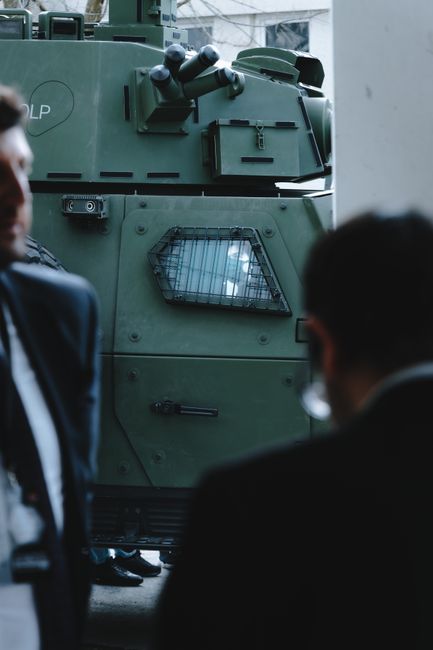
Germany and United Kingdom Strengthen Defense Ties Through New Strategic Partnership
2026-11-09