
Germany Approves €6.3 Billion Contract for New F128 Frigates
The German Bundestag has authorized the construction of four advanced frigates to bolster naval surveillance and anti-submarine capabilities in the North Atlantic.
PENN Explainer
Hear this story explained in 90 seconds.
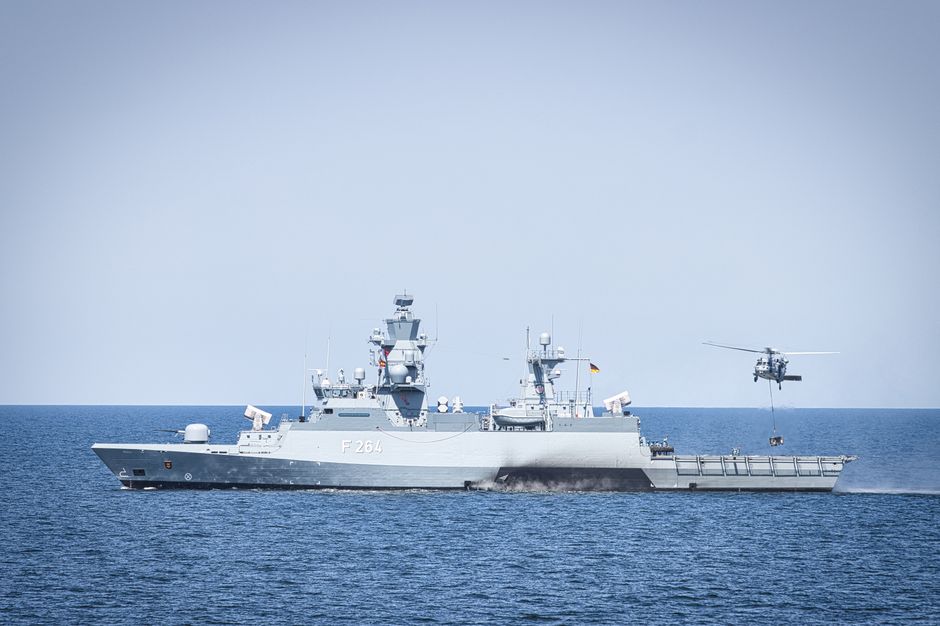
The German Bundestag Budget Committee officially approved €6.3 billion in funding on July 8, 2026, to begin the construction of four new F128 MEKO A-200 DEU frigates. This procurement initiative aims to address critical gaps in Germany's maritime security, specifically regarding the monitoring of Russian submarine activity in the North Atlantic. The contract was awarded to ThyssenKrupp Marine Systems, with the first vessel scheduled for delivery by December 2029.
Parliamentary officials included an option within the agreement to order four additional ships, which would bring the total fleet size to eight vessels. If the government chooses to exercise this option, the total investment for the program would reach approximately €11.6 billion. This expansion is intended to ensure that the German Navy maintains a consistent presence at sea, even when accounting for necessary maintenance and crew training cycles.
The F128 frigates are designed to serve as a capability-restoration project rather than a pursuit of experimental technology. By prioritizing standardization, the German military hopes to streamline operations and reduce the complexity of maintaining a diverse fleet. The ships will be equipped with advanced dipping sonar and torpedo systems to detect and track underwater threats effectively.
These vessels will also feature an airborne prosecution arm, allowing them to deploy helicopters for enhanced surveillance and response. Military planners emphasized that this combination of organic acoustic detection and aerial support is essential for modern naval operations. The procurement process was accelerated by replacing certain civilian certification requirements with military exemptions to speed up construction timelines.
This naval investment follows a broader trend of increased defense spending within Germany. In 2025, Germany’s military expenditure reached €114 billion, marking the first time since 1990 that the country's defense burden exceeded 2.0 percent of its gross domestic product. The government has pledged to continue this upward trajectory, aiming for 3.5 percent of GDP by 2029.
Beyond naval assets, the German armed forces, known as the Bundeswehr, have been rapidly modernizing other branches of their military. In April 2026, the military signed a billion-euro contract with Rheinmetall to modernize and procure new soldier systems. These systems are designed to integrate infantry units into the broader digital communication network used by the German army.
Earlier in the year, the Bundeswehr also moved to expand its fleet of PUMA infantry fighting vehicles. A contract amendment signed in December 2025 authorized the purchase of 200 additional vehicles, with a total value of €4.2 billion. These vehicles are expected to receive upgrades to improve their defensive capabilities against drone threats.
Despite these significant investments, some analysts have raised concerns about the efficiency of the procurement process. The central procurement agency, BAAINBw, has faced criticism regarding the speed of approvals and the internal culture surrounding liability for project leaders. Experts suggest that simplifying these administrative hurdles could help the military field new equipment more quickly.
Germany is also collaborating with international partners on long-term defense projects, including the development of a next-generation European fighter jet. Airbus is currently working with the German and Spanish governments to define the requirements for this future aircraft. These collaborative efforts reflect a wider European push to strengthen regional defense industries and reduce reliance on external suppliers.
As the security environment in Europe continues to evolve, the German government remains focused on balancing fiscal policy with the need for rapid military modernization. The success of these procurement programs will likely depend on the ability of the defense industry to meet delivery deadlines and integrate new technologies into existing structures. Future updates to the defense budget will be closely watched by NATO allies as Germany continues to increase its role in collective security.
You've reached your free article limit
You've read 10 of 10 free articles this month. Subscribe to Planet Earth News Network for unlimited access to neutral, global journalism — plus puzzles, podcasts, and the weekly newsletter.
Already a subscriber? Sign in.
Ask the Author
Subscribers can ask the journalist a question about this story. Subscribe to ask.
Neutrality note
Auto-harvested from global news wires and presented neutrally by PENN.
to vote
Comments
No comments yet — be the first to share your thoughts.
Related stories in Defense & Military
Hanwha Aerospace Breaks Ground on First European Missile Production Facility in Poland
2026-11-10
South Korea to Deploy Military Assets to Support Security in Strait of Hormuz
2026-11-10