Global Race for Next-Generation Solid-State and Sodium Batteries Accelerates as Pilot Lines Launch
Major automakers and research laboratories push alternative energy storage technologies toward commercial deployment to address mineral supply and safety challenges.
PENN Explainer
Hear this story explained in 90 seconds.
Automakers, national laboratories, and battery manufacturers around the world are accelerating investments in next-generation battery architectures as they push to overcome the limitations of traditional lithium-ion systems. The global energy storage sector is increasingly focusing on two distinct technological pathways: high-density solid-state cells designed for long-range transportation and low-cost sodium-ion chemistries intended for budget vehicles and stationary electrical grids.
Traditional lithium-ion batteries rely on liquid electrolytes to transfer ions between positive and negative terminals. While these systems currently dominate the consumer electronics and electric vehicle markets, they present notable challenges regarding thermal runaway risks, degradation rates, and supply-chain dependencies on scarce raw materials such as cobalt and high-grade lithium.
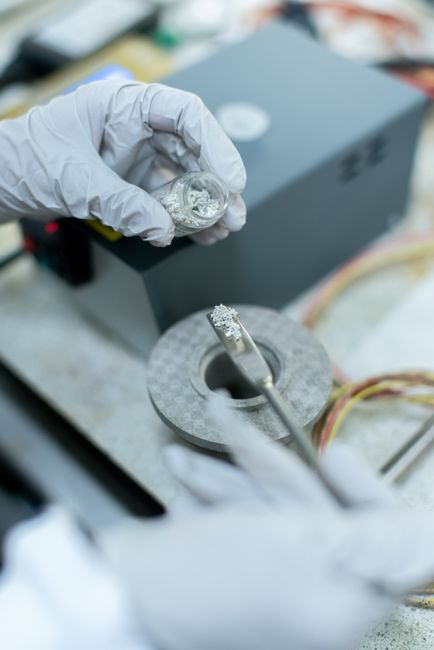
Solid-state technology replaces volatile liquid electrolytes with solid conductive materials, including ceramic, polymer, or composite matrices. This structural change significantly reduces flammability risks while allowing cells to operate safely with higher energy densities. Multiple manufacturers, including Toyota, Honda, and BMW, have established dedicated pilot manufacturing facilities to validate solid-state prototypes for automotive duty cycles.
In China, battery developers backed by major automotive groups have advanced prototype production lines to test full-scale solid-state cells. Recent demonstrations of composite electrolyte designs showed resilience under standard abuse evaluations, including physical crushing, extreme temperatures, and mechanical nail-penetration tests, without catching fire or exploding. Engineers are currently working to transition these prototypes from initial A-sample stages to gigawatt-hour manufacturing scale.
Alongside solid-state efforts, sodium-ion technology is emerging as an attractive solution for stationary storage and urban transit. Sodium is widely available, environmentally distributed across the globe, and significantly cheaper to extract than battery-grade lithium compounds. Recent developments by major producers have pushed sodium cell cycle lifespans up to 10,000 cycles using stable poly-anion material designs.
Government research agencies are also expanding domestic supply-chain initiatives to support alternative chemistries. In the United States, researchers at the Department of Energy's Argonne National Laboratory are directing consortia like the Low-cost Earth-abundant Na-ion Storage program to formulate resilient materials that avoid overseas mineral dependencies. Scientists use advanced computing systems and synchrotron facilities to study molecular degradation in alternative electrodes in real time.
Energy analysts point out that replacing established lithium-ion infrastructure will require significant capital and rigorous long-term testing. Current lithium-ion manufacturing benefits from decades of supply-chain optimization, economies of scale, and established recycling standards. Solid-state manufacturers still face technical hurdles in maintaining uniform contact between solid layers during repeated charge and discharge cycles.
Industry leaders emphasize that the future energy landscape will likely feature a mix of chemistries rather than a single dominant winner. Sodium-ion systems are poised to manage stationary electrical power grids and short-range mobility, while solid-state designs target aviation and premium electric transport. The parallel progression of these technologies marks a key phase in the global transition toward durable and diversified energy storage.
Ask the Author
Subscribers can ask the journalist a question about this story. Subscribe to ask.
Заметка о нейтральности
Auto-harvested from global news wires and presented neutrally by PENN.
to vote
Comments
No comments yet — be the first to share your thoughts.