Google DeepMind Integrates Gemini AI into Humanoid Robotics
New research explores how advanced AI models can control diverse robot bodies to perform complex physical tasks.

PENN Explainer
Hear this story explained in 90 seconds.
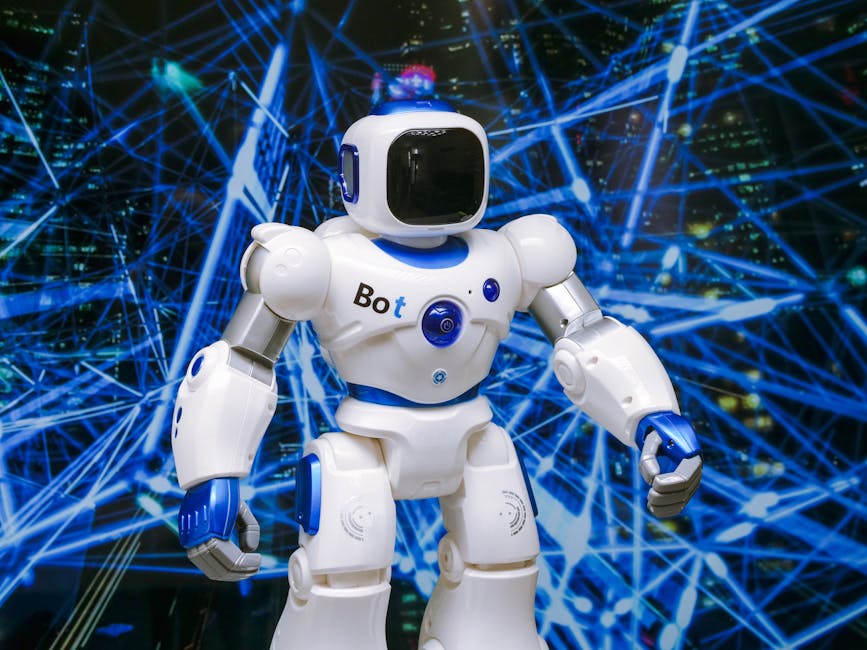
Google DeepMind is making a significant push into the field of physical artificial intelligence by integrating its Gemini AI model into humanoid robots. The initiative aims to create a versatile 'AI brain' capable of operating different types of robotic hardware. By moving beyond simple chatbots, researchers hope to enable robots to navigate and interact with the real world more effectively. Principal software engineer Kanishka Rao is leading efforts to make these machines more helpful in practical, everyday environments. The project represents a shift toward creating robots that can adapt to various tasks rather than being limited to a single function. Researchers are currently testing whether the intelligence of Gemini can successfully translate into physical movement and decision-making. This work involves controlling robots from their feet to their fingertips to ensure smooth and coordinated motion. The team is using platforms like Apptronik’s Apollo 2 to study how the AI manages complex physical interactions. These developments are part of a broader trend in the robotics industry to improve how machines learn and execute dexterous movements. Previous challenges in robotics often centered on mechanical issues like bipedal balance and motor control, which have largely been solved. The current focus has shifted toward the software and cognitive capabilities required for robots to perform human-like activities. For example, recent research has explored how robots can learn to tie shoelaces, hang shirts, or repair other machines using two-armed manipulation. These advancements rely on new AI systems that allow robots to learn from simulations and video demonstrations. As the technology matures, the goal is to create robots that can assist in industrial settings and potentially in domestic environments. The integration of large-scale AI models into physical bodies is seen as a major step toward more capable and autonomous machines. While the technology is still in the research phase, the progress highlights the rapid evolution of robotics in 2026.
Ask the Author
Subscribers can ask the journalist a question about this story. Subscribe to ask.
Neutrality note
Auto-harvested from global news wires and presented neutrally by PENN.
to vote
Comments
No comments yet — be the first to share your thoughts.