Indian Researchers Demonstrate Quantum Measure Exceeding Standard Probability Limits
Scientists at the Raman Research Institute have experimentally confirmed that quantum-world probability can surpass traditional mathematical boundaries.
PENN Explainer
Hear this story explained in 90 seconds.
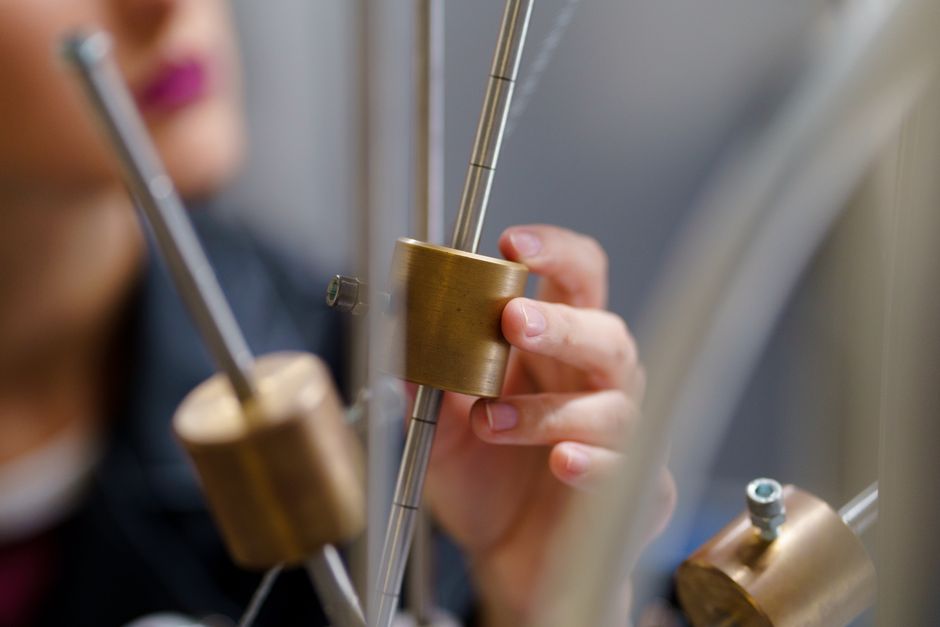
Researchers at the Raman Research Institute in Bengaluru, India, have achieved a significant milestone in the field of quantum physics. The team successfully demonstrated that a concept known as quantum measure can exceed the value of one. This finding challenges traditional understandings of probability that govern the classical world. In standard statistics, the sum of all possible outcomes in a system cannot be greater than one, or one hundred percent.
The experiment provides the first physical evidence that quantum systems operate under different mathematical rules than everyday objects. This discovery confirms theoretical work previously developed by physicist Rafael Sorkin, who pioneered Quantum Measure Theory. By observing these unique behaviors, the team has opened new doors for understanding how particles interact at the smallest scales. The experiment involved precise measurements of quantum states to track how these probabilities behave under controlled conditions.
Such results are essential for refining the fundamental laws that describe the universe. The ability to measure these values accurately marks a shift in how scientists approach quantum mechanics. This research could eventually influence the development of more advanced quantum technologies. Future studies will likely focus on how these findings apply to complex quantum networks and computing systems.
By proving that quantum measure can surpass traditional limits, the researchers have provided a clearer picture of the non-intuitive nature of the subatomic world. This work highlights the ongoing efforts of global scientific institutions to map the boundaries of modern physics.
You've reached your free article limit
You've read 10 of 10 free articles this month. Subscribe to Planet Earth News Network for unlimited access to neutral, global journalism — plus puzzles, podcasts, and the weekly newsletter.
Already a subscriber? Sign in.
Ask the Author
Subscribers can ask the journalist a question about this story. Subscribe to ask.
Neutrality note
Auto-harvested from global news wires and presented neutrally by PENN.
to vote
Comments
No comments yet — be the first to share your thoughts.
Related stories in Science & Technology
Astronomers Use Machine Learning to Unmask Hidden Planets in Telescope Data
2026-11-09
Physicists Create Record-Low Temperature Aboard China's Space Station
2026-11-09