
Indonesia and China Launch Strategic Partnership to Boost Domestic Garlic Production
The collaboration aims to strengthen national food security through seed provision and advanced cultivation techniques.
PENN Explainer
Hear this story explained in 90 seconds.
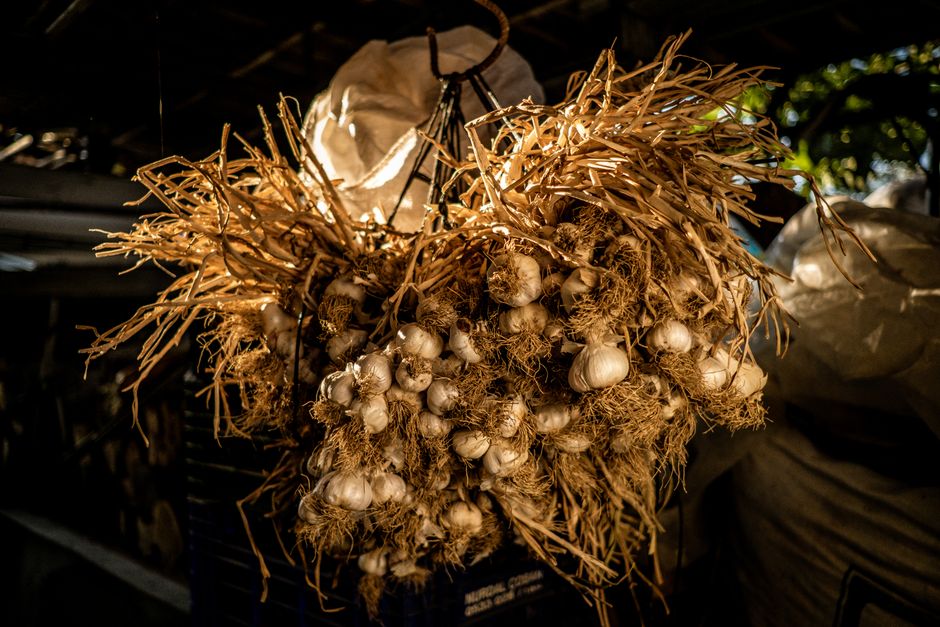
The Indonesian government has announced a new agricultural partnership with China focused on expanding domestic garlic production. Minister of Agriculture Amran Sulaiman confirmed that the initiative aims to develop 120,000 acres of land dedicated to the crop. This project is part of a broader strategy to enhance national food security and reduce reliance on imported supplies.
The collaboration was finalized following discussions between Minister Amran and China's Minister of Agriculture Zhang Zhu. Both officials identified garlic as a priority commodity for this bilateral effort. The agreement covers the entire production cycle, starting from the provision of high-quality seeds to the implementation of modern cultivation methods.
Indonesia has been working to stabilize its food supply chains through various international partnerships. Recently, the country reported that it has gone two years without importing rice, marking a significant milestone in its agricultural policy. Officials hope that the new garlic project will replicate this success by increasing local yields and supporting smallholder farmers.
This initiative is expected to provide farmers with the technical expertise needed to improve crop quality and consistency. By focusing on seed development, the government aims to ensure that the garlic varieties planted are well-suited to Indonesia's specific climate and soil conditions. These improvements are intended to make domestic production more competitive against international market prices.
The development of 120,000 acres represents a substantial investment in the nation's agricultural infrastructure. Local authorities are currently identifying suitable regions for the expansion to ensure optimal growing environments. This systematic approach is designed to minimize risks and maximize the output of the new farming zones.
Beyond garlic, Indonesia continues to explore diverse ways to modernize its agricultural sector. The government is actively seeking to integrate new technologies and sustainable practices into its food systems. These efforts are part of a long-term plan to ensure that the country can meet the nutritional needs of its growing population.
Food security remains a central pillar of Indonesia's economic policy as global market conditions fluctuate. By strengthening domestic production, the government aims to insulate the local market from the volatility of international trade. This strategy is viewed as a necessary step toward achieving greater self-sufficiency in essential food items.
Agricultural experts note that such partnerships are becoming increasingly common as nations look to share knowledge and resources. The cooperation with China provides Indonesia with access to advanced agricultural research and development. This exchange of information is expected to benefit both countries by fostering innovation in crop science and farm management.
Local farmers are expected to play a key role in the implementation of the new cultivation plans. The government intends to provide training and support to ensure that the transition to new methods is successful. This focus on human capital is intended to create sustainable livelihoods for rural communities involved in the project.
As the project moves forward, the Ministry of Agriculture will monitor progress to ensure that production targets are met. The success of this partnership could serve as a model for future collaborations involving other high-demand crops. Officials remain optimistic that these efforts will lead to a more resilient and productive agricultural sector for the country.
You've reached your free article limit
You've read 10 of 10 free articles this month. Subscribe to Planet Earth News Network for unlimited access to neutral, global journalism — plus puzzles, podcasts, and the weekly newsletter.
Already a subscriber? Sign in.
Ask the Author
Subscribers can ask the journalist a question about this story. Subscribe to ask.
Neutrality note
Auto-harvested from global news wires and presented neutrally by PENN.
to vote
Comments
No comments yet — be the first to share your thoughts.
Related stories in Agriculture & Food Security

European Feed Industry Faces Potential Supply Shortfalls Due to New Deforestation Regulations
2026-11-13
European Union Postpones Deforestation Regulation to 2026
2026-11-13