
Ingredient of the Day: Chives
A delicate perennial staple of the global kitchen
Hear this story explained in 90 seconds.
Chives
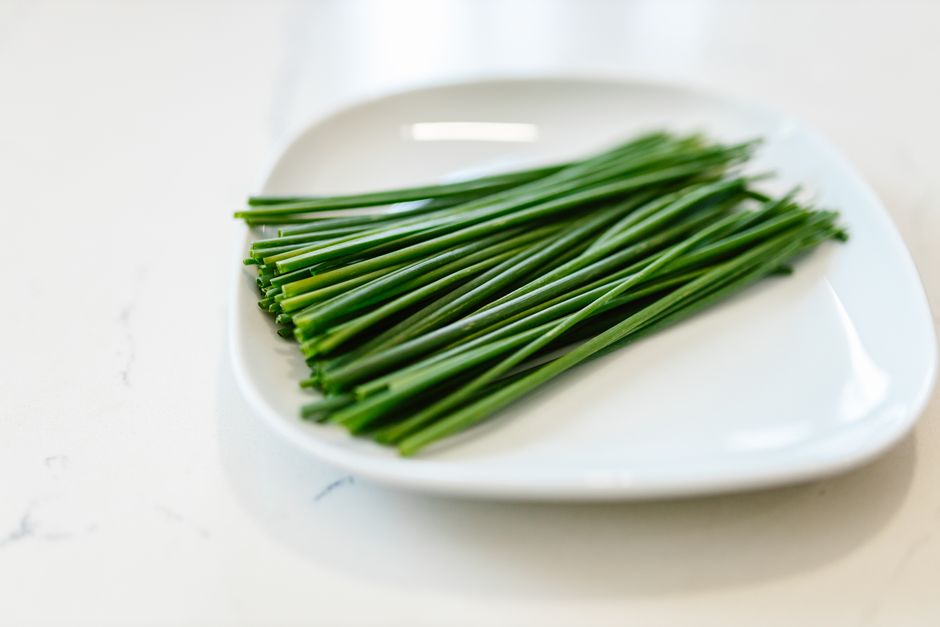
Chives, known botanically as Allium schoenoprasum, are a hardy, bulbous perennial herb belonging to the onion family. These plants are easily recognized by their slender, hollow, grass-like leaves that grow in dense, attractive clumps. Prized for their mild, subtle onion flavor, they serve as a versatile ingredient in kitchens across the globe.
Origin & History
The history of chives spans thousands of years, with evidence of their use dating back to ancient China around 5,000 years ago. According to the Arkansas Cooperative Extension Service, the species is native to both Asia and Europe, and it likely grew wild in Italy and Greece, making it familiar to ancient Roman and Greek civilizations. The name chive is derived from the French word cive, which traces back to the Latin word cepa, meaning onion. The botanical name, Allium schoenoprasum, combines the Greek words skhoinos, meaning sedge, and prason, meaning onion.
Production
Chives are widely considered one of the easiest herbs to cultivate in both home gardens and commercial settings. They thrive in full sun and well-drained soil, often reaching heights of 8 to 18 inches. Gardeners typically propagate them through seed or by dividing established clumps every three years to maintain plant vigor. Because they are hardy perennials, they can be grown in containers or as ornamental borders, and many growers bring potted clumps indoors during the winter to ensure a continuous supply of fresh leaves.
Culinary Uses
In the culinary world, chives are celebrated for their ability to add a delicate, onion-like brightness to a variety of dishes without the sharpness of larger alliums. They are a key component of the French fines herbes blend, which often includes tarragon, chervil, and parsley. Chefs frequently use them to garnish soups, salads, egg dishes, and potatoes, or incorporate them into compound butters, cream cheese spreads, and vinegars. Beyond the leaves, the plant produces edible violet flowers that serve as a visually striking garnish for salads and other savory preparations.
Nutrition & Facts
While chives are primarily used as a flavorful condiment, they are a staple of the herb garden that offers both aesthetic and practical value. They are known to be drought-resistant and can even act as a natural insect repellent in the garden. It is important to note that while they are safe for human consumption in typical culinary quantities, the University of Maryland Extension and other agricultural sources advise that the plant can have toxic characteristics for certain animals or individuals with specific sensitivities. For the best flavor, leaves should be harvested by snipping them near the base of the plant, and they are best used fresh, though they can be frozen for later use.
Recipe Featuring This Ingredient
Creamy Chive and Potato Soup
A comforting, velvety soup that highlights the fresh, mild onion flavor of garden-grown chives.
Prep time: 10 min | Cook time: 30 min | Total time: 40 min | Yield: 4 servings | Difficulty: Easy
Ingredients
- 900g Yukon Gold potatoes, peeled and cubed
- 30g unsalted butter
- 1 medium yellow onion, finely diced
- 1 liter vegetable or chicken stock
- 240ml heavy cream
- 30g fresh chives, finely chopped
- 5g sea salt
- 2g black pepper
Instructions
- Melt the butter in a large pot over medium heat and sauté the diced onion until translucent, about 5 minutes.
- Add the cubed potatoes and stock to the pot, bringing the mixture to a boil before reducing the heat to a simmer.
- Cook for 15 to 20 minutes, or until the potatoes are fork-tender.
- Use an immersion blender to process the soup until smooth and creamy.
- Stir in the heavy cream, salt, and pepper, heating gently for another 3 minutes without letting the soup boil.
- Remove from heat and stir in two-thirds of the chopped chives, serving immediately with the remaining chives sprinkled on top as a garnish.
Notes
This soup pairs excellently with crusty sourdough bread. For a lighter version, substitute the heavy cream with whole milk or Greek yogurt. Store any leftovers in an airtight container in the refrigerator for up to three days.
You've reached your free article limit
You've read 10 of 10 free articles this month. Subscribe to Planet Earth News Network for unlimited access to neutral, global journalism — plus puzzles, podcasts, and the weekly newsletter.
Already a subscriber? Sign in.
Subscribers can ask the journalist a question about this story. Subscribe to ask.
Ingredient of the Day feature by the PENN Food & Spirits Desk.
Comments
No comments yet — be the first to share your thoughts.
PENN's lifestyle and culinary department, covering global cuisine — the origins, traditions, and recipes behind the world's dishes, with deep histories and cultural context that go beyond the plate. and PENN's beverage-focused culinary team, dedicated to spirits and drinks — covering distilleries, breweries, and producers worldwide, with histories, tasting notes, professional reviews, and cocktail traditions.
View all articles by Desk →
