
Ingredient of the Day: Dill
A fragrant herb with a storied past and a place in kitchens across the globe
Hear this story explained in 90 seconds.
Dill
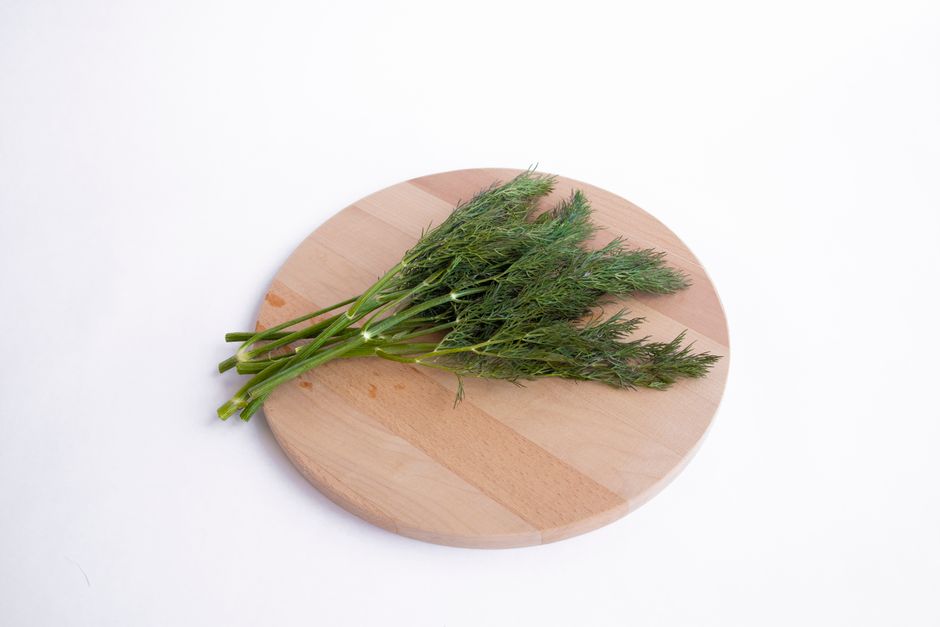
Dill, known botanically as Anethum graveolens, is a versatile aromatic herb belonging to the Apiaceae family, which also includes carrots and parsley. This feathery, blue-green plant is prized for both its delicate foliage, often called dill weed, and its pungent seeds. Whether used as a fresh garnish or a foundational pickling spice, dill remains a staple in culinary traditions worldwide.
Origin & History
Dill is native to the Mediterranean region, southern Russia, and parts of western Asia. According to the North Carolina Extension Gardener Plant Toolbox, the genus name Anethum derives from the Greek word for soothing, while the species name graveolens refers to its strong, distinct scent. Historical records indicate that ancient Egyptians utilized the herb as early as 1500 B.C.E., and it has been a fixture in Ayurvedic medicine in India for centuries. By the time it reached England in the 16th century, it was already well-established as both a medicinal remedy for digestive ailments and a culinary seasoning.
Production
Cultivating dill is a straightforward process that requires full sun and well-drained, slightly acidic soil. As noted by the University of Minnesota Extension, the plant does not transplant well due to its long taproot, so seeds should be sown directly into the garden bed in early spring. Gardeners can stagger plantings every few weeks to ensure a continuous supply of fresh leaves throughout the growing season. Harvesting should occur before the plant produces its yellow, umbrella-like flower clusters, as the flavor of the foliage is most potent during the vegetative stage.
Culinary Uses
Dill is perhaps most famous for its role in pickling, where its seeds and flower heads provide a signature sharp flavor to cucumbers and other vegetables. Beyond the pickle jar, it is a cornerstone of Eastern European, Scandinavian, and Russian cuisines, frequently appearing in dishes like borscht, gravlax, and creamy potato salads. In the Middle East and India, the herb is often incorporated into legume dishes, rice, and savory pies. Because the delicate leaves lose their aromatic oils quickly when heated, chefs typically add fresh dill at the very end of the cooking process to preserve its bright, grassy notes.
Nutrition & Facts
Dill is more than just a flavorful garnish, as it contains various minerals, proteins, and fiber. Historically, the plant has been used as a carminative to soothe the stomach and relieve gas, a property that likely inspired the common name derived from the Norse word dilla, meaning to lull. Beyond the kitchen, the essential oils extracted from the plant are used in the fragrance industry for soaps and perfumes. Interestingly, the plant also serves as a beneficial companion in the garden, as it attracts pollinators and predatory insects that help manage garden pests.
Recipe Featuring This Ingredient
Creamy Dill Potato Salad
A refreshing and classic side dish that highlights the bright, herbaceous notes of fresh dill paired with tender potatoes.
Prep time: 15 min | Cook time: 20 min | Total time: 35 min | Yield: 6 servings | Difficulty: Easy
Ingredients
- 900g baby potatoes, halved
- 120ml sour cream
- 60ml mayonnaise
- 30g fresh dill, finely chopped
- 15ml Dijon mustard
- 15ml lemon juice
- 1 tsp salt
- 0.5 tsp black pepper
Instructions
- Place the potatoes in a large pot of salted water and bring to a boil over medium-high heat.
- Cook the potatoes for 15 to 20 minutes until they are fork-tender but still hold their shape.
- Drain the potatoes thoroughly and allow them to cool to room temperature.
- In a medium bowl, whisk together the sour cream, mayonnaise, dill, mustard, lemon juice, salt, and pepper until smooth.
- Gently fold the cooled potatoes into the dressing until evenly coated.
- Chill the salad in the refrigerator for at least one hour before serving to allow the flavors to meld.
Notes
This salad can be stored in an airtight container in the refrigerator for up to three days. For a variation, add diced celery or red onion for extra crunch, or substitute Greek yogurt for the sour cream to create a lighter dressing.
You've reached your free article limit
You've read 10 of 10 free articles this month. Subscribe to Planet Earth News Network for unlimited access to neutral, global journalism — plus puzzles, podcasts, and the weekly newsletter.
Already a subscriber? Sign in.
Subscribers can ask the journalist a question about this story. Subscribe to ask.
Ingredient of the Day feature by the PENN Food & Spirits Desk.
Comments
No comments yet — be the first to share your thoughts.
PENN's lifestyle and culinary department, covering global cuisine — the origins, traditions, and recipes behind the world's dishes, with deep histories and cultural context that go beyond the plate. and PENN's beverage-focused culinary team, dedicated to spirits and drinks — covering distilleries, breweries, and producers worldwide, with histories, tasting notes, professional reviews, and cocktail traditions.
View all articles by Desk →
