
Kenya Advances National Agri-Food Systems Investment Plan to Boost Food Security
New strategic framework aims to transition the nation from fragmented subsistence farming to a coordinated, climate-smart, and commercially viable agricultural sector.
PENN Explainer
Hear this story explained in 90 seconds.
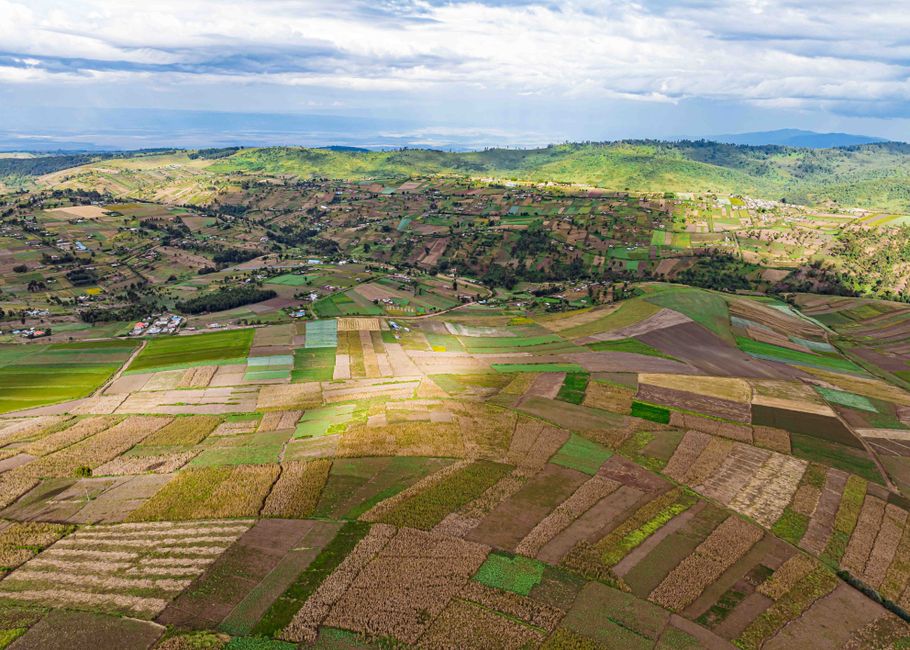
Kenya is currently implementing the National Agri-Food Systems Investment Plan, a comprehensive blueprint designed to transform the country's agricultural sector between 2026 and 2030. The initiative seeks to move the nation away from fragmented subsistence farming toward a more coordinated and commercially viable model. This shift is intended to strengthen the country's food and nutrition security while fostering long-term economic growth. Agriculture remains a cornerstone of the Kenyan economy, employing approximately 40 percent of the total population and 70 percent of rural residents.
The government has demonstrated its commitment to this transformation by increasing the national agriculture budget to 77.7 billion shillings for the 2025/2026 fiscal year. This funding is being directed toward mobilizing investments across both county and national levels to support sustainable development. Officials emphasize that the plan is essential for addressing the rising challenges posed by climate change and unsustainable farming practices. By focusing on climate-smart techniques, the government hopes to build a more resilient agricultural foundation.
Recent developments in the sector include a significant expansion of the Galana-Kulalu farming project, which received 13 billion shillings in backing from Equity Bank. This investment highlights the growing role of private sector partnerships in scaling up agricultural production. Such financial support is crucial for improving infrastructure, including storage facilities and cold chains, which are necessary to reduce post-harvest losses. These efforts are part of a broader strategy to integrate smallholder farmers into more efficient value chains.
Innovation in crop science is also playing a vital role in these national efforts. The Kenya Agriculture and Livestock Organization has recently registered four new climate-smart range grass varieties to support the livestock sector. These varieties are intended for commercial multiplication and distribution to farmers facing feed shortages. By reducing reliance on imported seeds, the country aims to make quality agricultural inputs more accessible and affordable for local producers.
Urban agriculture is emerging as another key component of Kenya's food security strategy. In Nairobi, model urban farmers are utilizing vertical farming techniques and organic methods to maximize productivity in limited spaces. The Ministry of Agriculture has recognized these efforts, providing training and support to help urban residents contribute to local food supplies. These small-scale initiatives are being integrated into broader urban planning and food policy deliberations.
International collaboration continues to support these domestic goals through various projects and summits. The Food and Agriculture Organization of the United Nations recently launched a 50 million dollar project in the Lake Region Economic Bloc to promote climate-resilient, low-carbon farming. This six-year initiative focuses on transforming critical value chains, including coffee, tea, and poultry, to benefit millions of people. Such partnerships are essential for sharing technical expertise and securing funding for large-scale agricultural improvements.
During the World Farmers Markets Coalition Fourth General Assembly held in Nairobi this October, experts discussed the importance of local food systems. Participants highlighted that global food security increasingly depends on the ability of territories to govern their own food production. The conference emphasized the need for a paradigm shift toward the co-creation of resilient and equitable food systems. These local models are seen as vital spaces for innovation and participatory governance.
Despite these advancements, researchers note that the relationship between commercialization and food security remains complex. A study published in June 2025 indicated that while commercialization can boost productivity, smallholder farmers often face significant barriers to market entry. Factors such as farm size, crop diversity, and access to resources are critical in determining whether commercial efforts lead to improved food security. Policymakers are now working to create an enabling environment that addresses these diverse needs.
Financial inclusion is also being addressed through new fintech solutions and private-sector deals. For instance, the platform Kaleidofin recently closed a landmark local currency securitization for smallholder agriculture, mobilizing 276 million shillings. This type of financing helps bridge the gap for farmers who previously lacked access to traditional credit markets. Expanding such financial tools is a priority for ensuring that investments reach the grassroots level.
As Kenya moves forward with its 2030 development goals, the focus remains on accountability and efficiency. Leaders are tasked with ensuring that every shilling invested in the sector delivers tangible value to farmers and consumers alike. The ongoing integration of digital extension services and improved water management systems will be key indicators of progress. These combined efforts aim to secure a more stable and prosperous future for the nation's food systems.
You've reached your free article limit
You've read 10 of 10 free articles this month. Subscribe to Planet Earth News Network for unlimited access to neutral, global journalism — plus puzzles, podcasts, and the weekly newsletter.
Already a subscriber? Sign in.
Ask the Author
Subscribers can ask the journalist a question about this story. Subscribe to ask.
Neutrality note
Auto-harvested from global news wires and presented neutrally by PENN.
to vote
Comments
No comments yet — be the first to share your thoughts.
Related stories in Agriculture & Food Security

Kenya Expands Precision Farming Initiatives to Combat Severe Drought and Food Insecurity
2026-11-14
Kenya Faces Record Maize Import Needs Following Severe Drought
2026-11-14