
Literature of the Day: Assia Djebar
Blending history and memoir in Fantasia: An Algerian Cavalcade, this Francophone author gave voice to the women of North Africa.
Hear this story explained in 90 seconds.
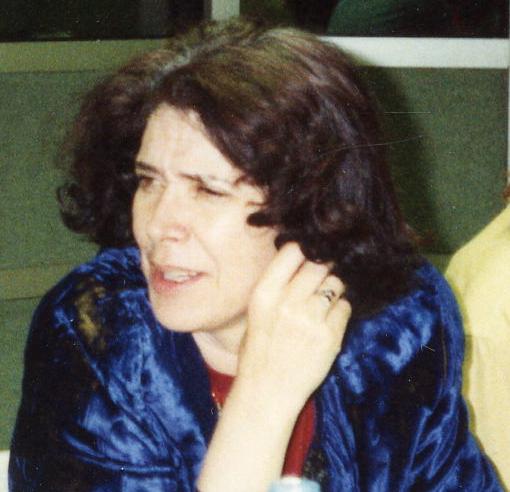
Assia Djebar
Assia Djebar was an Algerian novelist, filmmaker, and academic who wrote extensively about the lives of North African women and the legacy of French colonialism. Writing primarily in French, she became one of the most prominent voices in Francophone literature before her death in 2015, according to [Assia Djebar | Algerian Feminist Writer & Filmmaker | Britannica](http://www.britannica.com/print/article/166891). Her work frequently blends historical archives with personal memory to examine the intersection of language, gender, and national identity.
The Author
Born Fatima-Zohra Imalayen in 1936 in the coastal town of Cherchell, Algeria, Djebar grew up within the French colonial educational system. She studied at the Sorbonne in Paris and later taught history and literature at universities in Algeria, France, and the United States. Her decision to write in French, the language of the colonizer, rather than Arabic, shaped her entire literary trajectory. This linguistic choice allowed her to reach an international audience while simultaneously creating a complex relationship with her native culture, a tension she explored throughout her career, as noted in [Fantasia: An Algerian Cavalcade | Encyclopedia.com](https://www.encyclopedia.com/arts/culture-magazines/fantasia-algerian-cavalcade).
The Craft
Djebar is recognized for a polyphonic narrative style that weaves together multiple voices, historical documents, and autobiographical fragments. Her sentences often carry a rhythmic, meditative quality that reflects the oral storytelling traditions of Algerian women. Instead of relying on traditional linear plots, she constructs her novels as layered mosaics, placing nineteenth-century colonial reports alongside the intimate, domestic experiences of twentieth-century women. Critics note that her writing functions as an act of translation, bringing the silenced histories of marginalized women into the formal structure of the French language, as detailed in the [International Journal of Social Science and Economic Research](https://ijsser.org/2018files/ijsser_03__221.pdf).
From the Page
Fillette arabe allant pour la première fois à l'école, un matin d'automne, main dans la main du père.
Translated by Dorothy S. Blair
A little Arab girl going to school for the first time, one autumn morning, walking hand in hand with her father.
This opening sentence from her 1985 novel establishes the foundational conflict of the narrator's life. By focusing on the physical act of a father leading his daughter to a French school, Djebar introduces the dual forces of patriarchal authority and colonial education. The image is quiet and ordinary, yet it marks a permanent departure from the traditional, cloistered world of her female ancestors. Scholars admire how this brief, factual statement sets the stage for a sweeping examination of how language and education both liberate and alienate the colonized subject.
Reading Guide
- Fantasia: An Algerian Cavalcade (1985): This novel intertwines the 1830 French conquest of Algeria with the author's own coming-of-age story, making it the essential starting point for understanding her approach to history.
- A Sister to Scheherazade (1987): The second volume in her Algerian Quartet explores the contrasting lives of two women married to the same man, offering a detailed look at domestic confinement and female solidarity.
- Algerian White (1995): A deeply personal narrative that reflects on the lives of friends and intellectuals lost to violence, providing crucial context for Algeria's post-independence struggles.
You've reached your free article limit
You've read 10 of 10 free articles this month. Subscribe to Planet Earth News Network for unlimited access to neutral, global journalism — plus puzzles, podcasts, and the weekly newsletter.
Already a subscriber? Sign in.
Subscribers can ask the journalist a question about this story. Subscribe to ask.
Literature of the Day: a passage quoted verbatim and checked against independent sources, with the original language shown alongside the English translation.
Comments
No comments yet — be the first to share your thoughts.
Books & Literature Desk, Planet Earth News Network
View all articles by Desk →

