Musée Jacquemart-André in Paris Stages Landmark Exhibition of Spanish Baroque Masterpieces
Historic loan from New York's Hispanic Society of America brings rare works by Velázquez, El Greco, and Zurbarán together in France.
PENN Explainer
Hear this story explained in 90 seconds.
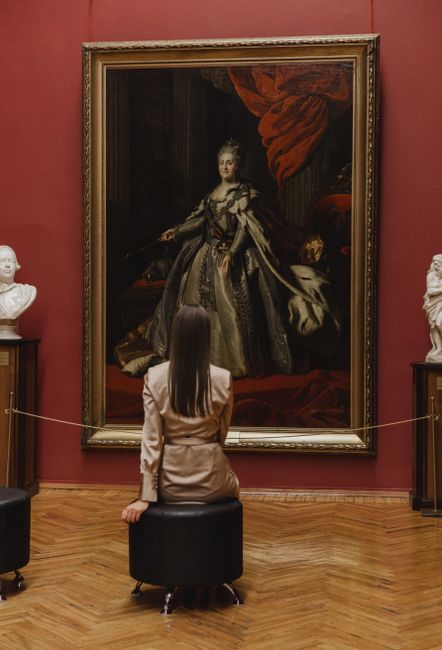
The Musée Jacquemart-André in Paris has opened an ambitious exhibition celebrating the Spanish Golden Age, bringing together roughly 40 landmark paintings by some of history's most celebrated artists. Titled 'Baroque Splendors: From El Greco to Velázquez', the presentation draws heavily from the world-renowned holdings of the Hispanic Society of America in New York City. The project marks the first time that many of these masterworks have crossed the Atlantic for a dedicated museum presentation in France.
Organizers designed the exhibition to offer visitors a deep look into the visual power and spiritual complexity of 17th-century Iberian art. Masterpieces by Diego Velázquez, El Greco, Francisco de Zurbarán, and Bartolomé Esteban Murillo anchor the galleries. Together, the works illustrate the evolution of Spanish Baroque painting, from dramatic religious compositions to psychological court portraits.
The Hispanic Society of America, founded in 1904 by philanthropist Archer Milton Huntington, holds one of the most comprehensive collections of Spanish, Portuguese, and Latin American art outside the Iberian Peninsula. Curators in Paris worked closely with their counterparts in Manhattan to coordinate the secure transit and display of the delicate historical canvases. Museum administrators noted that international loans of this magnitude require months of preparation and strict environmental controls.
Visitors can observe how artists of the Spanish Golden Age handled light and shadow to evoke religious devotion and human emotion. El Greco’s elongated forms and expressive color choices provide a striking contrast to the quiet realism and austere dignity seen in Zurbarán’s paintings of saints and monastics. Velázquez’s sharp observation of human character is represented through several fine examples of his refined portraiture.
The Musée Jacquemart-André, situated on the Boulevard Haussmann, offers an intimate architectural setting for the grand canvases. Originally built in the late 19th century as a private mansion by art collector Édouard André and his painter wife Nélie Jacquemart, the museum regularly hosts specialized temporary exhibitions within its historic staterooms. The period interiors provide a decorative backdrop that complements the dramatic flair of Baroque compositions.
Cultural historians highlight the show as an important cross-border exchange between American and French cultural institutions. The collaboration allows European audiences to engage directly with works preserved abroad, while drawing public attention to the educational mission of the Hispanic Society. Scholars also noted that the exhibition encourages modern viewers to re-examine the shared artistic currents that shaped European culture during an era of global expansion.
In addition to religious altarpieces, the exhibition features genre scenes and secular portraits that illustrate everyday life, aristocratic hierarchy, and social customs across the Spanish empire. Detailed wall texts and audio guides provide contextual history, explaining how political developments and Counter-Reformation theology directly influenced artistic patronage in Madrid, Seville, and Toledo.
Museum directors reported strong public interest and heavy advance ticketing ahead of the opening weeks. To manage gallery capacities and protect the historic structure, the institution implemented timed-entry reservation slots throughout the run of the exhibition. Special lecture series, guided tours, and academic symposia have also been scheduled to accompany the presentation.
Art critics across Europe have welcomed the survey as one of the standout classical painting exhibitions of the season. Commentators pointed out that while modern and contemporary installations frequently dominate major gallery spaces, thoughtful gatherings of Old Masters continue to draw dedicated and diverse crowds. The show will remain on view at the Parisian venue through early August, providing visitors several months to view the assembled treasures.
Following its run in Paris, the loaned artworks are scheduled to return to New York City for reinstallation in the Hispanic Society’s permanent galleries. Officials from both institutions praised the partnership as a model for future international cultural cooperation, emphasizing that shared heritage initiatives help keep classical art accessible to broader global audiences.
Ask the Author
Subscribers can ask the journalist a question about this story. Subscribe to ask.
Neutrality note
Auto-harvested from global news wires and presented neutrally by PENN.
to vote
Comments
No comments yet — be the first to share your thoughts.
Related stories in Art and Culture

Granada Launches Neorama Festival to Showcase Emerging Musical Talent
2026-09-27
Paris Landmark Transformed by Artist JR with Giant Inflatable Cave Installation
2026-09-27