NASA's Voyager 1 Probe Restores Full Communications from Interstellar Space
The historic spacecraft successfully resumed normal operations after overcoming a complex technical glitch in deep space.
PENN Explainer
Hear this story explained in 90 seconds.
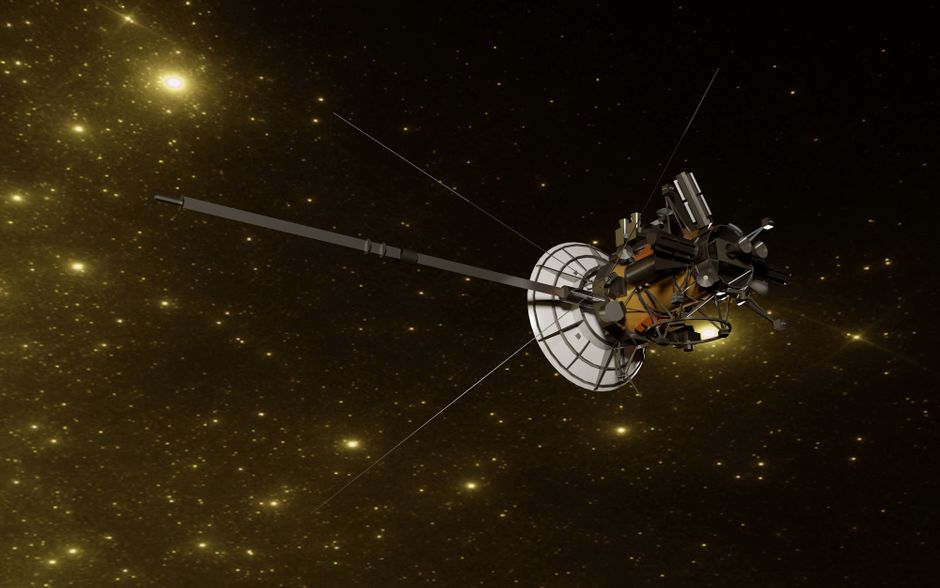
NASA's legendary Voyager 1 probe has successfully restored full communications with Earth after experiencing a significant technical malfunction while traveling through interstellar space. The spacecraft, which has been operating for nearly five decades, encountered a communications glitch that temporarily disrupted the flow of scientific data back to mission controllers. Engineers at NASA's Jet Propulsion Laboratory worked diligently to diagnose the issue from billions of miles away. Their efforts have now allowed the probe to resume its mission of exploring the region beyond our solar system.
This recovery marks another milestone for the aging but resilient spacecraft as it continues its journey into the unknown. The Voyager 1 mission remains one of the most ambitious and successful endeavors in the history of space exploration. Launched in 1977, the probe has provided humanity with unprecedented insights into the outer planets and the interstellar medium. Its ability to continue functioning after so many years is a testament to the engineering standards of the era.
Scientists rely on the data transmitted by the probe to understand the conditions of space far beyond the influence of the Sun. The recent restoration of full operations ensures that the spacecraft can continue to send valuable information back to researchers on Earth. Maintaining contact with a probe at such a vast distance requires precise coordination and advanced technology. The team at the Jet Propulsion Laboratory utilized backup systems and remote troubleshooting techniques to bypass the faulty components.
This process involved sending commands that took nearly a full day to reach the spacecraft due to the immense distance. The successful resolution of this incident highlights the ongoing dedication of the mission team to keep the probe active. Future operations will focus on managing the limited power supply to extend the life of the onboard instruments. As the probe drifts further into interstellar space, every bit of data it collects remains highly significant to the global scientific community.
The mission continues to inspire new generations of astronomers and engineers interested in the mysteries of the cosmos. NASA plans to continue monitoring the health of the spacecraft closely as it ventures deeper into the galaxy.
You've reached your free article limit
You've read 10 of 10 free articles this month. Subscribe to Planet Earth News Network for unlimited access to neutral, global journalism — plus puzzles, podcasts, and the weekly newsletter.
Already a subscriber? Sign in.
Ask the Author
Subscribers can ask the journalist a question about this story. Subscribe to ask.
Neutrality note
Auto-harvested from global news wires and presented neutrally by PENN.
to vote
Comments
No comments yet — be the first to share your thoughts.