New Hubble Images Reveal Bizarre Decagon Pattern Over Saturn’s South Pole
Astronomers analyze strange geometric weather patterns in the atmosphere of the ringed planet.
PENN Explainer
Hear this story explained in 90 seconds.
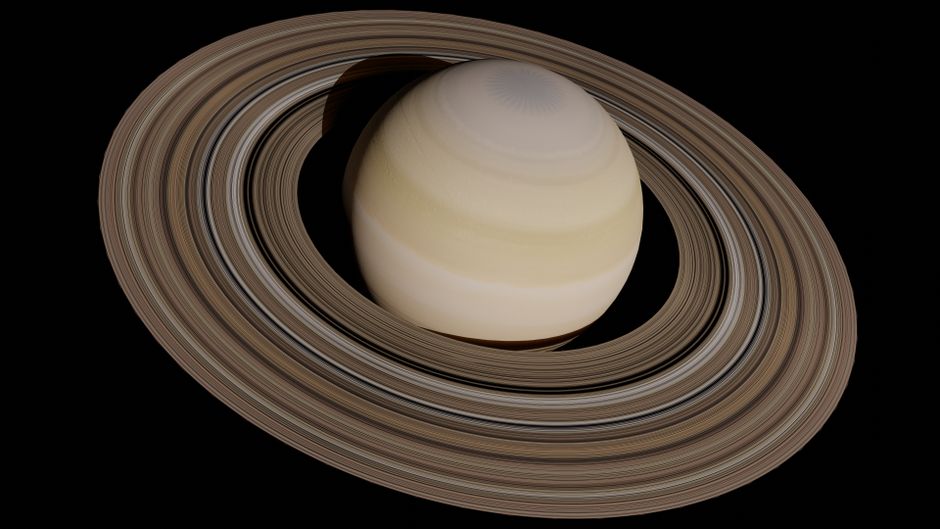
Astronomers have recently captured striking new images of Saturn using the Hubble Space Telescope, revealing a mysterious and complex weather pattern. The data shows a distinct decagon-shaped structure swirling over the planet's south pole. This geometric formation has captured the attention of planetary scientists who study the unique atmospheric dynamics of gas giants. While Saturn is well-known for its iconic rings, its polar regions often host unusual and long-lasting storm systems. The discovery of a ten-sided shape adds a new layer of complexity to our understanding of how these massive planets manage their internal heat and wind currents. Researchers are now working to determine the physical mechanisms that allow such a precise shape to persist in a turbulent environment. Unlike the famous hexagonal storm at Saturn's north pole, this southern decagon appears to have different characteristics in its formation and stability. Scientists believe that the interaction between deep-seated planetary winds and the planet's rapid rotation plays a critical role in creating these patterns. By comparing the northern hexagon with this new southern decagon, experts hope to build a more comprehensive model of Saturn's climate. The images were processed using advanced imaging techniques to highlight the subtle temperature and pressure differences within the clouds. These findings are part of a broader effort to monitor the long-term changes in the atmospheres of outer planets. Understanding these phenomena helps researchers refine theories about fluid dynamics that apply not only to Saturn but also to other rotating bodies in the universe. The scientific community plans to continue observing the region to see if the decagon evolves or remains stable over time. Such observations are essential for testing computer simulations that predict how storms behave on planets without solid surfaces. As data continues to arrive from space-based observatories, the study of Saturn's poles remains a vibrant area of planetary science.
Ask the Author
Subscribers can ask the journalist a question about this story. Subscribe to ask.
तटस्थता टिप्पणी
Auto-harvested from global news wires and presented neutrally by PENN.
to vote
Comments
No comments yet — be the first to share your thoughts.