
Russian Strikes Kill Eight in Ukraine as President Vladimir Putin Issues New Warning to European Leaders
Deadly attacks strike Ukrainian regions while Moscow warns Western nations against increasing military deployments and deep involvement.
PENN Explainer
Hear this story explained in 90 seconds.
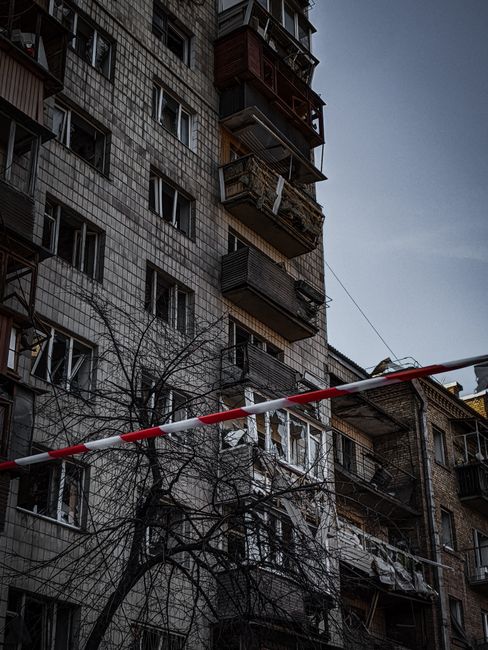
A series of Russian strikes across Ukraine has killed at least eight people and injured dozens of others, according to local Ukrainian emergency officials and regional authorities. The strikes struck multiple residential neighborhoods and critical infrastructure sites, disrupting power and basic services in impacted areas. Emergency crews deployed immediately to sift through rubble, extinguish fires, and provide urgent medical care to survivors trapped beneath damaged buildings.
The deadly assaults took place as Russian President Vladimir Putin issued a stern warning directly to European governments regarding their deepening defense cooperation with Ukraine. Speaking during a high-level government address, Putin cautioned European leaders against expanding direct military support or stationing any armed personnel inside Ukrainian borders. He asserted that any foreign deployment would represent a dangerous escalation that Moscow would view as direct involvement in the conflict.
Ukrainian officials condemned the latest bombardments as deliberate attempts to terrorize civilian populations and disable municipal infrastructure ahead of the colder months. Local governors reported that search-and-rescue operations continued late into the evening, with rescue teams working under difficult conditions to locate missing residents. Municipal engineers were simultaneously dispatched to restore electricity grids, water mains, and emergency heating networks damaged by the blasts.
In Kyiv, Ukrainian leaders reiterated urgent appeals to international partners for additional modern air defense systems, interceptor missiles, and radar tracking equipment. Officials stressed that sustained air defense assistance remains essential to protect urban population centers, schools, and hospitals from long-range precision attacks. They emphasized that without continuous air protection, critical utility networks face ongoing vulnerability to coordinated missile and drone barrages.
Across European capitals, government leaders responded swiftly to President Putin's remarks, rejecting Moscow's warnings and pledging continued solidarity with Ukraine. Representatives from France, Germany, and the United Kingdom affirmed that their defensive assistance programs comply fully with international law and the United Nations Charter. European diplomats stated that sovereign nations retain the legal right to provide logistical, financial, and material backing to defend national sovereignty.
The exchange comes at a delicate diplomatic moment, as North Atlantic Treaty Organization (NATO) member states deliberate over longer-term security compacts and joint arms production initiatives with Kyiv. Several European defense ministers noted that defense discussions are centered on strengthening Ukraine's domestic manufacturing capabilities, training armed forces personnel, and supplying ammunition stockpiles. European officials reiterated that their objective remains securing a stable and lasting peace based on established territorial borders.
Military analysts point out that recent front-line operations have seen intense artillery duels and localized skirmishes across both eastern and southern battlefronts. With neither military achieving decisive breakthrough momentum, long-range aerial strikes have increasingly become a primary mechanism for targeting logistical lines and supply depots. Civilian monitoring agencies have raised heightened concerns regarding the persistent toll these regular missile campaigns take on non-combatant populations.
International humanitarian agencies, including the International Committee of the Red Cross, have renewed calls for strict adherence to international humanitarian conventions. The organizations underscored that civilian lives, healthcare facilities, and civil power grids must never be targeted during military hostilities. Relief coordinators warned that mounting structural damage across municipal centers poses severe logistical hurdles for distributing aid, medicine, and food provisions to vulnerable households.
Global energy markets also reacted with caution to the heightened tensions and rhetoric between Moscow and European leadership. Analysts noted that potential instability in regional energy transport hubs and continuing uncertainty surrounding European security continue to generate volatility across commodity exchanges. Financial observers underscored that sustained geopolitical friction presents ongoing challenges for international supply chains and economic recovery plans.
Diplomatic efforts to organize multilateral peace frameworks remain active but heavily constrained by opposing preconditions set by both warring parties. United Nations representatives continue to advocate for dialogue, humanitarian corridors, and adherence to international protocols, urging all participants to prioritize civilian safety. As recovery efforts progress in the struck Ukrainian municipalities, international scrutiny remains sharply focused on upcoming diplomatic forums and defense consultations.
You've reached your free article limit
You've read 10 of 10 free articles this month. Subscribe to Planet Earth News Network for unlimited access to neutral, global journalism — plus puzzles, podcasts, and the weekly newsletter.
Already a subscriber? Sign in.
Ask the Author
Subscribers can ask the journalist a question about this story. Subscribe to ask.
Neutrality note
Auto-harvested from global news wires and presented neutrally by PENN.
to vote
Comments
No comments yet — be the first to share your thoughts.
Related stories in World/International

Global Climate Summit COP31 Opens in Turkey Amid Calls for Urgent Action
2026-11-12
Brazil Updates Bolsa Família Program with Increased Benefits and Administrative Adjustments
2026-11-11