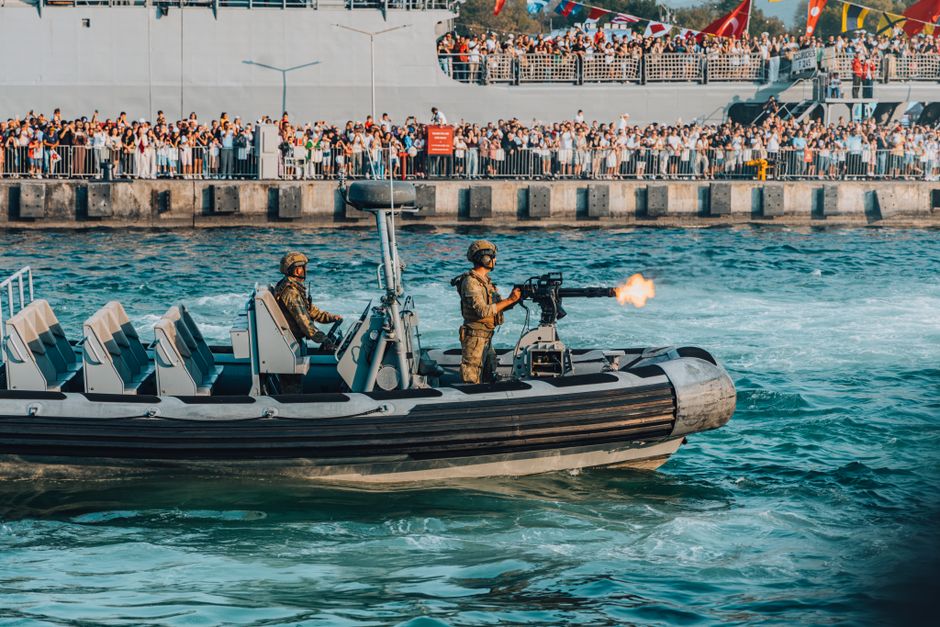
Saudi Arabia Accelerates Military Localization Efforts to Enhance Defense Readiness
The Kingdom aims to reduce reliance on external suppliers by boosting domestic production of advanced military technologies.
PENN Explainer
Hear this story explained in 90 seconds.
Saudi Arabia has significantly increased its efforts to localize military spending, reaching 27.3 percent by the end of 2025. This represents a substantial rise from the 4 percent localization rate recorded in 2018. The initiative is part of a broader strategy to ensure national security through self-reliance and technological advancement. Officials view this shift as essential for maintaining readiness in an evolving global security environment.
The strategy was highlighted during the Military Industries Forum held in Riyadh on October 25. Organized by the General Authority for Military Industries, the event brought together leaders to discuss the future of defense production. Bandar Alkhorayef, the Minister of Industry and Mineral Resources, emphasized that geopolitical tensions and supply chain disruptions are reshaping the industry. He noted that rapid advances in artificial intelligence, robotics, and autonomous systems are now central to modern defense.
For Saudi Arabia and its partners in the Gulf Cooperation Council, the goal is to build adaptable capabilities that complement existing conventional systems. The focus is on creating a domestic ecosystem that can produce critical components and spare parts locally. By reducing dependence on external suppliers, the Kingdom aims to maintain operational continuity during periods of international instability. This approach is seen as a more sustainable path than relying solely on expensive, imported weapon systems.
Experts suggest that the nature of warfare is changing, requiring military doctrine to evolve alongside new technologies. The integration of drones and autonomous systems into force structures is now a top priority for regional defense planners. These emerging capabilities are expected to enhance the effectiveness of training and operational concepts. The shift toward local production is intended to support these long-term military goals.
Beyond the immediate focus on hardware, the localization drive also aims to foster a national workforce skilled in advanced manufacturing. This investment in human capital is expected to provide long-term economic benefits while strengthening the defense industrial base. The government continues to encourage partnerships between local firms and international defense companies to facilitate technology transfer. These collaborations are designed to bring global expertise into the Saudi industrial sector.
As the global defense landscape becomes increasingly complex, the ability to secure critical supply chains has become a strategic imperative. Saudi Arabia is not alone in this pursuit, as many nations are re-evaluating their defense procurement strategies to mitigate risks. The focus on localization reflects a growing trend among countries to prioritize domestic resilience. This trend is likely to influence future defense spending patterns across the Middle East and beyond.
You've reached your free article limit
You've read 10 of 10 free articles this month. Subscribe to Planet Earth News Network for unlimited access to neutral, global journalism — plus puzzles, podcasts, and the weekly newsletter.
Already a subscriber? Sign in.
Ask the Author
Subscribers can ask the journalist a question about this story. Subscribe to ask.
Neutrality note
Auto-harvested from global news wires and presented neutrally by PENN.
to vote
Comments
No comments yet — be the first to share your thoughts.
Related stories in Defense & Military

European Nations Launch Joint Exercise to Prepare for Post-War Ukraine Reconstruction
2026-11-11
Royal Navy Commissions First Autonomous Squadron for Uncrewed Surface Vessels
2026-11-11