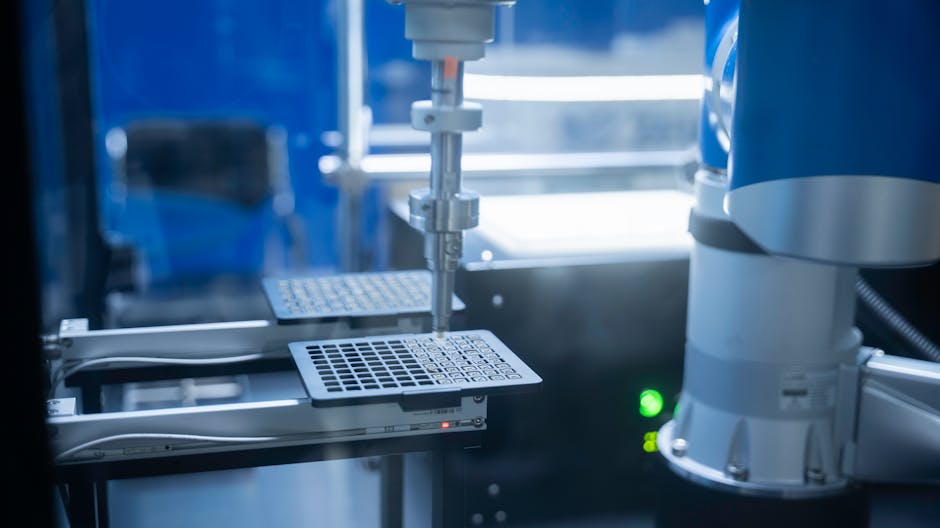
Scientists Discover Enzyme Capable of Breaking Down Plastic Waste
A newly identified 'Pac-Man enzyme' offers a potential breakthrough in the global effort to combat plastic pollution.

PENN Explainer
Hear this story explained in 90 seconds.
Researchers have recently identified a remarkable biological tool that could change how the world manages plastic waste. This substance, often referred to as a Pac-Man enzyme, has shown a unique ability to consume specific types of plastic materials. The discovery provides a new avenue for scientists working to address the growing environmental challenge of synthetic debris in ecosystems. By breaking down these persistent materials, the enzyme may offer a sustainable way to reduce the volume of plastic currently accumulating in landfills and oceans.
This finding represents a significant step forward in the field of environmental biotechnology. Scientists are now focused on understanding the precise mechanisms that allow the enzyme to target and degrade plastic polymers. The research highlights the potential for using natural biological processes to solve complex industrial problems. Experts believe that scaling this technology could eventually lead to more efficient recycling systems that do not rely solely on mechanical processing.
The discovery was highlighted in recent environmental reports as a promising development for global pollution mitigation. While the enzyme is currently being studied in laboratory settings, the implications for large-scale waste management are substantial. Researchers are investigating how to optimize the enzyme's activity to ensure it can function effectively in various environmental conditions. This work is part of a broader effort to develop circular economies where materials are repurposed rather than discarded.
Future studies will likely focus on the practical application of this enzyme in industrial recycling facilities. By integrating biological solutions into waste management infrastructure, society may be better equipped to handle the long-term impacts of plastic production. The scientific community continues to monitor these developments as they move from initial discovery toward potential real-world implementation.
You've reached your free article limit
You've read 10 of 10 free articles this month. Subscribe to Planet Earth News Network for unlimited access to neutral, global journalism — plus puzzles, podcasts, and the weekly newsletter.
Already a subscriber? Sign in.
Ask the Author
Subscribers can ask the journalist a question about this story. Subscribe to ask.
Заметка о нейтральности
Auto-harvested from global news wires and presented neutrally by PENN.
to vote
Comments
No comments yet — be the first to share your thoughts.
Related stories in Science & Technology
Scientists Discover New Species of Giant Prehistoric Rodent in Thailand
2026-11-11
Shanghai Facility Achieves First Light in Major Scientific Milestone
2026-11-11