Scientists Observe Magnetic Skyrmions Melting in Real-Time
Researchers have captured the first-ever footage of tiny magnetic vortices dissolving from an organized lattice structure.
PENN Explainer
Hear this story explained in 90 seconds.
Researchers have successfully filmed the melting process of magnetic vortices known as skyrmions. This observation, reported on October 26, 2026, provides scientists with a clearer understanding of how these unique structures behave at the atomic level. By watching them dissolve from an organized lattice, the team has uncovered new methods for manipulating these tiny magnetic patterns.
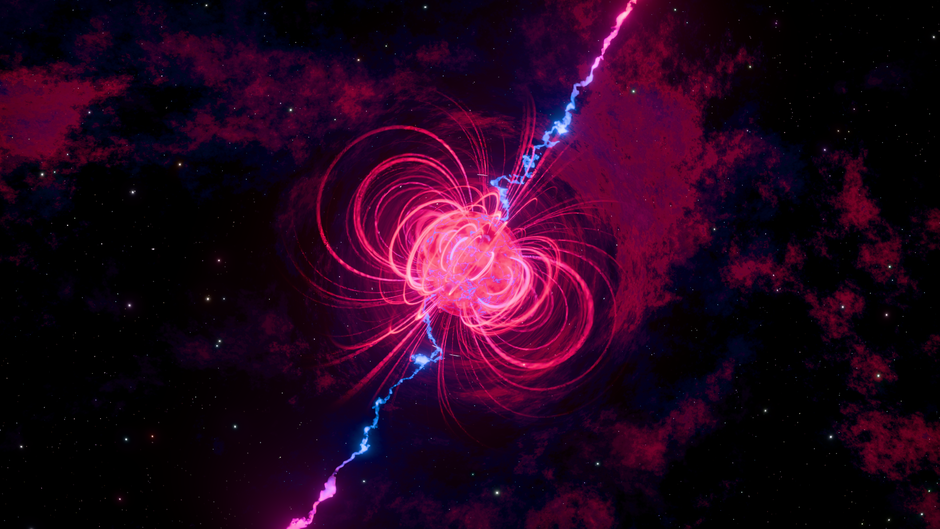
Skyrmions are often described as swirling, particle-like magnetic structures that exist within certain materials. Because of their small size and stability, they are considered promising candidates for future data storage and computing technologies. Understanding how they transition between states is a critical step in harnessing their potential for practical applications.
To capture this phenomenon, the research team utilized advanced imaging techniques that allowed them to track the vortices as they lost their structure. The process of melting, in this context, refers to the transition from a highly ordered arrangement to a disordered state. This transition is influenced by changes in temperature and external magnetic fields applied to the material.
This discovery offers a new perspective on how magnetic materials can be controlled for high-efficiency electronics. By learning how to stabilize or dissolve these vortices on command, engineers may be able to design more energy-efficient memory devices. Such devices could eventually replace current hardware, leading to faster and more compact computing systems.
The study highlights the importance of observing microscopic phenomena in real-time to verify theoretical models. Previous research had predicted how these magnetic lattices might behave, but direct visual evidence was previously unavailable. This breakthrough confirms existing theories while providing new data for future material science research.
Beyond data storage, the ability to manipulate skyrmions could impact the development of neuromorphic computing. This field aims to create hardware that mimics the structure and function of the human brain. Because skyrmions can represent information in a way similar to biological neurons, they are a key focus for researchers in this area.
The research team plans to continue investigating how different materials affect the stability of these magnetic vortices. They hope to find ways to maintain the organized lattice structure at higher temperatures, which would make the technology more practical for everyday use. Future experiments will likely focus on refining the control mechanisms required to switch these structures on and off reliably.
This work represents a significant step forward in the field of spintronics, which uses the spin of electrons to process information. Spintronics is widely viewed as a potential successor to traditional silicon-based electronics. By integrating skyrmion-based components, researchers believe they can overcome current limitations in power consumption and processing speed.
As the team continues their work, they are collaborating with other experts to explore the scalability of these magnetic structures. Scaling up the production of materials that support skyrmions remains a primary challenge for the industry. Overcoming this hurdle will be essential for moving these findings from the laboratory to commercial manufacturing.
The scientific community has noted that this research provides a foundation for a new generation of magnetic devices. By mastering the behavior of skyrmions, scientists are opening doors to technologies that were previously considered theoretical. The ongoing study of these magnetic vortices remains a vibrant area of exploration in modern physics.
You've reached your free article limit
You've read 10 of 10 free articles this month. Subscribe to Planet Earth News Network for unlimited access to neutral, global journalism — plus puzzles, podcasts, and the weekly newsletter.
Already a subscriber? Sign in.
Ask the Author
Subscribers can ask the journalist a question about this story. Subscribe to ask.
Neutrality note
Auto-harvested from global news wires and presented neutrally by PENN.
to vote
Comments
No comments yet — be the first to share your thoughts.