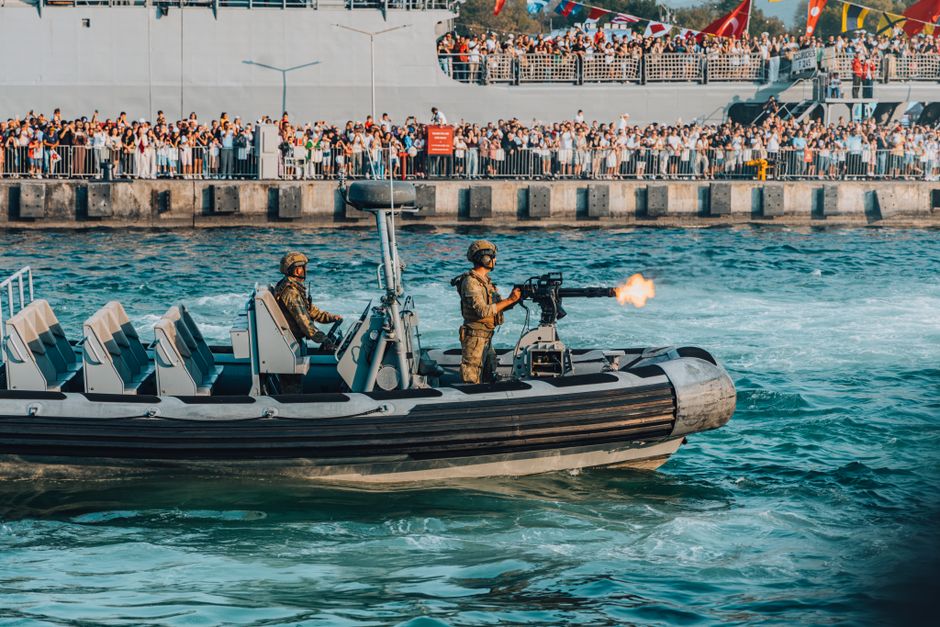
South Korea Proposes Record Defense Budget to Accelerate Military Modernization
The 2027 budget request seeks an 8.2 percent increase to fund advanced technology and prepare for the transfer of wartime operational control.
PENN Explainer
Hear this story explained in 90 seconds.
The South Korean Ministry of National Defense has officially submitted a proposed defense budget of 73.27 trillion won, or approximately 53.9 billion U.S. dollars, for the 2027 fiscal year. This request represents an 8.2 percent increase over the previous year and marks the first time the nation's core defense spending has exceeded the 50 billion dollar threshold. The ministry stated that this funding is essential to address a changing security environment and a shrinking pool of military personnel. By shifting focus toward advanced technology, the government aims to maintain a robust deterrent against regional threats.
A primary driver for this budget increase is the planned transfer of wartime operational control from the United States to South Korea. The ministry has requested 12.17 trillion won specifically to support this transition, which is a 35 percent increase from the 2026 allocation. This funding will facilitate upgrades to air-ground communication systems and the establishment of a new wartime military information distribution network. These improvements are intended to enhance the ability of the Republic of Korea Armed Forces to lead the Combined Forces Command independently.
Modernization efforts also include significant investments in domestic aerospace and naval capabilities. The draft budget allocates 3.3 trillion won for the mass production of the KF-21 homegrown fighter jet, a substantial increase from the previous 1.4 trillion won. Additionally, the government has boosted funding for the Jang Bogo N nuclear-powered submarine program to 100 billion won. These projects are central to the nation's strategy of building a self-reliant defense force capable of operating in complex maritime and aerial environments.
To counter evolving missile and drone threats, the military plans to accelerate the deployment of several key defensive systems. The ministry intends to speed up the introduction of long-range surface-to-air missile systems and medium-altitude unmanned aerial vehicles by approximately one year. These assets are expected to be operational between late 2027 and 2028. Officials believe these systems will provide a critical layer of protection against modern ballistic missile threats.
The budget also reflects a broader shift toward an AI-driven military structure to compensate for demographic challenges. With fewer conscripts available, the government is prioritizing automation and high-tech solutions to maintain operational readiness. This includes funding for research into artificial intelligence and cyber defense capabilities. The ministry views these technological advancements as a necessary response to the country's declining birth rate and the resulting impact on troop numbers.
Beyond domestic procurement, South Korea is actively expanding its defense-industrial cooperation with international partners. In September 2026, the UAE-based EDGE Group and South Korea’s Hanwha signed a strategic agreement to develop an integrated air defense network for the United Arab Emirates. This deal includes the potential integration of South Korean L-SAM and M-SAM missile systems into the Emirati defense force. Such partnerships highlight the growing global demand for South Korean military technology.
Regional security remains a focal point for the government as it navigates tensions on the Korean Peninsula. Recent reports have noted increased activity along the border, including the deployment of artillery and the construction of new fortifications. In response, South Korea continues to participate in joint exercises with the United States and Japan, such as the Freedom Edge 2026 drills. These exercises focus on ballistic missile defense, maritime interdiction, and defensive cyber operations.
Despite the ambitious procurement goals, some sectors of the defense industry have faced recent hurdles. Companies like Hyundai Rotem and Korea Aerospace Industries have experienced delays in securing major overseas contracts due to budget issues and political factors in partner nations. The government hopes that increased domestic investment will help stabilize the industry and maintain its competitive edge in the global market. Officials remain optimistic that the 2027 budget will provide the necessary momentum to overcome these temporary setbacks.
The proposed budget is currently under review by the National Assembly, which must approve the final spending plan. Lawmakers are expected to debate the balance between military modernization and other national priorities. The outcome of these deliberations will determine the pace at which the military can implement its planned reforms. If passed, the budget will set the stage for a significant transformation of the nation's defense posture over the next decade.
You've reached your free article limit
You've read 10 of 10 free articles this month. Subscribe to Planet Earth News Network for unlimited access to neutral, global journalism — plus puzzles, podcasts, and the weekly newsletter.
Already a subscriber? Sign in.
Ask the Author
Subscribers can ask the journalist a question about this story. Subscribe to ask.
Neutrality note
Auto-harvested from global news wires and presented neutrally by PENN.
to vote
Comments
No comments yet — be the first to share your thoughts.
Related stories in Defense & Military
European Nations Launch Joint Exercise to Prepare for Post-War Ukraine Reconstruction
2026-11-11
Royal Navy Commissions First Autonomous Squadron for Uncrewed Surface Vessels
2026-11-11