
SpaceX Prepares for Ambitious Starship Flight 15 Following Orbital Milestone
The company aims to demonstrate unprecedented recovery techniques for its next-generation megarocket in November.
PENN Explainer
Hear this story explained in 90 seconds.
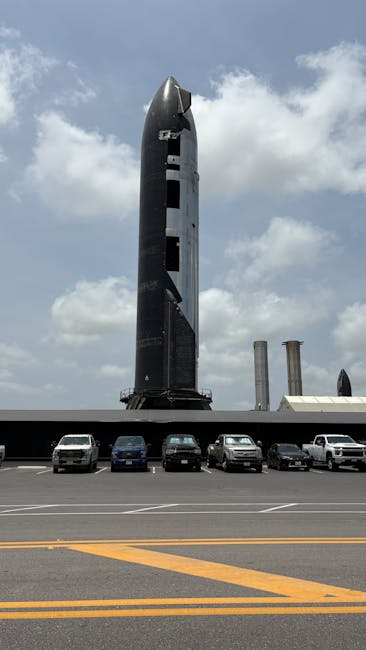
SpaceX is currently preparing for the 15th flight test of its Starship megarocket, which is targeted for launch in November. This upcoming mission follows the successful 14th flight test on September 28, 2026, which marked the first time the vehicle reached orbit. During that historic flight, the spacecraft successfully deployed 26 Starlink V3 satellites before completing a controlled deorbit and splashdown in the Pacific Ocean.
The upcoming Flight 15 mission aims to push the boundaries of rocket reusability by attempting a new recovery maneuver. SpaceX plans to use the launch tower's giant mechanical arms, often referred to as chopstick arms, to catch both the Super Heavy booster and the Starship upper stage. While the company has previously demonstrated the ability to catch the booster, successfully catching the upper stage after an orbital return would represent a significant new milestone.
Preparations for the mission are moving forward rapidly at the company's Starbase facility in Texas. Booster 22 has already completed a successful 33-engine static fire test to ensure its propulsion systems are ready for flight. Additionally, the upper stage vehicle, known as Ship 42, has finished its own series of engine tests.
These test flights are critical components of the broader effort to certify Starship for regular orbital operations. The vehicle is a central part of NASA's Artemis program, which intends to use a version of the spacecraft as a lunar lander for future moon missions. NASA officials and SpaceX engineers are working closely to ensure the rocket meets the safety and performance requirements for these human spaceflight goals.
During the 14th flight, the mission control team encountered an early engine issue during the initial ascent. Despite the loss of a single Raptor engine, the vehicle successfully achieved its planned trajectory by adjusting the burn duration of its remaining engines. This resilience demonstrated the system's ability to compensate for technical challenges in real-time.
Out of an abundance of caution, the flight control team decided to shorten the duration of the orbital phase during the 14th mission. The spacecraft was deorbited earlier than originally planned to ensure a safe splashdown in a pre-coordinated zone in the northern Pacific Ocean. This decision allowed the team to gather essential data while maintaining strict safety protocols.
SpaceX founder Elon Musk has emphasized that the transition to Starship is a priority for the company's future operations. The long-term plan involves using the megarocket to haul large quantities of satellites into orbit, which would eventually lead to the retirement of the Falcon 9 rocket. This shift is intended to lower launch costs and enable more frequent access to space for various commercial and scientific partners.
Infrastructure development is also expanding to support these increased flight cadences. A second launch site is nearing completion at the Kennedy Space Center in Florida, and a third site is currently planned for Louisiana. These additional locations will provide the necessary capacity to support the company's ambitious launch schedule.
As the industry watches these developments, the focus remains on achieving full and rapid reusability. If SpaceX successfully demonstrates the ability to catch both stages of the rocket, it would represent a major step toward making space travel more sustainable and affordable. The results of the upcoming Flight 15 will provide further insight into the feasibility of these advanced recovery techniques.
Beyond the technical milestones, the success of these missions is vital for the broader space community. The ability to deploy large payloads, such as the advanced Starlink V3 satellites, is changing how global internet connectivity is managed. As testing continues, the data gathered from each flight helps refine the design and operational procedures for the entire Starship program.
You've reached your free article limit
You've read 10 of 10 free articles this month. Subscribe to Planet Earth News Network for unlimited access to neutral, global journalism — plus puzzles, podcasts, and the weekly newsletter.
Already a subscriber? Sign in.
Ask the Author
Subscribers can ask the journalist a question about this story. Subscribe to ask.
Neutrality note
Auto-harvested from global news wires and presented neutrally by PENN.
to vote
Comments
No comments yet — be the first to share your thoughts.
Related stories in Space & Astronomy

Caltech Researchers Achieve First Autonomous Robotic Construction in Space
2026-11-11
South Korea Successfully Deploys Satellites in Fifth Nuri Rocket Mission
2026-11-11