Theoretical Study Suggests Rapidly Spinning Black Holes Could Split in Two
New calculations explore the possibility of a single black hole dividing into two smaller entities, challenging traditional merger models.
PENN Explainer
Hear this story explained in 90 seconds.
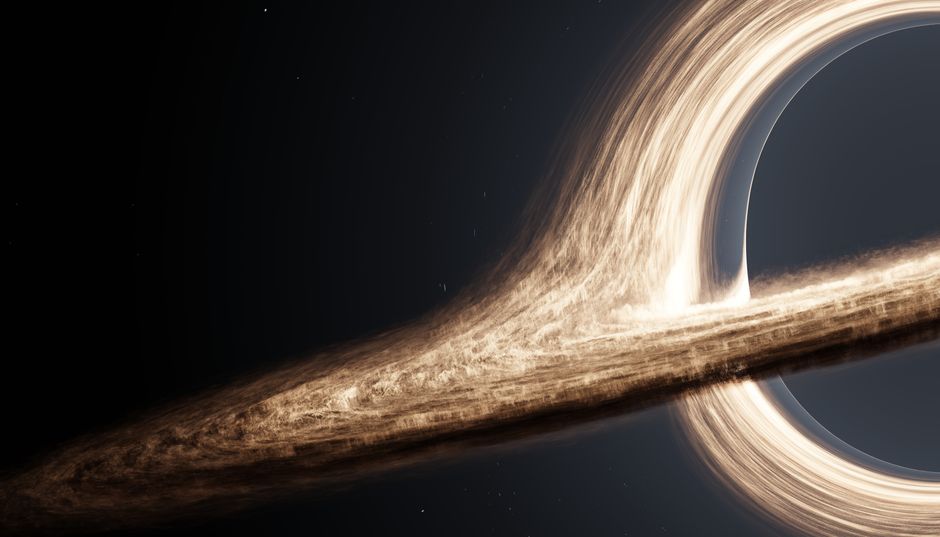
A new theoretical study has introduced the possibility that a single black hole could split into two smaller ones. This concept challenges the conventional understanding that black holes primarily grow by colliding and merging with one another. Researchers are now investigating the mathematical conditions under which such a division might occur. The study, titled When Black Holes Admit Pair-of-pants, examines the physics behind this potential phenomenon.
It suggests that black holes spinning near their maximum theoretical rate could undergo this dramatic transformation. While black hole mergers are well-documented in astrophysics, the idea of a single object splitting is a significant departure from standard models. The researchers used complex calculations to determine if the laws of general relativity allow for such an event. Their findings indicate that the extreme rotational energy of a black hole could theoretically facilitate a split.
This process would essentially be the inverse of a merger, where two objects combine into one. The team behind the study emphasizes that these results are currently based on theoretical simulations rather than direct observation. Identifying black holes in the Milky Way remains a difficult task for astronomers, as these objects do not emit light. Scientific estimates suggest there are between 100 million and 1 billion stellar-mass black holes within our galaxy.
Detecting a black hole that is in the process of splitting would require unprecedented precision and luck. Future observations from advanced telescopes may help determine if these theoretical predictions hold up in the physical universe. Understanding the life cycles of black holes is essential for mapping the evolution of the cosmos. If such a split were confirmed, it would provide new insights into the behavior of gravity and spacetime under extreme conditions. The scientific community continues to analyze the implications of this study for our broader understanding of black hole dynamics.
You've reached your free article limit
You've read 10 of 10 free articles this month. Subscribe to Planet Earth News Network for unlimited access to neutral, global journalism — plus puzzles, podcasts, and the weekly newsletter.
Already a subscriber? Sign in.
Ask the Author
Subscribers can ask the journalist a question about this story. Subscribe to ask.
तटस्थता टिप्पणी
Auto-harvested from global news wires and presented neutrally by PENN.
to vote
Comments
No comments yet — be the first to share your thoughts.
Related stories in Science & Technology
Astronomers Use Machine Learning to Unmask Hidden Planets in Telescope Data
2026-11-09
Physicists Create Record-Low Temperature Aboard China's Space Station
2026-11-09