
Tokyo Commercial Land Prices Reach 33-Year High Amid Office Demand
Rising demand for central office space and a return to in-person work drive property values to levels not seen in over three decades.
PENN Explainer
Hear this story explained in 90 seconds.
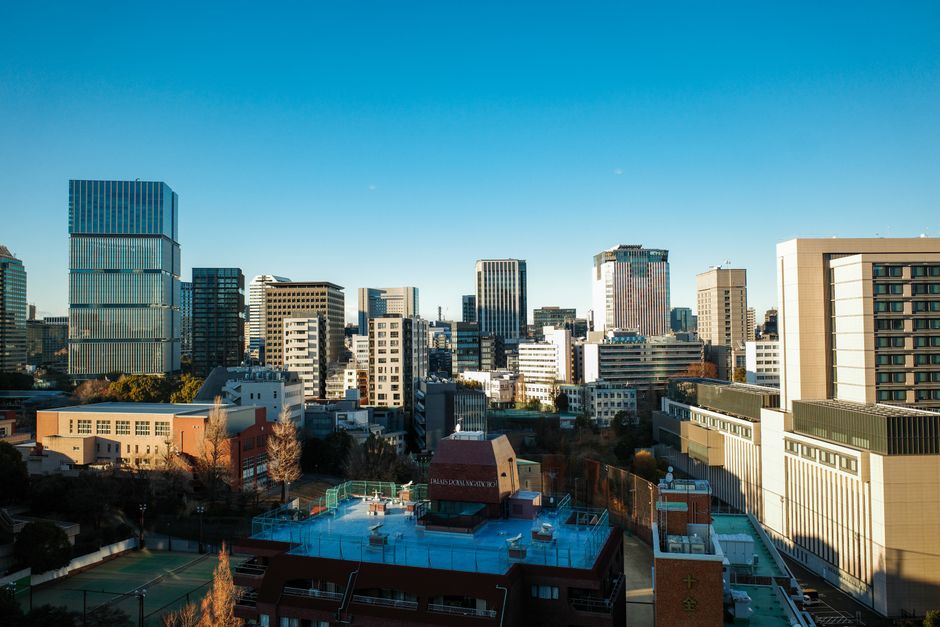
Commercial land prices in Tokyo have climbed to their highest point in more than 33 years. This surge in value follows a period where remote work trends had previously softened demand for central business districts. As more companies encourage employees to return to the office, the need for premium workspace has intensified across the capital.
Data from the local market indicates that office vacancy rates in Tokyo's central wards have dropped well below the five percent threshold. This level is often considered the break-even point for balancing supply and demand in the commercial sector. With fewer available spaces, competition among businesses for prime locations has pushed land valuations upward.
While commercial property thrives, the residential market in Tokyo is experiencing a different set of pressures. New condominium supply in the city's 23 wards has fallen to its lowest level in roughly 30 years. Developers are increasingly focusing on high-end, expensive units, which has made it difficult for many local families to find affordable housing options.
Recent figures from the Real Estate Economic Institute show that new condo listings in the 23 wards dropped by over 30 percent in August 2026 compared to the previous year. This scarcity of new inventory has kept prices for available units at record levels. The average price for a new condominium in these central wards has recently hovered around 138 million yen.
Market analysts note that the gap between asking prices and actual transaction prices has widened significantly. Sellers have raised their expectations faster than buyers are willing to pay, leading to a rise in unsold inventory. This disconnect suggests that the market for used condominiums may be entering a period of stagnation after years of rapid growth.
Government policy continues to play a role in how these markets function. As of April 2026, non-residents must file formal reports for all residential property acquisitions in Japan under the Foreign Exchange and Foreign Trade Act. This change ensures greater transparency in foreign investment, though it does not restrict the ability of international buyers to purchase property.
Investors remain interested in Tokyo due to the city's stable environment and the relative weakness of the yen. However, the high cost of construction and the difficulty of securing suitable land plots continue to challenge developers. These factors make it harder to bring new, moderately priced housing to the market.
In the broader Tokyo area, the average price of new apartments has also reached record highs. The rising costs are not limited to the city center, as surrounding regions have seen similar upward trends. This has sparked ongoing discussions about housing attainability for the average resident.
Experts suggest that the current supply constraints are structural rather than temporary. Developers are competing for the same plots of land for office, hotel, and mixed-use projects, which limits the space available for new residential construction. This competition for land is a primary driver of the current price environment.
Looking ahead, the market is expected to remain competitive for those seeking prime assets. Access to local expertise and off-market opportunities has become increasingly important for both domestic and international buyers. The balance between supply, demand, and affordability will likely remain a central focus for policymakers and industry leaders in the coming months.
You've reached your free article limit
You've read 10 of 10 free articles this month. Subscribe to Planet Earth News Network for unlimited access to neutral, global journalism — plus puzzles, podcasts, and the weekly newsletter.
Already a subscriber? Sign in.
Ask the Author
Subscribers can ask the journalist a question about this story. Subscribe to ask.
Neutrality note
Auto-harvested from global news wires and presented neutrally by PENN.
to vote
Comments
No comments yet — be the first to share your thoughts.
Related stories in Real Estate & Housing

Australian Property Investment Plummets as Housing Finance Market Contracts
2026-11-14
Australian Investor Lending Hits Record Low Amid Market Contraction
2026-11-14