
United Nations Elects Five New Judges to International Court of Justice
The UN General Assembly and Security Council have appointed five new members to the world's highest court for nine-year terms.
PENN Explainer
Hear this story explained in 90 seconds.
The United Nations has officially elected five new judges to serve on the International Court of Justice in The Hague. The selection process concluded this week following a series of ballots held at the United Nations headquarters in New York. These judges will each serve a nine-year term, beginning in early 2027, to help resolve legal disputes between sovereign states.
Among the newly elected members is Dapo Akande, a professor of public international law at the University of Oxford. His appointment marks the first time a British national has served on the court in nine years. Akande is a recognized expert in international law and has previously served as a legal adviser to various international organizations.
Also joining the bench is Rena Lee, a prominent diplomat from Singapore. Her election represents a significant milestone as she becomes the first Singaporean judge to serve on the International Court of Justice. Lee is well-regarded for her extensive work in international maritime law and her contributions to global environmental negotiations.
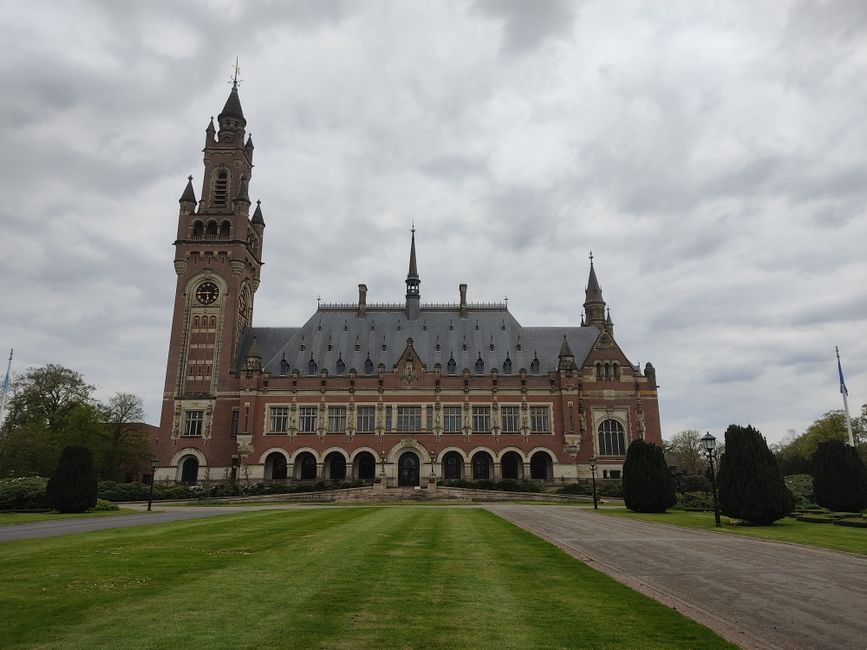
The International Court of Justice serves as the primary judicial organ of the United Nations. It is tasked with settling legal disputes submitted by states and providing advisory opinions on legal questions referred by authorized UN bodies. The court consists of 15 judges who are elected to ensure the representation of the main forms of civilization and the principal legal systems of the world.
Candidates for the court must be elected by both the UN General Assembly and the Security Council. To succeed, a candidate must receive an absolute majority of votes in both bodies simultaneously. This dual-voting requirement is designed to ensure that the judges have broad international support and legitimacy.
The election process often involves complex diplomatic maneuvering as member states seek to balance regional representation and legal expertise. The court's composition is intended to reflect a diverse range of geographic regions, including Africa, Asia, Latin America, and Western Europe. Maintaining this balance is considered essential for the court's authority in international affairs.
In addition to Akande and Lee, the other three newly elected judges will bring diverse backgrounds to the bench. Their specific identities and professional histories were confirmed following the final tally of the secret ballots. These individuals will join the existing members to form a panel that hears cases ranging from border disputes to human rights allegations.
The court currently faces a heavy workload as it addresses various high-profile international conflicts. The arrival of the new judges comes at a time when many nations are increasingly turning to the court to resolve long-standing territorial and legal disagreements. Observers note that the court's ability to maintain its independence remains a central focus for the international community.
Legal experts suggest that the new appointments will influence the court's direction for the next decade. The court's rulings are binding on the parties involved in a case, though enforcement often relies on the cooperation of the states themselves. The addition of these new members is expected to provide fresh perspectives on evolving international legal standards.
As the new judges prepare to take their seats, the court will continue its ongoing proceedings. The transition period will involve briefings and administrative preparations to ensure a smooth handover of responsibilities. The international legal community will be watching closely to see how the newly constituted bench approaches upcoming cases.
You've reached your free article limit
You've read 10 of 10 free articles this month. Subscribe to Planet Earth News Network for unlimited access to neutral, global journalism — plus puzzles, podcasts, and the weekly newsletter.
Already a subscriber? Sign in.
Ask the Author
Subscribers can ask the journalist a question about this story. Subscribe to ask.
Neutrality note
Auto-harvested from global news wires and presented neutrally by PENN.
to vote
Comments
No comments yet — be the first to share your thoughts.
Related stories in Legal & Justice

South Korea Constitutional Court Hears First Appeal Against Supreme Court Ruling
2026-11-17
Norway Supreme Court Invalidates North Sea Oil Licences Over Emissions Oversight
2026-11-16