
Vietnam Accelerates Low-Emission Rice Initiatives in the Mekong Delta
Authorities and international partners are scaling sustainable farming models to protect food security against climate threats.
PENN Explainer
Hear this story explained in 90 seconds.
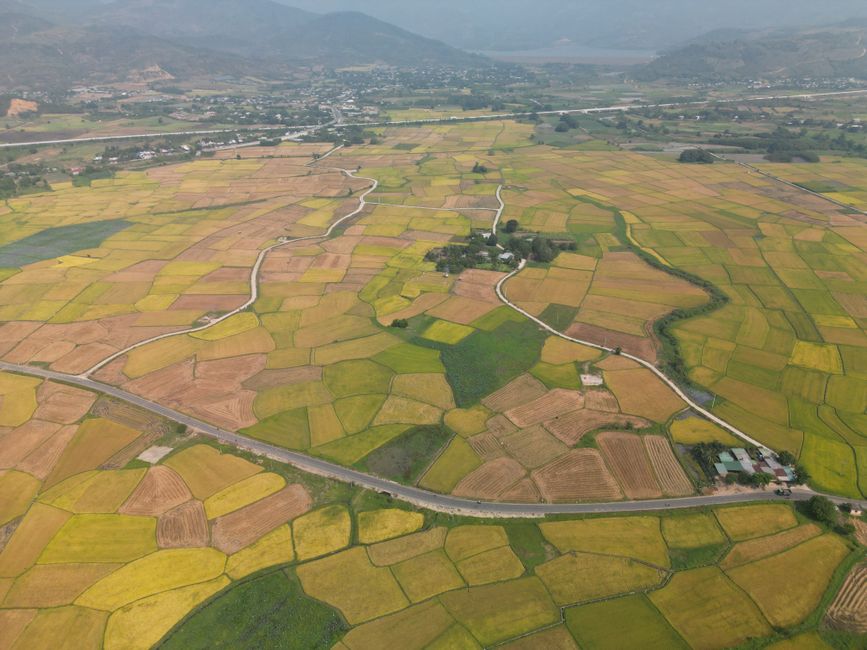
Vietnam is intensifying efforts to transform its rice production in the Mekong Delta through a large-scale project focused on high-quality, low-emission cultivation. The initiative aims to modernize farming practices across one million hectares to ensure long-term food security and environmental sustainability. This region currently accounts for approximately half of the country's total rice output and nearly all of its export volume.
Rising sea levels and saltwater intrusion pose significant risks to the delta's traditional agricultural landscape. Upstream dams have reduced the flow of sediment, which historically replenished the soil and helped the coastline adapt to changing water levels. These environmental pressures, combined with the threat of El Niño, have prompted officials to seek more resilient farming methods.
To address these challenges, the Ministry of Agriculture and Environment is collaborating with the International Rice Research Institute and the Vietnam Rice Industry Association. Their joint efforts focus on creating a circular economy by maximizing the value of agricultural by-products. A primary goal is to reduce the common practice of burning rice straw, which currently accounts for up to 70 percent of post-harvest waste.
Proposed solutions include mechanized straw collection and the use of new technologies for composting and bioenergy generation. By converting waste into mushroom substrate or building materials, farmers can create new revenue streams while lowering their environmental footprint. Experts are also developing a digital database to track these circular agriculture technologies across the region.
Beyond waste management, the project promotes the use of alternate wetting and drying techniques in rice fields. This method can significantly reduce methane emissions compared to traditional, continuously flooded fields. Research suggests that such approaches can conserve water and lower greenhouse gas emissions without compromising overall crop yields.
Integrated rice-shrimp farming systems are also being scaled as a strategic adaptation measure in coastal provinces. By rotating shrimp and rice crops, farmers can better manage the salinity of their land while maintaining productivity. This model has shown significant potential for large-scale impact and is being refined through ongoing research and farmer training.
Despite these advancements, the sector faces economic hurdles, including fluctuating global prices and increased competition. Vietnam's rice exports have experienced downward price pressure as major buyers like Indonesia and the Philippines have increased their own domestic reserves. Authorities are now working to diversify export markets and improve the quality of rice varieties to remain competitive.
Researchers are also testing new, high-yield rice varieties that are resistant to disease and better suited for diverse climate conditions. These trials are expanding beyond the Mekong Delta to the South Central Coast and Central Highlands. By diversifying the seed catalog, officials hope to build stronger raw material zones and establish signature rice brands for different localities.
Deputy Minister of Agriculture and Environment Tran Thanh Nam has emphasized that the government is closely monitoring the needs of the region to provide necessary direction. The involvement of the entire political system, alongside private businesses and local farmers, is considered essential for maintaining growth. Officials are encouraging proactive market management to avoid the risks associated with small-scale, uncoordinated production.
As the country enters a new phase of agricultural development, the focus remains on balancing productivity with climate resilience. The success of these initiatives will depend on the ability of farmers to adopt new technologies while maintaining profitability. Future efforts will continue to prioritize the integration of research innovations with practical, demand-driven solutions for the agricultural sector.
You've reached your free article limit
You've read 10 of 10 free articles this month. Subscribe to Planet Earth News Network for unlimited access to neutral, global journalism — plus puzzles, podcasts, and the weekly newsletter.
Already a subscriber? Sign in.
Ask the Author
Subscribers can ask the journalist a question about this story. Subscribe to ask.
Neutrality note
Auto-harvested from global news wires and presented neutrally by PENN.
to vote
Comments
No comments yet — be the first to share your thoughts.
Related stories in Agriculture & Food Security

Kenya Expands Precision Farming Initiatives to Combat Severe Drought and Food Insecurity
2026-11-14
Kenya Faces Record Maize Import Needs Following Severe Drought
2026-11-14