
Vietnam Modernizes Agricultural Sector Through Technology and Policy Reform
The nation is integrating digital tools and biotechnology to boost rice production and maintain global export competitiveness.
PENN Explainer
Hear this story explained in 90 seconds.
Vietnam is actively reshaping its agricultural landscape in 2026 by prioritizing technological innovation and regulatory updates to secure its position as a leading global rice exporter. The Ministry of Agriculture and Environment projects that the country will produce over 43.5 million tonnes of paddy rice this year, with approximately 7.73 million tonnes earmarked for international markets. This strategic focus aims to balance domestic food security with the demands of traditional trade partners including the Philippines, China, and various African nations.
To drive this growth, the government has placed a heavy emphasis on digital transformation and scientific research. Deputy Prime Minister Ho Quoc Dung recently stated that science, technology, and innovation must serve as the primary engines for agricultural development. By applying advanced farming processes and biotechnology, the sector seeks to improve productivity and efficiency across the entire supply chain.
Regulatory changes are also playing a significant role in this modernization effort. On January 26, 2026, the government issued Decree 43/2026/ND-CP, which streamlines the approval process for genetically engineered food and feed products. This legislation also establishes a new self-determination process for gene-edited crops, providing a clearer framework for researchers and agricultural businesses to introduce new varieties.
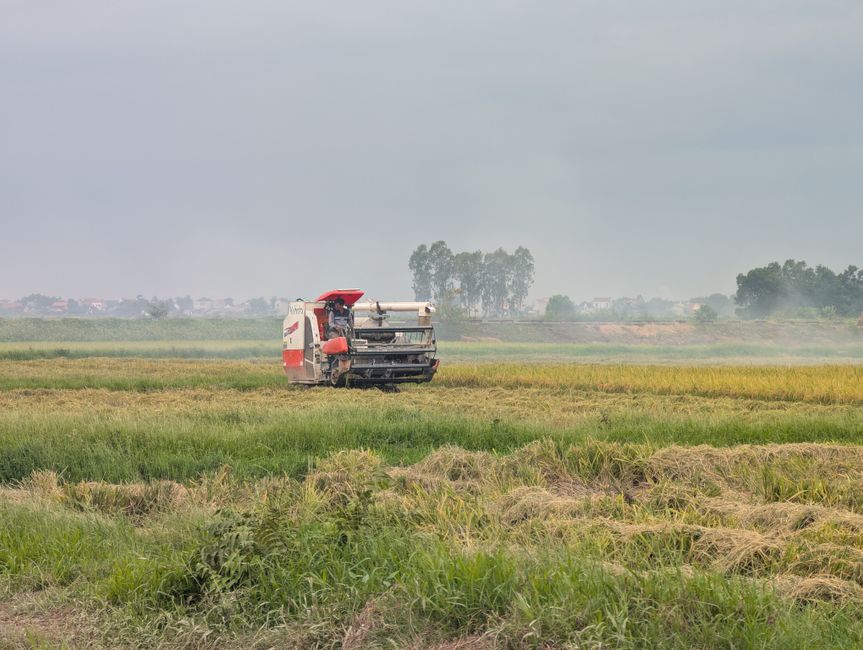
Mechanization is another key pillar of the current strategy to increase output. In late 2025, the International Rice Research Institute, in collaboration with local partners, introduced a machine capable of performing mechanized dry direct seeding and deep fertilizer placement simultaneously. This technology is designed to reduce labor costs and improve resource efficiency for smallholder farmers in provinces like Dong Nai.
International partnerships continue to bolster these domestic initiatives. Vietnam and Australia recently committed $2.3 million to a joint agricultural research program aimed at fostering sustainable, low-emission growth. Dr. Nick Austin, the acting director-general of the Australian Centre for International Agricultural Research, noted that this partnership focuses on advancing green transitions and resilience to global climate challenges.
Despite these advancements, the sector faces ongoing market pressures. Statistics from the General Statistics Office indicate that rice export values in the first nine months of 2026 saw a decrease compared to the previous year, partly due to lower average export prices. The government is responding by diversifying product segments, including a shift toward high-value varieties like fragrant and Japonica rice.
Supply chain management remains a critical priority for officials. The Ministry of Industry and Trade is currently reviewing trade regulations to ensure that rice procurement remains standardized and efficient. These efforts are intended to help the country respond quickly to market signals and potential changes in international import tariffs.
Digital tools are being deployed to monitor supply and demand risks in real time. Programs such as RiceMoRe and e-Extension Lua Viet are being scaled to provide farmers with better data and technical support. Experts emphasize that these tools must provide tangible benefits to producers to ensure widespread adoption across the Mekong River Delta.
Looking ahead, the government plans to maintain minimum circulating reserves to protect against domestic shortages. By organizing trade promotion activities and developing flexible export scenarios, officials hope to navigate the complexities of the global grain trade. These measures are intended to keep Vietnam competitive while ensuring that the nation's food systems remain stable and resilient.
You've reached your free article limit
You've read 10 of 10 free articles this month. Subscribe to Planet Earth News Network for unlimited access to neutral, global journalism — plus puzzles, podcasts, and the weekly newsletter.
Already a subscriber? Sign in.
Ask the Author
Subscribers can ask the journalist a question about this story. Subscribe to ask.
Neutrality note
Auto-harvested from global news wires and presented neutrally by PENN.
to vote
Comments
No comments yet — be the first to share your thoughts.
Related stories in Agriculture & Food Security

Urban Agriculture Gains Momentum as Global Strategy for Food Security
2026-11-10
Vietnam Launches Ambitious Plan to Expand Sustainable Rice Production
2026-11-09