Australia Launches Multi-Million Dollar Initiative to Drought-Proof Dryland Farming
The new STRAP program aims to test regenerative agricultural practices across diverse Australian regions to improve long-term climate resilience.
PENN Explainer
Hear this story explained in 90 seconds.
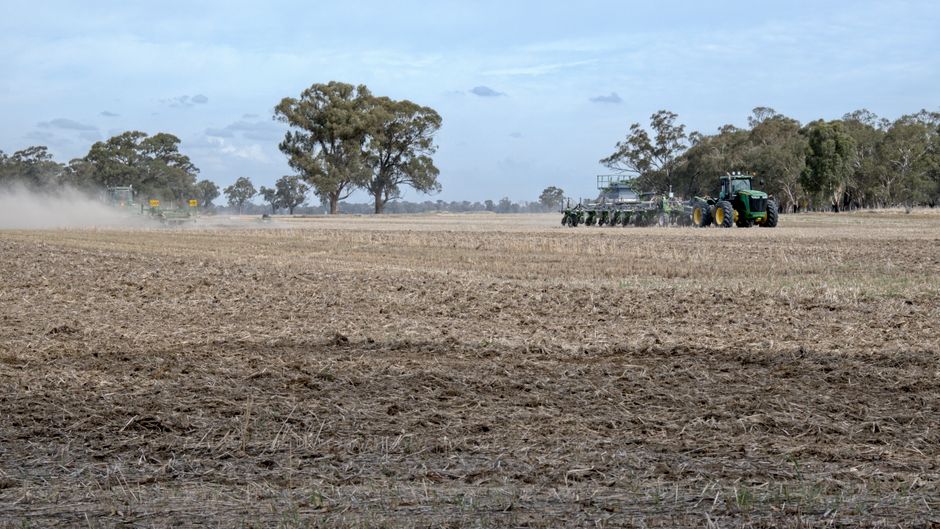
The Commonwealth Scientific and Industrial Research Organisation (CSIRO) has launched an 8 million dollar initiative to help Australian farmers better manage the risks of drought. The program, known as Stress Testing Regenerative Agricultural Practices (STRAP), began trial plantings this season across South Australia, Victoria, and New South Wales. This effort seeks to adapt farming techniques to the specific needs of Australia’s drier grain-growing regions.
STRAP brings together the CSIRO with ten partner organizations, including the Ag Excellence Alliance and Mallee Sustainable Farming. These regional groups manage trial sites on real farms to ensure the research reflects actual working conditions. By testing several regenerative practices side by side, researchers hope to gain a clearer picture of how different methods perform under identical environmental pressures.
One key focus of the project is evaluating techniques such as intercropping, where two or more species are grown in the same field. The trials also examine the use of legumes to naturally add nitrogen to the soil, reducing the need for synthetic fertilizers. Additionally, the program is testing alternative fertilizer products and the integration of grazing pasture into continuous cropping rotations.
Researchers intend to analyze data from these small plots as a combined, multi-environment study. This approach is designed to help scientists predict how a specific practice might perform in a new region without needing a separate trial in every location. The team is also building data systems that link these results to artificial intelligence and geospatial mapping tools.
These digital tools aim to track greenhouse gas emissions and fertilizer use across different sites. By monitoring these factors, the project hopes to better understand the economic risks associated with various farming practices. Jade Rose, a project manager at the Ag Excellence Alliance, is working alongside researchers to coordinate the on-ground trial network.
Penny Roberts, a research manager at Mallee Sustainable Farming, is overseeing the intercropping trials as part of the demonstration. The project reflects a broader shift in Australian agricultural policy toward long-term resilience. Recent government reports highlight that farming practices that conserve moisture and improve water use efficiency are essential for maintaining output in variable climates.
Australian broadacre cropping has historically been highly variable, with significant production swings between drought years and record harvests. In recent years, advancements in seed varieties and improved soil moisture management have helped stabilize yields. However, ongoing downside production risks remain for many growing regions due to below-average rainfall expectations.
Government agencies are increasingly viewing food systems through the lens of national security and industrial competitiveness. Investments in precision agriculture and climate-resilient seeds are now central to both public and private agendas. Australia, along with other nations, is expanding incentives for agricultural technology to ensure future food security.
This focus on resilience is part of a larger national strategy, including the Australian Government Drought Plan for 2024-2029. The plan emphasizes collaboration between the national government, states, and territories to finance drought preparedness. These efforts are intended to help the agricultural sector align with global sustainability commitments and environmental standards.
As climate patterns continue to shift, the ability to adapt farming systems before the next dry spell arrives has become a strategic priority. The STRAP program represents a significant step in this direction by providing farmers with actionable data. Future success will depend on how effectively these research findings can be translated into widespread, practical applications on the ground.
You've reached your free article limit
You've read 10 of 10 free articles this month. Subscribe to Planet Earth News Network for unlimited access to neutral, global journalism — plus puzzles, podcasts, and the weekly newsletter.
Already a subscriber? Sign in.
Ask the Author
Subscribers can ask the journalist a question about this story. Subscribe to ask.
Neutrality note
Auto-harvested from global news wires and presented neutrally by PENN.
to vote
Comments
No comments yet — be the first to share your thoughts.
Related stories in Agriculture & Food Security

European Feed Industry Faces Potential Supply Shortfalls Due to New Deforestation Regulations
2026-11-13
European Union Postpones Deforestation Regulation to 2026
2026-11-13