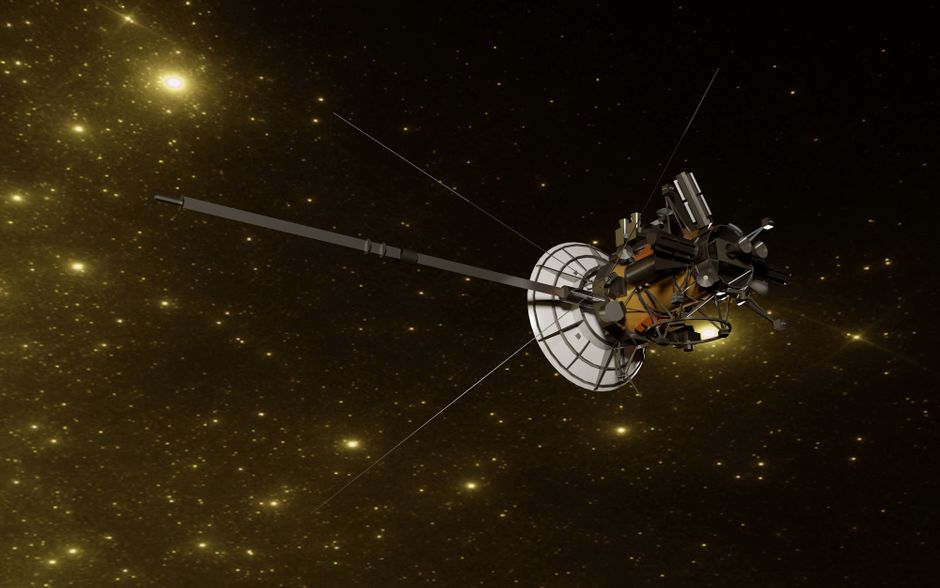
China Space Station Sets New Record in Quantum Physics Research
Researchers aboard the Tiangong space station successfully cooled atoms to a record-breaking 9.7 picokelvin.
PENN Explainer
Hear this story explained in 90 seconds.
Scientists aboard China's Tiangong space station have achieved a significant milestone in quantum physics by cooling atoms to a record-breaking temperature of 9.7 picokelvin. This temperature is just a tiny fraction of a degree above absolute zero, the theoretical point where all molecular motion stops. The experiment utilized focused lasers to trap approximately 20,000 rubidium atoms within the microgravity environment of the orbiting laboratory. By reaching such extreme cold, researchers can observe quantum phenomena that are otherwise impossible to study on Earth.
The low-gravity conditions of space allow atoms to remain in a trapped state for much longer than is possible in ground-based laboratories. This extended observation time provides scientists with a clearer view of how matter behaves at the most fundamental levels. The achievement was reported following recent operations on the station, which continues to serve as a hub for advanced scientific research. Experts suggest that this capability could pave the way for new experiments in quantum sensing and precision measurement.
Understanding these atomic behaviors is essential for developing future technologies, including highly accurate atomic clocks and advanced navigation systems. The success of this experiment highlights the growing role of orbital platforms in pushing the boundaries of modern physics. As international space agencies continue to expand their research portfolios, the ability to conduct such delicate work in orbit becomes increasingly valuable. Future missions may build upon these findings to explore even more complex quantum states in the vacuum of space.
You've reached your free article limit
You've read 10 of 10 free articles this month. Subscribe to Planet Earth News Network for unlimited access to neutral, global journalism — plus puzzles, podcasts, and the weekly newsletter.
Already a subscriber? Sign in.
Ask the Author
Subscribers can ask the journalist a question about this story. Subscribe to ask.
Nota de neutralidad
Auto-harvested from global news wires and presented neutrally by PENN.
to vote
Comments
No comments yet — be the first to share your thoughts.
Related stories in Space & Astronomy

ESA's Hera Spacecraft Captures First Close-Up Images of Didymos Asteroid System
2026-11-09
NASA Awards New Contracts to Enhance Satellite Communications Relay
2026-11-09