Community of the Day: Thimphu, Bhutan
Exploring the Himalayan Capital of the Kingdom of Bhutan
Hear this story explained in 90 seconds.
Thimphu, Bhutan
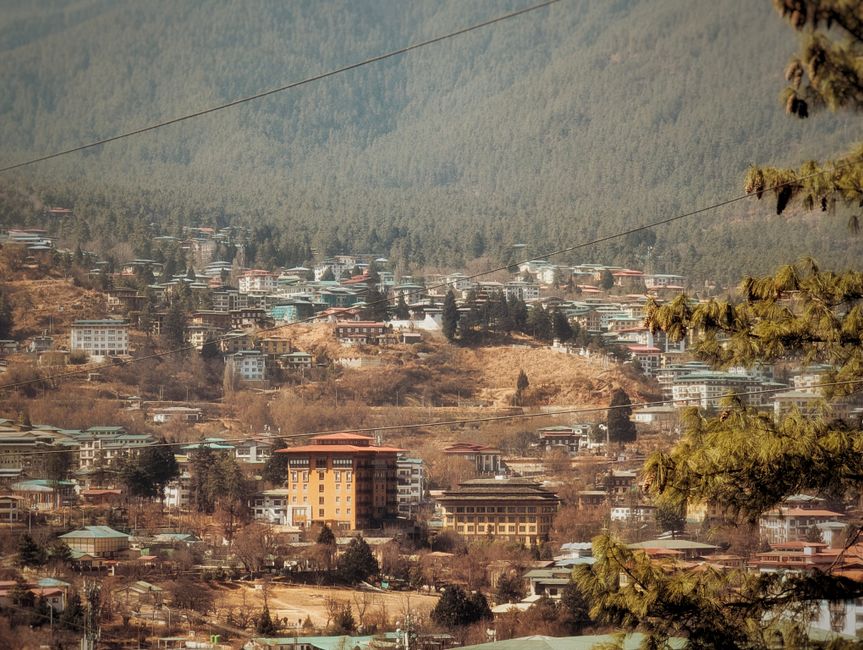
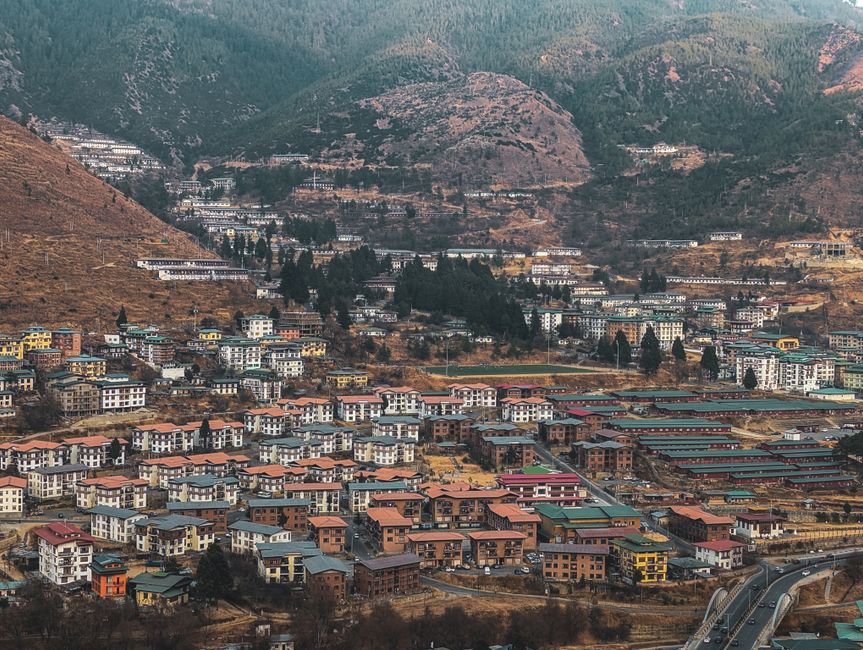
Thimphu is the vibrant capital and largest city of the Kingdom of Bhutan, nestled in a picturesque valley along the Wang Chhu river. As the nation's political and economic heart, it serves as a unique blend of ancient Buddhist traditions and modern development, all set against the dramatic backdrop of the eastern Himalayas.
- Thimphu was officially designated as the capital of Bhutan in 1961, though it had served as the seat of government since 1952. Before this transition, the country's administrative center was more fluid, but Thimphu's central location in the western part of the country made it the ideal choice for a permanent capital.
- The city is situated at an elevation of approximately 2,320 meters above sea level within the Wang Chhu valley. This high-altitude location provides a cool, temperate climate and stunning views of the surrounding forested mountains.
- Thimphu is home to the Tashichho Dzong, a massive fortress and monastery that serves as the seat of the Bhutanese government. This architectural marvel houses the throne room of the King and the offices of the central government, symbolizing the integration of religious and secular authority.
- The city is famous for being one of the only capitals in the world without traffic lights. Instead, traffic is managed by police officers stationed at key intersections, who direct vehicles with graceful, rhythmic hand gestures.
- The National Memorial Chorten, which dominates the city's skyline, was built in 1974 to honor the third King of Bhutan, Jigme Dorji Wangchuck. It is a focal point for daily worship, where locals gather to circumambulate the structure while spinning prayer wheels.
- Changangkha Lhakhang is one of the oldest temples in the Thimphu valley, dating back to the 13th century. It was founded by Phajo Drugom Zhigpo, the man who introduced the Drukpa Lineage of Buddhism to Bhutan.
- The National Institute for Zorig Chusum is a vital educational center in Thimphu dedicated to preserving Bhutan's thirteen traditional arts and crafts. Students here learn skills ranging from painting and woodcarving to embroidery and sculpture, ensuring these ancient practices survive.
- Thimphu's economy is the most developed in the country, serving as the hub for banking, commerce, and government services. Despite its growth, the city remains deeply committed to the national philosophy of Gross National Happiness, which prioritizes sustainable development and cultural preservation.
- The Centenary Farmer's Market is a bustling social and economic hub where residents purchase fresh, local produce. It offers a vibrant glimpse into daily life, showcasing the agricultural diversity of the region and the importance of local food security.
- The city is surrounded by protected forests and biological corridors, reflecting Bhutan's constitutional mandate to maintain at least 60% forest cover. These natural areas provide essential habitats for endangered species and offer residents access to pristine mountain landscapes.
Photo Gallery

You've reached your free article limit
You've read 10 of 10 free articles this month. Subscribe to Planet Earth News Network for unlimited access to neutral, global journalism — plus puzzles, podcasts, and the weekly newsletter.
Already a subscriber? Sign in.
Subscribers can ask the journalist a question about this story. Subscribe to ask.
Community of the Day feature by PENN editorial.
Comments
No comments yet — be the first to share your thoughts.
Senior Editor, Planet Earth News Network
View all articles by Desk →