Culinary Tradition of the Day: Pozole
An ancient Mexican stew of hominy and broth that bridges pre-Columbian history and modern celebration
Hear this story explained in 90 seconds.
Pozole
Pozole is a traditional Mexican soup or stew that serves as a cornerstone of the nation's culinary identity. Built upon a base of nixtamalized maize, known as hominy, the dish is celebrated for its deep, complex flavors and its role in both daily life and major festive gatherings. While variations exist across different regions and households, the dish remains a symbol of cultural continuity and communal dining.
History
The origins of pozole trace back to the pre-Columbian era in Mesoamerica, where it was considered a sacred dish. According to research from the Instituto Nacional de Antropología e Historia, the stew was historically prepared for ceremonial occasions and served to the elite members of society. While some historical accounts and scholarly debates suggest that early versions of the dish may have incorporated human flesh during ritual sacrifices, many modern historians note that such claims are complex and often lack definitive eyewitness documentation. Following the arrival of Spanish colonizers, the traditional recipe evolved significantly, with pork and chicken replacing earlier protein sources to become the standard ingredients used today.
Cultural Significance
Pozole holds a profound place in Mexican culture, often appearing at the center of major holidays and family milestones. It is a staple during Mexican Independence Day, Christmas, and various birthdays, where it serves as a vessel for hospitality and shared heritage. Chef Emmanuel Vilchez notes that the dish is inherently ceremonial, often prepared in large pots that remain in the kitchen to feed guests throughout a celebration. In many communities, the act of preparing the stew is a labor-intensive process that reinforces family bonds and preserves ancestral cooking techniques.
How It Works
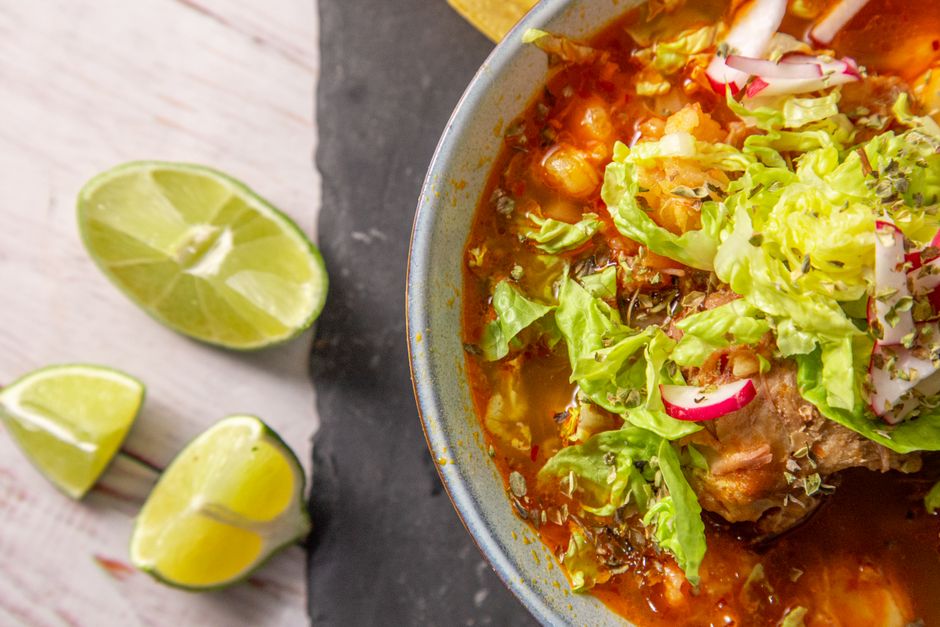
The preparation of authentic pozole begins with nixtamalization, a process where dried maize is soaked in an alkaline solution to soften the kernels into hominy. The three primary variations are defined by their color and seasoning: blanco, verde, and rojo. Pozole blanco is served without additional sauces, while pozole verde incorporates tomatillos, serrano chiles, and pumpkin seeds for a vibrant, herbaceous profile. Pozole rojo relies on a rich base of dried red chiles, such as guajillo or ancho, often combined with roasted tomatoes to create a deep, smoky flavor. Once the broth and hominy are ready, the dish is typically finished with a variety of fresh toppings, including shredded cabbage, radishes, lime, and avocado.
Representative Recipe
Traditional Pozole Rojo
A hearty and comforting Mexican stew featuring tender pork and chewy hominy in a rich, chile-infused broth.
Prep time: 30 min | Cook time: 180 min | Total time: 210 min | Yield: 8 servings | Difficulty: Medium
Ingredients
- 2 kg pork shoulder, cut into chunks
- 1 kg dried hominy, soaked overnight
- 10 dried guajillo chiles, stemmed and seeded
- 5 cloves garlic, minced
- 1 tbsp dried oregano
- 1 tsp ground cumin
- 3 liters water
- Salt to taste
Instructions
- Place the soaked hominy in a large pot with water and simmer for approximately 2 hours until the kernels have blossomed and become tender.
- Add the pork shoulder chunks to the pot and continue to simmer until the meat is tender enough to shred easily.
- Toast the dried guajillo chiles in a dry pan for 1 minute, then rehydrate them in hot water before blending with garlic, cumin, and a splash of broth until smooth.
- Stir the chile sauce into the main pot and season with salt and oregano, allowing the stew to simmer for an additional 30 minutes to meld the flavors.
- Serve hot in deep bowls, allowing guests to garnish with their choice of shredded cabbage, sliced radishes, and lime wedges.
Notes
For the best results, serve with crispy tostadas on the side to provide a textural contrast to the soft hominy. Leftovers often taste better the next day as the spices continue to develop in the broth. You may substitute the pork with chicken if a lighter flavor profile is preferred.
You've reached your free article limit
You've read 10 of 10 free articles this month. Subscribe to Planet Earth News Network for unlimited access to neutral, global journalism — plus puzzles, podcasts, and the weekly newsletter.
Already a subscriber? Sign in.
Subscribers can ask the journalist a question about this story. Subscribe to ask.
Culinary Tradition of the Day feature by the PENN Food & Spirits Desk.
Comments
No comments yet — be the first to share your thoughts.
PENN's lifestyle and culinary department, covering global cuisine — the origins, traditions, and recipes behind the world's dishes, with deep histories and cultural context that go beyond the plate. and PENN's beverage-focused culinary team, dedicated to spirits and drinks — covering distilleries, breweries, and producers worldwide, with histories, tasting notes, professional reviews, and cocktail traditions.
View all articles by Desk →