
Food of the Day: Ca Kho To Caramel Fish (Vietnam)
A deep dive into the history and preparation of Vietnam's iconic clay pot braised fish.
Hear this story explained in 90 seconds.
Ca Kho To Caramel Fish
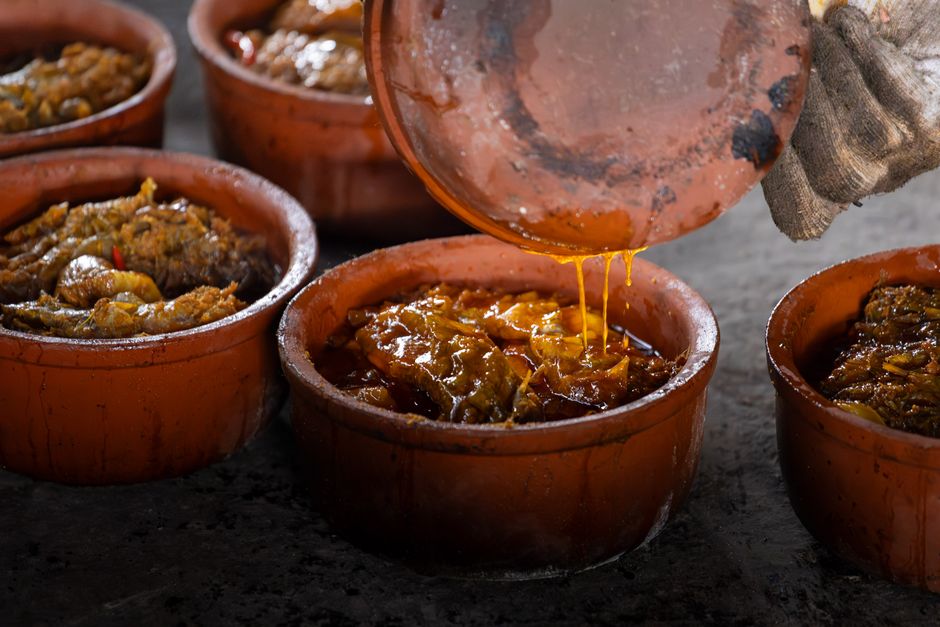
Ca Kho To is a quintessential Vietnamese dish that features fish braised in a savory and sweet caramel sauce. Originating from the southern regions of Vietnam, particularly near the Mekong Delta where freshwater fish are abundant, this meal is a staple of home cooking. The name itself describes the preparation method, as kho refers to the act of braising or stewing, while to refers to the traditional clay pot used for cooking.
History
The history of Ca Kho To is rooted in the practical culinary traditions of southern Vietnam, where the dish was developed as a way to preserve and flavor local freshwater catches like snakehead fish. Cookbook author Mai Pham notes in her work, Pleasures of the Vietnamese Table, that this dish is a cornerstone of Vietnamese home cooking. While traditionally prepared in a clay pot to maintain heat and develop deep flavors, modern adaptations allow for the use of heavy-bottomed saucepans or Dutch ovens. The dish has evolved from a regional specialty into a national comfort food, celebrated for its balance of salty fish sauce and sweet, dark caramel.
Cultural Traditions
In Vietnamese culture, Ca Kho To is considered everyday soul food, yet it holds a place of honor during significant celebrations. Chef Nina Teddie Huynh explains that the dish is frequently prepared during Tet, the Lunar New Year, to symbolize abundance, family unity, and good fortune for the coming year. It is typically served as part of a traditional meal that includes steamed jasmine rice, a stir-fried vegetable dish, and a clear soup. The communal nature of the meal emphasizes the importance of family gatherings, where the piping hot clay pot is placed at the center of the table for all to share.
Ca Kho To Caramel Fish
A rich and savory Vietnamese classic featuring tender fish fillets braised in a dark, aromatic caramel sauce.
Prep time: 30 min | Cook time: 30 min | Total time: 1 hr | Yield: 4 servings | Difficulty: Medium
Ingredients
- 450g catfish or firm whitefish fillets, cut into chunks
- 2 tbsp vegetable oil
- 2 tbsp caster sugar
- 4 tbsp fish sauce
- 4 cloves garlic, minced
- 2 shallots, thinly sliced
- 1 tsp ground black pepper
- 1/4 cup coconut water or water
- 2 stalks green onions, sliced for garnish
- 1 red chili, sliced (optional)
Instructions
- Rinse the fish fillets under cold water, pat dry with paper towels, and set aside.
- Heat the vegetable oil in a clay pot or heavy-bottomed saucepan over medium heat.
- Add the sugar to the pot and stir constantly until it melts and turns a deep amber color, being careful not to burn it.
- Add the garlic and shallots to the caramel, stirring quickly until fragrant.
- Place the fish into the pot in a single layer, allowing it to brown slightly on both sides.
- Pour in the fish sauce and coconut water, then reduce the heat to low.
- Cover and simmer for 15 to 20 minutes, basting the fish occasionally with the sauce until it thickens into a syrupy consistency.
- Remove from heat, garnish with green onions and chili, and serve immediately over steamed jasmine rice.
Notes
For the best results, use a pot with a light-colored interior to monitor the color of the caramel sauce accurately. If the sauce reduces too quickly, add an extra tablespoon of water to prevent burning. Leftovers store well in the refrigerator and often taste better the next day as the flavors continue to meld.
You've reached your free article limit
You've read 10 of 10 free articles this month. Subscribe to Planet Earth News Network for unlimited access to neutral, global journalism — plus puzzles, podcasts, and the weekly newsletter.
Already a subscriber? Sign in.
Subscribers can ask the journalist a question about this story. Subscribe to ask.
Food of the Day feature with recipe by the PENN Food & Spirits Desk.
Comments
No comments yet — be the first to share your thoughts.
PENN's lifestyle and culinary department, covering global cuisine — the origins, traditions, and recipes behind the world's dishes, with deep histories and cultural context that go beyond the plate. and PENN's beverage-focused culinary team, dedicated to spirits and drinks — covering distilleries, breweries, and producers worldwide, with histories, tasting notes, professional reviews, and cocktail traditions.
View all articles by Desk →
