Food of the Day: Congee (China)
A timeless staple of Chinese cuisine, this comforting rice porridge has sustained generations through its versatility and simplicity.
Hear this story explained in 90 seconds.
Congee (China)
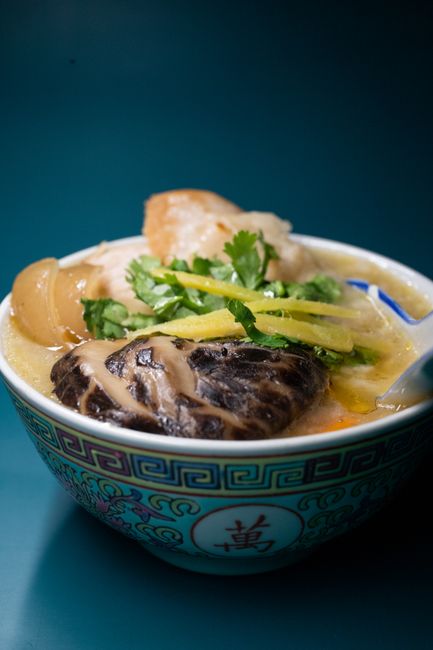
Congee is a traditional Chinese rice porridge that serves as a fundamental staple across the nation. Known as zhou in Mandarin or jook in Cantonese, this dish consists of rice simmered in a large volume of water or stock until the grains break down into a smooth, creamy consistency. It functions as a versatile base that can be served plain or enhanced with a wide variety of savory toppings and side dishes.
History
The history of congee spans approximately 3,000 years, with the first recorded references appearing during the Zhou dynasty around 1000 BC. Archaeological evidence from the Longshan Cultural Site suggests that pottery used for preparing this porridge dates back even further to the Neolithic Age, around 2300 BC. Throughout the centuries, the dish evolved from a simple method of stretching limited food supplies during times of famine into a celebrated culinary tradition found in historical cookbooks from the Ming and Qing dynasties.
Beyond its role as a daily meal, congee has long been valued for its medicinal properties and ease of digestion. Ancient texts often detailed the use of congee as a healing ailment, frequently pairing the porridge with specific herbs to address various health concerns. As populations migrated from the Central Plain region of China to the south during the Wei, Jin, and Northern and Southern Dynasties, the tradition of preparing and consuming this nourishing porridge spread across the country.
Cultural Traditions
Congee occupies a central place in Chinese daily life, frequently appearing on the breakfast table as a warm and comforting start to the day. It is also widely regarded as the ideal food for those who are unwell, as its neutral flavor and soft texture are gentle on the stomach. In many households, the dish is served with an array of traditional accompaniments, such as salted duck eggs, pickled mustard greens, rousong, or the deep-fried dough fritter known as youtiao.
The preparation of congee can also reflect social and festive occasions, with more elaborate versions featuring multiple ingredients like fish, organ meats, or century eggs. One notable variety is sampan congee, which originated in the Lychee Bay area of Guangzhou and was historically sold by vendors on boats along the Pearl River. Whether enjoyed as a simple, frugal meal to reduce food waste or as a complex, festive dish, congee remains a powerful symbol of comfort and connection to family roots.
Chicken Congee
A classic, satisfying version of Chinese rice porridge that highlights the comforting nature of slow-cooked grains and savory aromatics.
Prep time: 15 min | Cook time: 135 min | Total time: 150 min | Yield: 4 servings | Difficulty: Easy
Ingredients
- 1 cup jasmine rice
- 8 cups chicken stock
- 1 lb chicken thighs, bone-in
- 1 tbsp ginger, julienned
- 2 stalks spring onion, thinly sliced
- 1 tbsp soy sauce
- 1 tsp sesame oil
Instructions
- Rinse the rice thoroughly under cold water until the water runs clear, then drain well.
- In a large pot, combine the rinsed rice and chicken stock, bringing the mixture to a boil over medium-high heat.
- Add the chicken thighs to the pot, reduce the heat to low, and cover the pot partially to allow for a gentle simmer.
- Cook the mixture for approximately 2 hours, stirring occasionally to prevent the rice from sticking to the bottom, until the grains have completely broken down and the porridge is creamy.
- Remove the chicken thighs from the pot, shred the meat away from the bones, and return the shredded chicken to the porridge.
- Ladle the hot congee into bowls and garnish with the julienned ginger, sliced spring onions, a drizzle of soy sauce, and a few drops of sesame oil before serving.
Notes
Congee will continue to thicken as it cools, so you may add a small amount of hot water or additional stock to reach your desired consistency before serving. Leftovers can be stored in the refrigerator and reheated on the stove with a splash of water to restore the original texture.
You've reached your free article limit
You've read 10 of 10 free articles this month. Subscribe to Planet Earth News Network for unlimited access to neutral, global journalism — plus puzzles, podcasts, and the weekly newsletter.
Already a subscriber? Sign in.
Subscribers can ask the journalist a question about this story. Subscribe to ask.
Food of the Day feature with recipe by the PENN Food & Spirits Desk.
Comments
No comments yet — be the first to share your thoughts.
PENN's lifestyle and culinary department, covering global cuisine — the origins, traditions, and recipes behind the world's dishes, with deep histories and cultural context that go beyond the plate. and PENN's beverage-focused culinary team, dedicated to spirits and drinks — covering distilleries, breweries, and producers worldwide, with histories, tasting notes, professional reviews, and cocktail traditions.
View all articles by Desk →