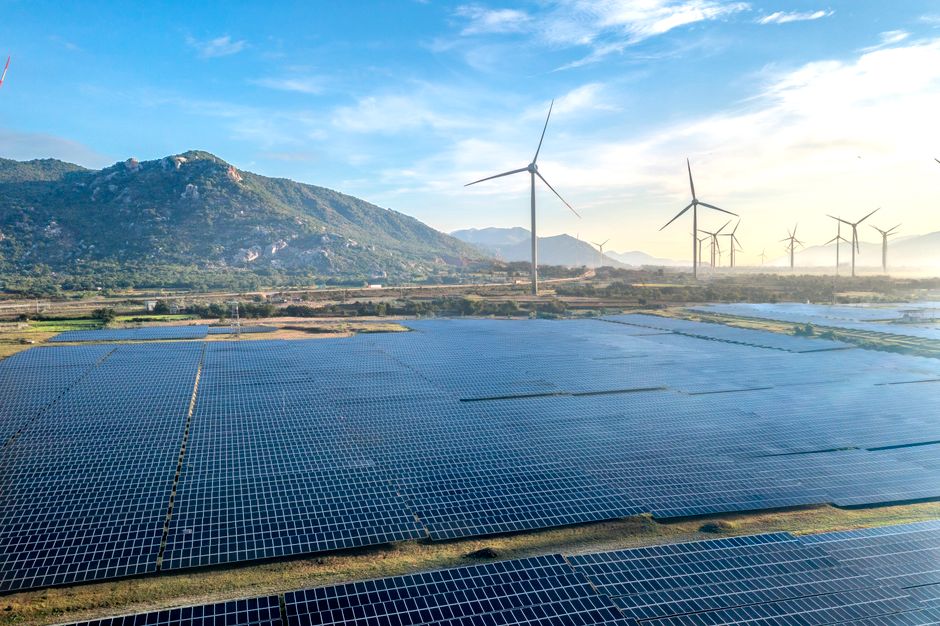
Global Fossil Fuel Emissions Projected to Decline in 2026
New research highlights a 0.4 percent drop in carbon emissions driven by clean energy growth and geopolitical energy shocks.
PENN Explainer
Hear this story explained in 90 seconds.
Global carbon emissions from fossil fuels are expected to decrease by 0.4 percent in 2026, according to the latest annual report from the Global Carbon Project. This projection, published in the journal Earth System Science Data, marks a notable shift in the trajectory of global greenhouse gas output. The study attributes this decline to a combination of expanding renewable energy capacity and short-term energy market disruptions. Researchers estimate that total fossil carbon dioxide emissions will reach 38.2 billion metric tons for the year.
While this figure represents a decrease, experts emphasize that the total volume of emissions remains high. Emissions from oil are specifically projected to fall by 1.9 percent, a change linked to energy shocks resulting from the ongoing conflict in Iran. Despite these gains, the report notes that emissions from land-use changes, such as deforestation, are expected to rise slightly. This brings the total projected carbon dioxide emissions to 43.3 billion metric tons, an increase from the 42.8 billion metric tons recorded in 2025.
Professor Pierre Friedlingstein, the director of the Global Carbon Budget Office at the University of Exeter, led the research team. He stated that while a decline in fossil emissions is encouraging, a reduction driven partly by geopolitical shocks is not a sustainable climate solution. The long-term answer remains the rapid deployment of clean energy technologies, according to Friedlingstein. The study highlights that two-thirds of the global increase in energy demand is currently being met by solar power, wind energy, and electric vehicles.
However, the authors conclude that clean energy growth is not yet fast enough to ensure a durable and permanent decline in global emissions. The remaining carbon budget to keep warming below 1.5 degrees Celsius is now estimated at 150 billion metric tons. This amount is equivalent to less than four years of emissions at the current global rate. The report also warns that the powerful 2026 El Niño weather pattern is expected to have a significant impact on natural carbon sinks in the coming year. As carbon dioxide continues to accumulate in the atmosphere, the research team stresses the need for further acceleration of clean technology deployment to achieve a sustained peak and decline in global emissions.
You've reached your free article limit
You've read 10 of 10 free articles this month. Subscribe to Planet Earth News Network for unlimited access to neutral, global journalism — plus puzzles, podcasts, and the weekly newsletter.
Already a subscriber? Sign in.
Ask the Author
Subscribers can ask the journalist a question about this story. Subscribe to ask.
Neutrality note
Auto-harvested from global news wires and presented neutrally by PENN.
to vote
Comments
No comments yet — be the first to share your thoughts.