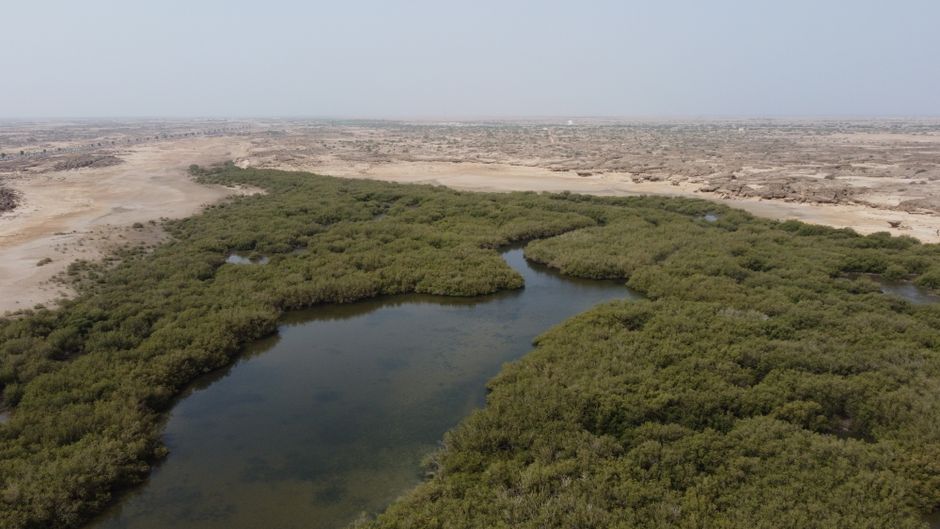
Indian Village Watershed Projects Restore Degraded Landscapes
Community-led water management initiatives in India are transforming barren land into thriving ecosystems through equitable resource distribution.

PENN Explainer
Hear this story explained in 90 seconds.
In the Jhabua district of India, local communities are successfully reversing decades of severe land and forest degradation through innovative watershed management projects. These initiatives focus on restoring natural resources by empowering villagers to take direct control of their local environment. By shifting from traditional, unequal water distribution systems to more inclusive models, these communities have turned once-barren landscapes into productive, green ecosystems. The success of these projects highlights the power of local leadership and active community participation in solving complex environmental challenges.
Historically, water distribution in many rural Indian regions was tied strictly to land ownership, which often left small farmers and landless residents without adequate access. A significant breakthrough occurred when innovators like Vilas Salunkhe introduced the Pani Panchayat model, which fundamentally changed how water is shared. Under this new system, water is allocated based on the number of family members rather than the size of landholdings. This radical shift ensured that every landowner received an equal share of water, fostering a sense of fairness and collective responsibility.
Community participation in these projects goes far beyond simple consultation or feedback sessions. Villagers are actively involved in the planning, implementation, and long-term maintenance of the watershed infrastructure. This hands-on approach ensures that the solutions are tailored to the specific needs and geography of each village. By taking ownership of the work, residents have built a sustainable framework that continues to function long after the initial projects are completed.
Strong local leadership has proven to be an essential component in the success of these watershed efforts. Figures such as Anna Hazare in Ralegan Siddhi and Rajendra Singh with the organization Tarun Bharat Sangh have provided the guidance necessary to mobilize entire villages. These leaders have helped bridge the gap between traditional knowledge and modern conservation techniques. Their ability to unite diverse groups toward a common goal has been a driving force behind the widespread adoption of these practices.
The impact of these initiatives is visible in the physical transformation of the landscape. Areas that were previously suffering from severe soil erosion and deforestation are now showing signs of ecological recovery. Improved water retention has allowed for better agricultural yields, which in turn supports the economic stability of the participating households. These measurable improvements provide clear evidence that community-led natural resource management is a viable path toward environmental resilience.
Beyond the immediate environmental benefits, these projects have strengthened the social fabric of the participating villages. The collaborative nature of the work encourages residents to communicate more effectively and resolve conflicts through democratic processes. This increased social cohesion makes it easier for communities to tackle other shared problems, such as infrastructure development or education. The success of these watershed projects serves as a model for other regions facing similar environmental and social pressures.
Experts note that the principles used in these Indian villages are highly adaptable to other contexts. The core idea of prioritizing equitable access and local governance can be applied to various natural resource management challenges globally. By focusing on the specific needs of the community, these projects avoid the pitfalls of top-down policies that often fail to account for local realities. This bottom-up approach is increasingly recognized as a key strategy for achieving sustainable development goals.
As these initiatives continue to expand across the state, they provide a blueprint for how to address land degradation on a larger scale. The time-bound nature of the watershed projects ensures that progress is tracked and that goals are met within a reasonable timeframe. This structured approach helps maintain momentum and keeps the community focused on long-term outcomes. The ongoing success of these efforts demonstrates that even in the most challenging environments, collective action can lead to significant, lasting change.
You've reached your free article limit
You've read 10 of 10 free articles this month. Subscribe to Planet Earth News Network for unlimited access to neutral, global journalism — plus puzzles, podcasts, and the weekly newsletter.
Already a subscriber? Sign in.
Ask the Author
Subscribers can ask the journalist a question about this story. Subscribe to ask.
Neutrality note
Auto-harvested from global news wires and presented neutrally by PENN.
to vote
Comments
No comments yet — be the first to share your thoughts.