Medellín’s Green Corridors Initiative Successfully Lowers Urban Temperatures
Colombia’s innovative network of urban vegetation provides a scalable model for cooling cities and improving public health.
PENN Explainer
Hear this story explained in 90 seconds.
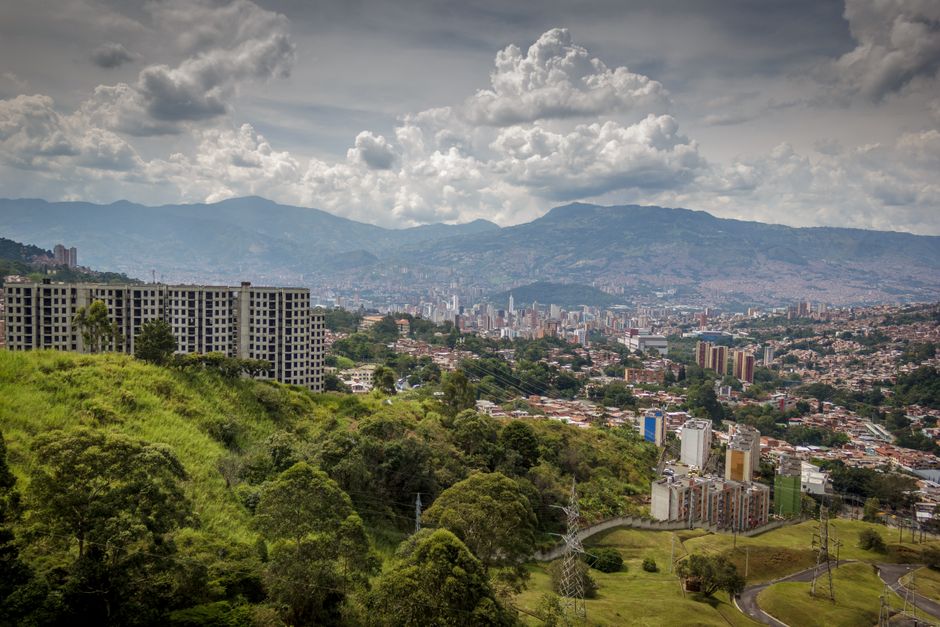
As global temperatures rise, many cities are facing the intense challenge of the urban heat island effect. This phenomenon occurs when concrete, asphalt, and dense buildings trap heat, causing city centers to become significantly warmer than surrounding rural areas. In Medellín, Colombia, local authorities have implemented a groundbreaking solution known as the Green Corridors project. This initiative focuses on transforming urban spaces into interconnected networks of vegetation to naturally cool the city environment.
The Green Corridors project involves the strategic planting of 8,800 trees and palms across 30 major urban routes. These corridors cover approximately 65 hectares of the city, creating a web of greenery that links parks, hillsides, and public spaces. By integrating this vegetation into the existing urban fabric, the city has created a system that provides shade and improves air quality for residents. The project treats nature as essential infrastructure, similar to roads or utility networks.
The cooling effect of these corridors is achieved through two primary natural processes: solar shading and evapotranspiration. Trees and plants block direct sunlight from hitting heat-absorbing surfaces like pavement and buildings. Simultaneously, they release moisture into the air through their leaves, which helps to lower the ambient temperature. These combined actions have successfully reduced the urban heat island effect in Medellín by 2°C.
Beyond the immediate temperature reduction, the project is designed for long-term climate resilience. Experts anticipate that the continued growth and maturation of these corridors will lead to further temperature decreases of 4-5°C over the next 28 years. This measurable progress demonstrates how nature-based solutions can provide sustainable, long-term relief from extreme heat. The initiative serves as a practical example for other cities looking to adapt to a warming climate.
The success of the Green Corridors in Medellín has gained international attention as a model for sustainable urban planning. By prioritizing green and blue infrastructure, the city has shown that it is possible to mitigate the negative impacts of rapid urbanization. The project highlights the importance of integrating environmental considerations into the core of city governance. It also underscores the value of using data-driven planning to address public health risks associated with heat.
Governance and accountability have been key components of the project's implementation. Because heat-related issues often span multiple departments, such as planning, health, and infrastructure, the city established clear ownership for the maintenance of these corridors. This coordination ensures that the vegetation is properly cared for and that the benefits are sustained over time. Such institutional support is vital for the success of large-scale urban environmental projects.
Community involvement has also played a role in the project's ongoing success. By creating more pleasant and shaded environments, the corridors have improved the walkability and overall livability of the city's streets. Residents benefit from cooler temperatures while traveling through the city, which encourages more active transportation. This shift toward a more pedestrian-friendly environment contributes to both public health and reduced carbon emissions.
The Medellín model is now being studied by urban planners and policymakers worldwide. As cities continue to grow, the need for effective heat mitigation strategies becomes increasingly urgent. The Green Corridors initiative provides a clear, evidence-based framework that can be adapted to different geographic and social contexts. It proves that investing in nature is a viable and effective way to protect urban populations from the dangers of extreme heat.
While every city faces unique challenges, the principles behind the Green Corridors project are widely applicable. Other municipalities are beginning to explore similar strategies, such as tree equity programs and the expansion of public parks. These efforts are supported by global initiatives that provide tools for heat risk assessment and urban cooling planning. The focus remains on creating resilient, healthy, and sustainable urban environments for all residents.
Ultimately, the Medellín experience highlights the power of combining traditional urban design with ecological restoration. By viewing the city as a living system, planners can create spaces that are not only functional but also restorative. The Green Corridors project stands as a testament to the impact of proactive, nature-based policy. It offers a hopeful path forward for cities striving to remain livable in an era of climate change.
Ask the Author
Subscribers can ask the journalist a question about this story. Subscribe to ask.
Neutrality note
Auto-harvested from global news wires and presented neutrally by PENN.
to vote
Comments
No comments yet — be the first to share your thoughts.