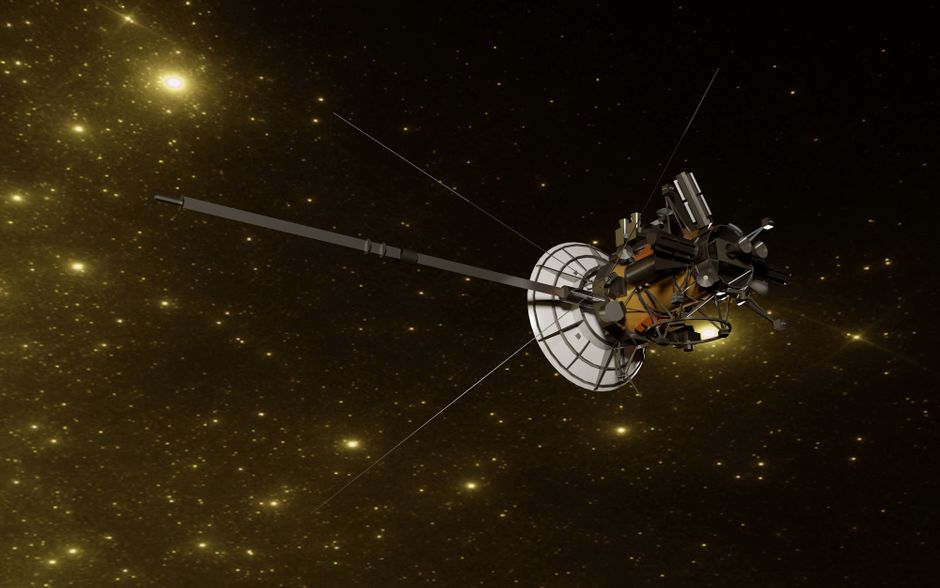
NASA’s Juno Spacecraft Reveals Complex Plasma Waves Around Jupiter
New data from the long-running mission shows that Jupiter’s invisible magnetic shield is more intricate than previously understood.

PENN Explainer
Hear this story explained in 90 seconds.
NASA’s Juno spacecraft has uncovered new details about the environment surrounding Jupiter, revealing that the gas giant’s magnetic shield is significantly more complex than that of Earth. Researchers announced this week that the probe detected a sophisticated system of powerful plasma waves interacting with the planet’s massive magnetic field. These findings provide a deeper look into how the largest planet in our solar system protects itself from the harsh conditions of space. Scientists have long studied Jupiter’s magnetosphere to understand how it traps charged particles and creates intense radiation belts.
The new data suggests that the interaction between plasma and magnetic fields is more dynamic than earlier models predicted. This discovery helps astronomers better understand the fundamental physics governing planetary magnetic environments across the universe. The Juno mission has been orbiting Jupiter for several years, consistently providing high-resolution data that challenges existing theories. By analyzing the movement of plasma waves, the team can map out the invisible structures that define the planet's outer reaches.
These observations are essential for building more accurate simulations of how gas giants interact with the solar wind. The research team noted that the complexity of these waves may be linked to the unique composition and rapid rotation of Jupiter. Understanding these mechanisms is a key goal for planetary scientists who study the evolution of solar systems. Future analysis of the data will likely focus on how these plasma waves influence the auroras observed at Jupiter’s poles.
The mission continues to operate as a vital tool for exploring the outer solar system. NASA officials emphasized that the ongoing success of the Juno mission demonstrates the value of long-term planetary exploration. As the spacecraft continues its journey, it will keep sending back information that helps refine our knowledge of the giant planet. This work remains a cornerstone of modern astrophysics and planetary science.
You've reached your free article limit
You've read 10 of 10 free articles this month. Subscribe to Planet Earth News Network for unlimited access to neutral, global journalism — plus puzzles, podcasts, and the weekly newsletter.
Already a subscriber? Sign in.
Ask the Author
Subscribers can ask the journalist a question about this story. Subscribe to ask.
Neutrality note
Auto-harvested from global news wires and presented neutrally by PENN.
to vote
Comments
No comments yet — be the first to share your thoughts.