Philippines Expands Nationwide Water Filtration and Desalination Program
Government initiative targets water-stressed regions to provide clean, affordable drinking water to thousands of underserved residents.
PENN Explainer
Hear this story explained in 90 seconds.
The Department of Environment and Natural Resources in the Philippines is scaling up a national effort to provide clean drinking water to underserved communities. By the end of this year, the agency plans to install high-performance filtration and desalination systems in 59 additional barangays across various water-stressed provinces. This expansion builds on previous efforts to address critical supply gaps in island, coastal, and remote inland areas where residents often face high costs for potable water.
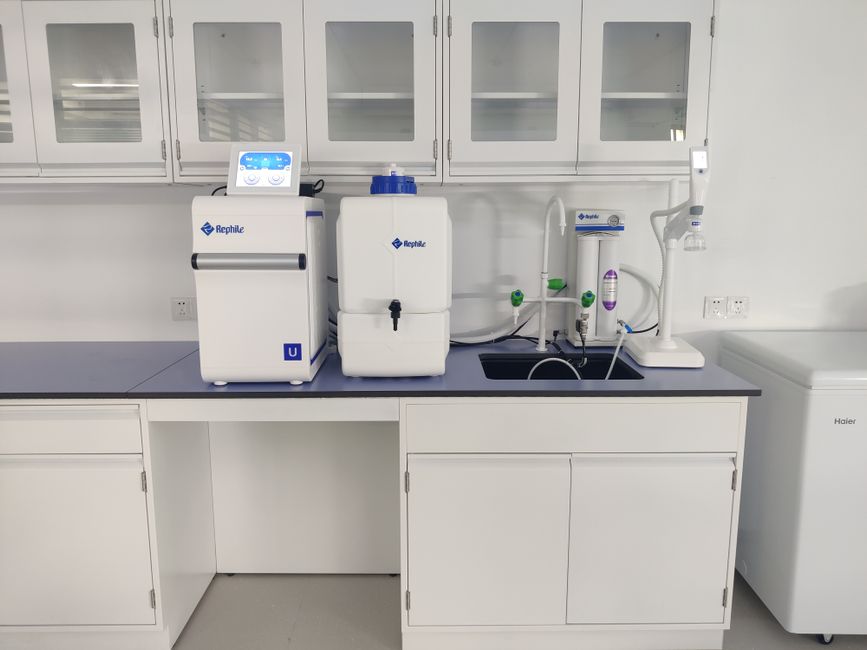
The initiative focuses on deploying technology tailored to local needs, including both freshwater filtration and seawater desalination systems. According to the Department of Environment and Natural Resources, these projects are designed to be cost-effective while delivering significant improvements in public health. The agency reported that earlier installations have already helped lower the price of drinking water by nearly 50 percent in several remote districts.
In many of these isolated communities, the cost of a 5-gallon container of water has dropped from as much as 70 pesos to between 20 and 25 pesos. This reduction is a direct result of the agency’s water filtration program, which provides high-grade refilling equipment to local water districts. By reducing the reliance on expensive, long-distance water delivery, the program makes safe water more accessible to families who previously struggled with both availability and affordability.
The Water Resources Management Office, a division within the department, is overseeing the implementation of these projects. Officials noted that the agency has a dedicated budget of 485 million pesos covering the period from 2024 through the current year to support these infrastructure improvements. Once completed, these combined efforts are expected to benefit over 440,000 residents across the archipelago.
Beyond standard filtration, the government is also exploring integrated solutions for remote areas. The department aims to complete spring water systems at 11 sites that feature a micro-hydropower component. This dual-purpose design provides both clean water and a local energy source, demonstrating a commitment to sustainable infrastructure in geographically isolated regions.
Desalination technology has become a key component of the strategy for island communities that lack freshwater sources. The country first introduced this technology in 2021 with a plant on Mavulis Island, the northernmost outpost in Batanes province. That facility, capable of producing 1,500 gallons of potable water daily, served as a successful pilot for the larger rollout currently underway.
Financial assistance is also being provided to 13 local water districts to help them extend their service grids. By upgrading existing infrastructure, the government hopes to reach more outskirt barangays that have historically been left out of formal water supply networks. This strategy ensures that the benefits of the program extend beyond the installation of individual filtration units.
The initiative is part of a broader national strategy to improve water security for the estimated 40 million Filipinos who lack access to formal water supplies. Environment Secretary Raphael Lotilla emphasized that these projects prove that significant improvements can be achieved even with limited funding. By focusing on modular and scalable technology, the government aims to provide a reliable safety net for vulnerable populations.
Local community involvement remains a central pillar of the program's success. In addition to government-led installations, other organizations are working to protect natural water sources through environmental conservation and waste management. For example, community-led coastal clean-ups in areas like Siargao help prevent debris from contaminating local freshwater supplies, reinforcing the government's technical efforts.
As the country prepares for potential climate-related challenges, such as the effects of Super El Niño, the government is also demonstrating portable filtration kits. These mobile solutions are intended to provide immediate access to safe water during emergencies or natural disasters. By combining permanent infrastructure with rapid-response capabilities, the Philippines is building a more resilient water management system for the future.
You've reached your free article limit
You've read 10 of 10 free articles this month. Subscribe to Planet Earth News Network for unlimited access to neutral, global journalism — plus puzzles, podcasts, and the weekly newsletter.
Already a subscriber? Sign in.
Ask the Author
Subscribers can ask the journalist a question about this story. Subscribe to ask.
Neutrality note
Auto-harvested from global news wires and presented neutrally by PENN.
to vote
Comments
No comments yet — be the first to share your thoughts.
Related stories in Solutions

California Food Processor Recovers Water from Tomatoes to Support Regional Irrigation
2026-11-17
Himalayan Kingdom Achieves Significant Gains in Food Security Through Climate Resilience Program
2026-11-16